

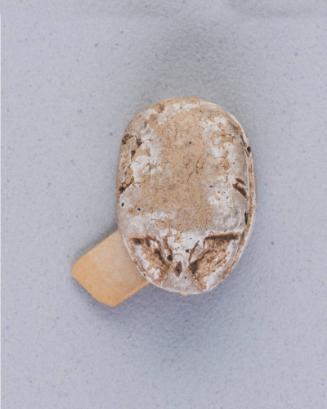
Scarab Seal with Adoring Baboons and Obelisk


Scarab Seal with Adoring Baboons and Obelisk
Place of OriginEgypt
Date19th Dynasty or later (1292–30 BCE)
DimensionsH: 1/2 in. (1.3 cm); W: 3/8 in. (1 cm); Depth: 1/4 in. (0.6 cm)
MediumSteatite; glazed.
ClassificationUtilitarian Objects
Credit LineGift of Henry W. Wilhelm
Object number
1927.68
Not on View
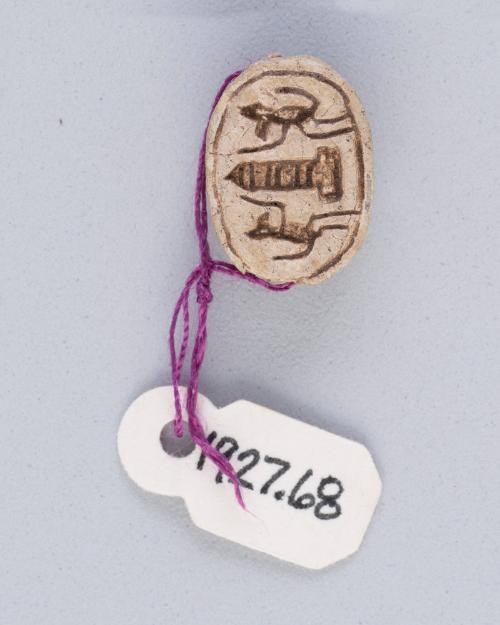
DescriptionA scarab-shaped seal carved from steatite. The back is naturalistic with a high profile in the prothorax. A nearly straight line marks the division between the prothorax and the elytra (wing cases), and a single line separates the elytra. The legs are carved in relief with pairs differentiated but lacking internal modeling or striations. The object is pierced lengthwise. The original green glaze is nearly entirely lost, leaving the surface a light brown color. The base features a symmetrical deep intaglio design.
Label TextThis scarab seal depicts two baboons standing on their hind legs, their hands raised in worship toward a central obelisk. In ancient Egyptian mythology, baboons were believed to chatter at the rising sun, welcoming the dawn. The obelisk itself is a symbol of the sun god, Re (or Amun-Re). This amulet therefore serves as a perpetual prayer to the solar deity, ensuring the owner's participation in the daily cycle of rebirth. Originally covered in a bright green glaze, the surface has worn to a soft brown over millennia.
18th Dynasty (1550-1292 BCE), about 1400 BCE
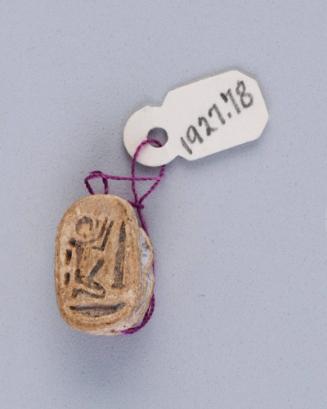
19th Dynasty (1292–1189 BCE)
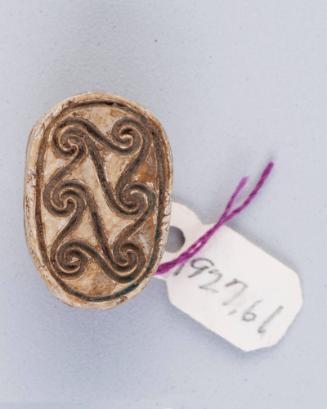
12th–18th Dynasties (1991–1292 BCE)
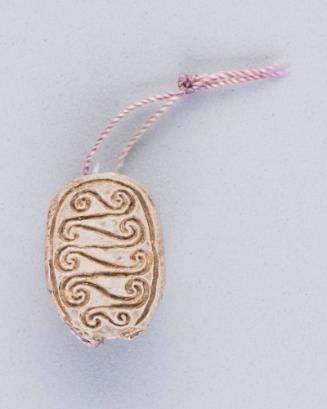
16th–18th Dynasties (1650–1292 BCE)
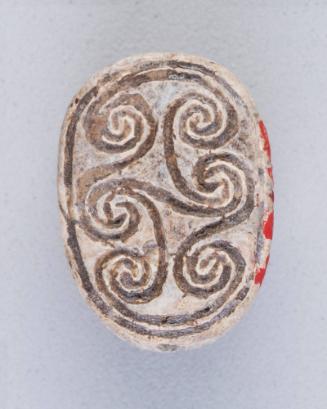
12th Dynasty (1991–1802 BCE)
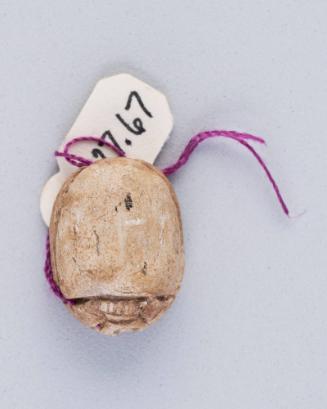
Possibly Hyksos, shortly before 1580 BCE
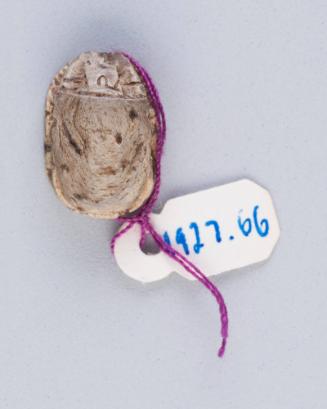
Hyksos, 17th-16th century BCE
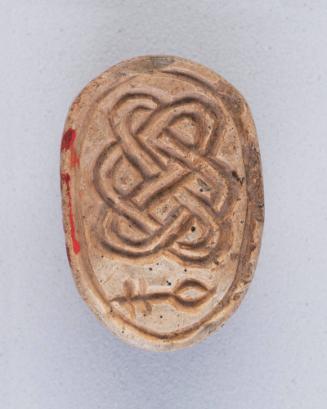
12th–18th Dynasties (1991–1292 BCE)

18th Dynasty (1550-1292 BCE), about 1400 BCE
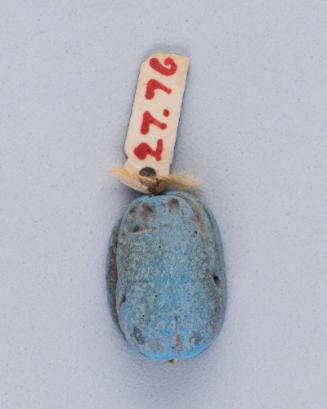
20th Dynasty or later (1189–1077 BCE)
18th Dynasty (1550-1292 BCE), about 1500 BCE

19th Dynasty (1292–1189 BCE)

Membership
Become a TMA member today
Support TMA
Help support the TMA mission