

Egyptian Blue Amulet of the Deified Amenhotep
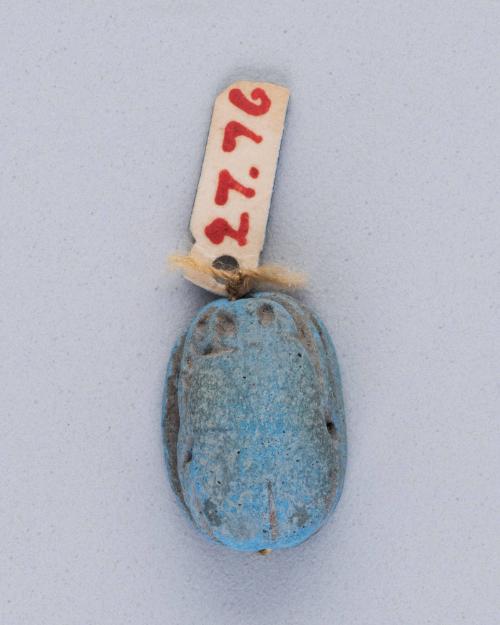



Egyptian Blue Amulet of the Deified Amenhotep
Place of OriginEgypt
Date20th Dynasty or later (1189–1077 BCE)
DimensionsH: 9/16 in. (1.4 cm); W: 3/8 in. (1 cm); Depth: 1/4 in. (0.6 cm)
MediumEgyptian Blue (Cuprorivaite)?
ClassificationJewelry
Credit LineGift of Mrs. Grant Williams
Object number
1927.76
Not on View
DescriptionA small scarab-shaped seal made of blue siliceous paste (unglazed faience). The back is high and evenly rounded with naturalistic modeling; the division between the elytra (wing cases) is marked by a single line, though now partly worn. The legs are rendered in relief with a deep depression between the fore and middle pairs, lacking striations. The object is pierced lengthwise. The surface is friable and powdery, colored a deep blue throughout the body, though now darkened in parts by a brownish film (possibly resin or gum). The base bears a molded hieroglyphic inscription: s3b 'Imn-htp.
Label TextThis deep blue scarab is not made of glazed pottery, but of "Egyptian Blue," a synthetic pigment that was molded and fired to create a solid, stone-like object. It was not used to seal documents, but to heal the sick. The base is inscribed "The Sage, Amenhotep," referring to Amenhotep son of Hapu, a real architect and scribe who lived 300 years earlier. By this period, he had been transformed into a god of wisdom and healing. Much like a modern religious medal, this amulet would have been worn by a devotee seeking his protection.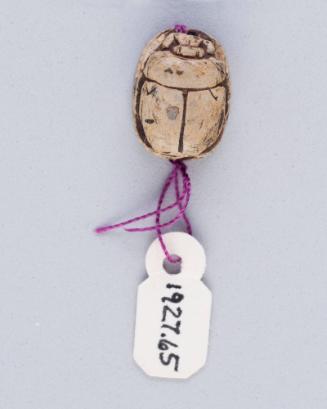
18th Dynasty (1550-1292 BCE), about 1400 BCE
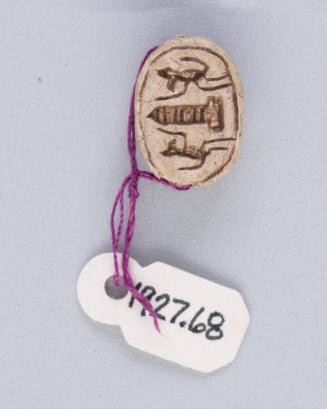
19th Dynasty or later (1292–30 BCE)
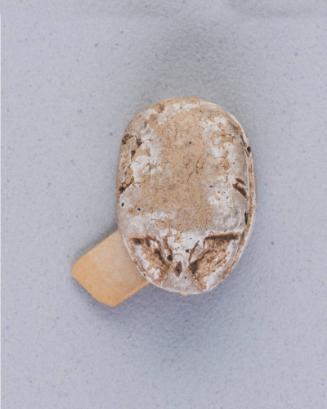
18th Dynasty (1550-1292 BCE), about 1500 BCE
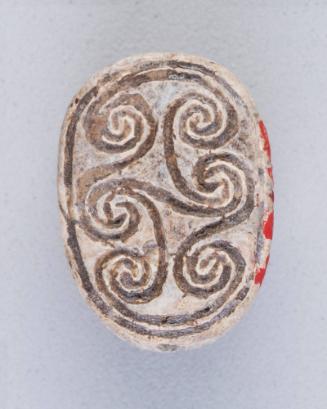
12th Dynasty (1991–1802 BCE)

18th Dynasty (1550-1292 BCE), about 1400 BCE
Hyksos, 17th-16th century BCE
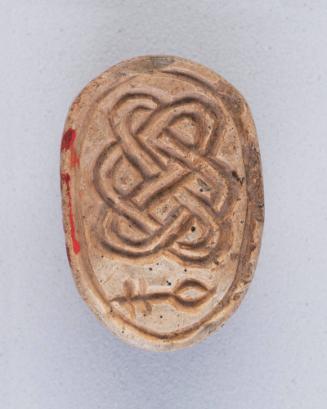
12th–18th Dynasties (1991–1292 BCE)
18th Dynasty (1550-1292 BCE), about 1347-1338 BCE



Membership
Become a TMA member today
Support TMA
Help support the TMA mission