

Scarab-Shaped Seal with Rope Pattern
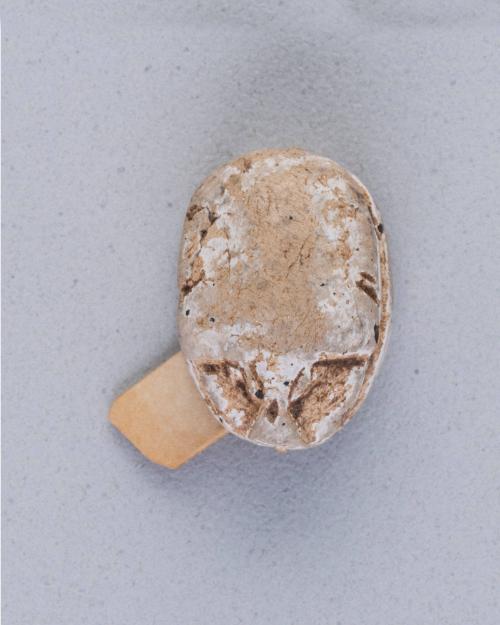



Scarab-Shaped Seal with Rope Pattern
Place of OriginEgypt
Date18th Dynasty (1550-1292 BCE), about 1500 BCE
DimensionsH: 7/16 in. (1.1 cm); W: 5/16 in. (0.8 cm); Depth: 3/16 in. (0.5 cm)
MediumFaience.
ClassificationJewelry
Credit LineGift of Mrs. Caroline Ransom Williams
Object number
1927.77
Not on View
DescriptionA small scarab-shaped seal made of faience. The back is conventionalized with a medium-height, evenly rounded profile. The modeling is considered good, though summary: there is no marking for the division between the elytra (wing cases). The legs are rendered as simple lines in relief without detailed differentiation or striations. The object is pierced lengthwise for threading. The underside (base) features a "rope pattern" device. The original glaze has completely deteriorated, fading to a light brown or white color.
Label TextThis small seal takes the form of a scarab beetle, a symbol of rebirth and transformation in ancient Egypt. The base is carved with a continuous "rope" or braid pattern, a popular geometric design in Egyptian glyptic art often associated with protection or eternity. Originally covered in a bright glaze that has since faded to white/brown, this object functioned as both an amulet and a seal. It was gifted to the museum by Caroline Ransom Williams, the first American woman to be professionally trained as an Egyptologist.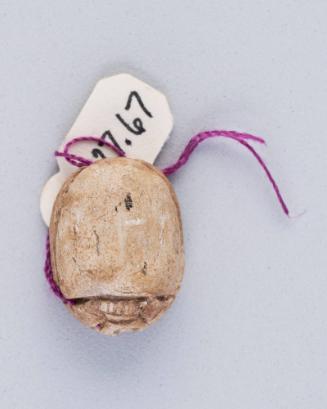
Possibly Hyksos, shortly before 1580 BCE
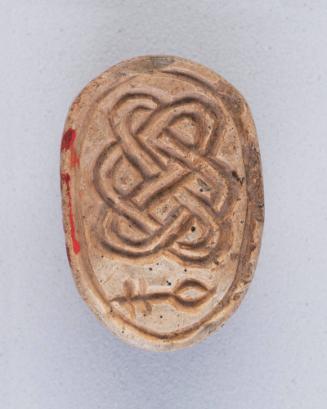
12th–18th Dynasties (1991–1292 BCE)
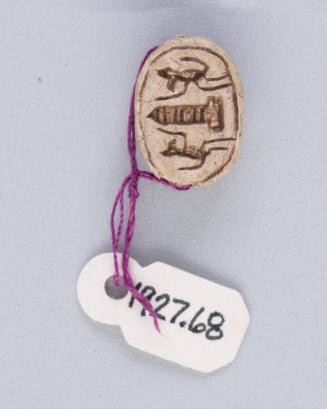
19th Dynasty or later (1292–30 BCE)
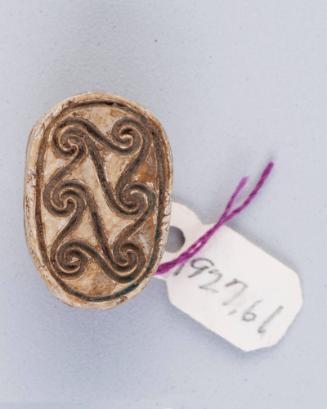
12th–18th Dynasties (1991–1292 BCE)
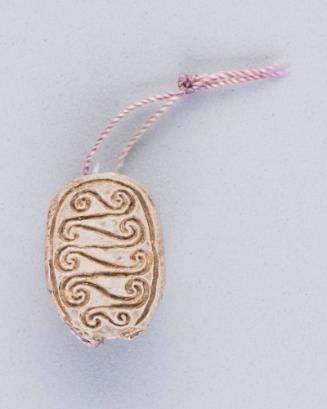
16th–18th Dynasties (1650–1292 BCE)
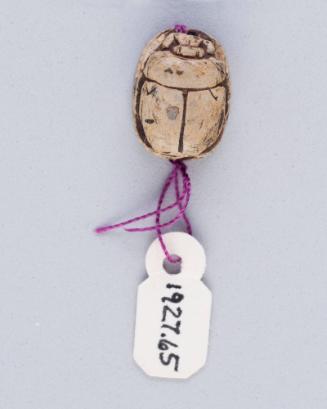
18th Dynasty (1550-1292 BCE), about 1400 BCE
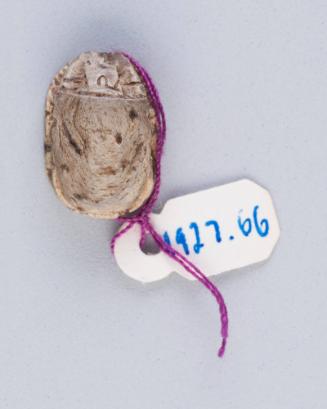
Hyksos, 17th-16th century BCE
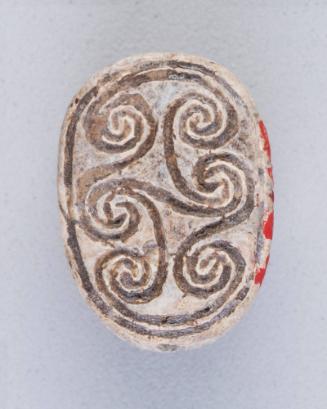
12th Dynasty (1991–1802 BCE)
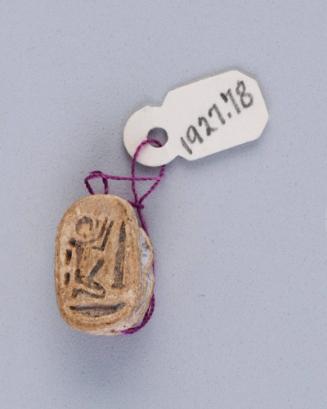
19th Dynasty (1292–1189 BCE)
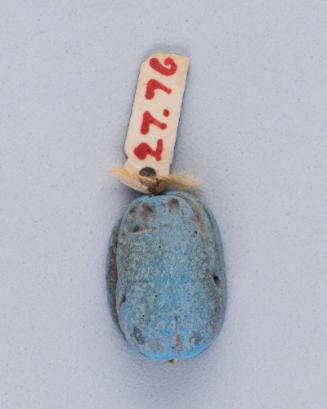
20th Dynasty or later (1189–1077 BCE)


18th Dynasty (1550-1292 BCE), about 1400 BCE

Membership
Become a TMA member today
Support TMA
Help support the TMA mission