

Scarab Seal with Continuous Scroll Pattern


Scarab Seal with Continuous Scroll Pattern
Place of OriginEgypt
Date16th–18th Dynasties (1650–1292 BCE)
DimensionsH: 1/2 in. (1.3 cm); W: 3/8 in. (0.9 cm); Depth: 1/4 in. (0.6 cm)
MediumGlazed steatite
ClassificationUtilitarian Objects
Credit LineGift of Henry W. Wilhelm
Object number
1927.62
Not on View
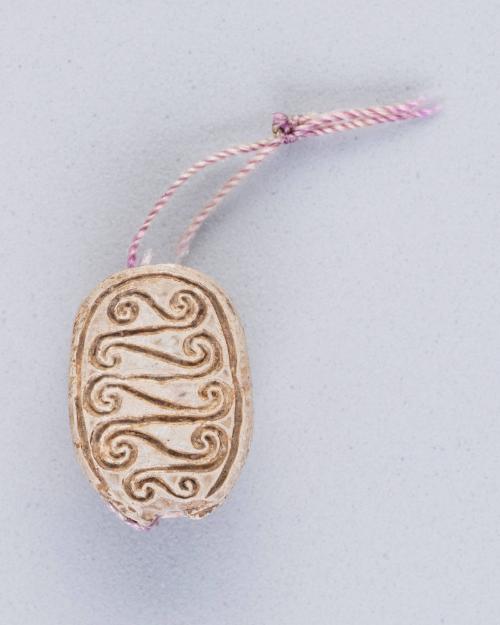
DescriptionA scarab-shaped seal carved from steatite. The back is of medium height and evenly rounded. The head merges directly into the prothorax without a dividing line, but prominent eyes are visible. Slight nicks at the sides distinguish the prothorax from the elytra (wing cases), though there is no suture line dividing the wing cases themselves. The legs are summarily and flatly rendered but clearly differentiated into three pairs; striations are visible on the outer surfaces of the front, side, and rear legs. The object is pierced lengthwise. The original glaze, presumably blue, has deteriorated, leaving the surface a very pale brown. The base features an incised scroll design.
Label TextThe underside of this scarab features a continuous "scroll" or loop coil pattern. This geometric design was extremely popular during the Middle Kingdom and the "Hyksos" period that followed. The endless, interlocking lines symbolize eternity, protection, and the interconnectedness of life. The back of the beetle is simplified, with prominent eyes and small nicks on the sides to suggest the separation of the head and wings.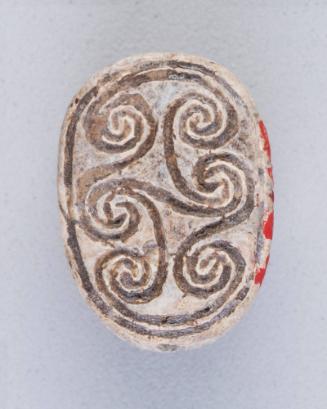
12th Dynasty (1991–1802 BCE)
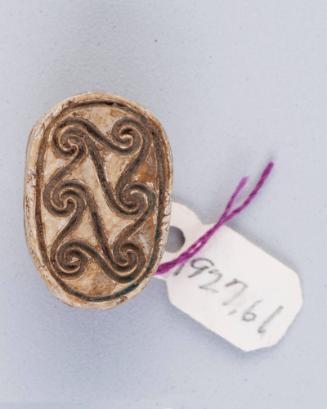
12th–18th Dynasties (1991–1292 BCE)
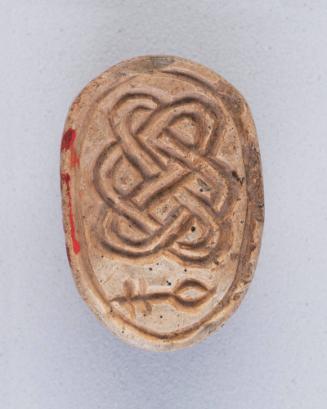
12th–18th Dynasties (1991–1292 BCE)
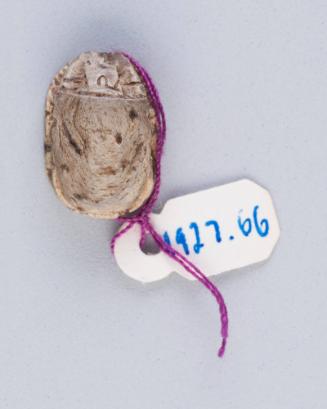
Hyksos, 17th-16th century BCE
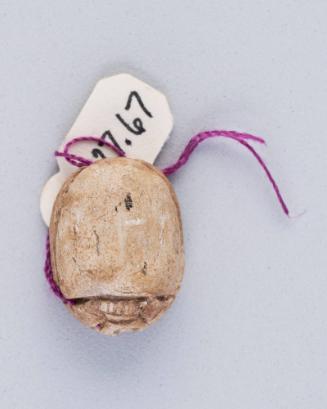
Possibly Hyksos, shortly before 1580 BCE
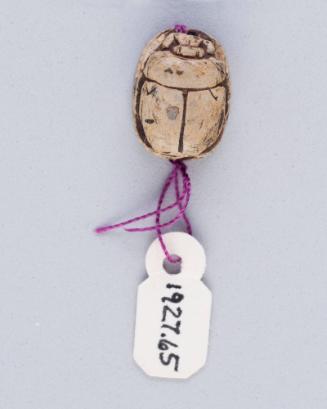
18th Dynasty (1550-1292 BCE), about 1400 BCE
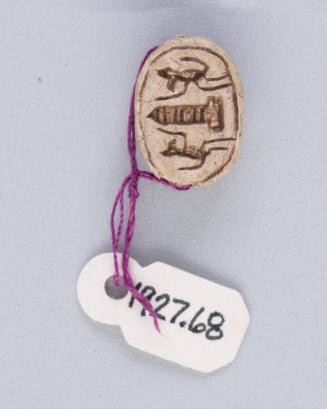
19th Dynasty or later (1292–30 BCE)
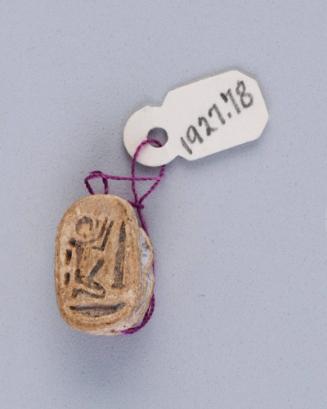
19th Dynasty (1292–1189 BCE)

18th Dynasty (1550-1292 BCE), about 1400 BCE

18th Dynasty (1550-1292 BCE), about 1381 BCE

19th Dynasty (1292–1189 BCE)
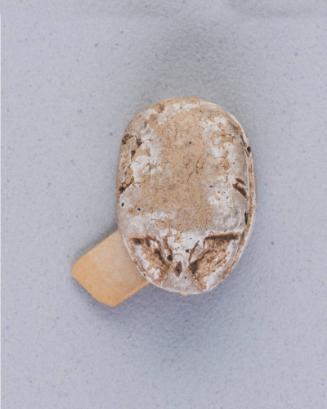
18th Dynasty (1550-1292 BCE), about 1500 BCE

Membership
Become a TMA member today
Support TMA
Help support the TMA mission