

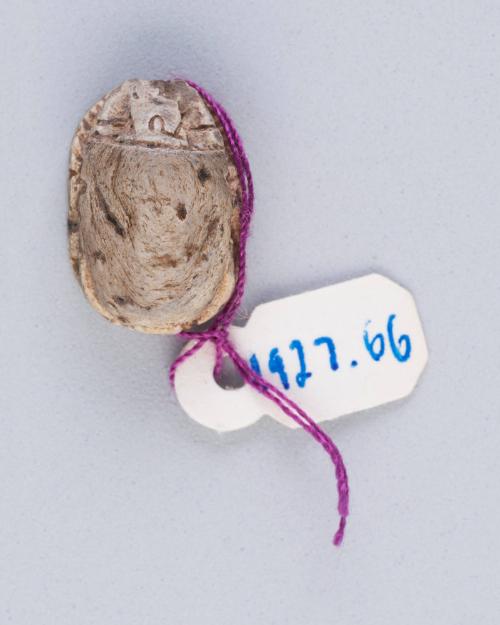
Scarab Seal with Antelope and Crocodile

Scarab Seal with Antelope and Crocodile
Place of OriginEgypt
DateHyksos, 17th-16th century BCE
DimensionsH: 5/8 in. (1.6 cm); W: 7/16 in. (1.1 cm); Depth: 5/16 in. (0.8 cm)
MediumSteatite; glazed.
ClassificationUtilitarian Objects
Credit LineGift of Henry W. Wilhelm
Object number
1927.66
Not on View
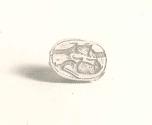
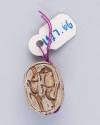
DescriptionA scarab-shaped seal carved from steatite. The back features a high prothorax with a straight horizontal cutting separating it from the head. The elytra (wing cases) are not divided by a suture line, though very slight nicks at the sides indicate the separation between the prothorax and elytra. The legs are coarsely indicated in relief with well-defined pairs; striations appear only on the upper surface of the front pair. The ground between the legs is cut away only slightly. The object is pierced lengthwise. The original glaze has deteriorated to a light gray-brown. The base features a deep intaglio design with cross-hatching.
Label TextThis small seal dates to the "Hyksos Period," a time when foreign rulers from the Near East controlled northern Egypt. The underside features a design of two animals—an oryx (antelope) and a crocodile—carved with a distinct cross-hatched texture. This style of decoration is unique to this era and represents a blend of Egyptian and Canaanite artistic traditions. The scarab would have been worn as a protective amulet, with the crocodile likely symbolizing the power needed to ward off danger.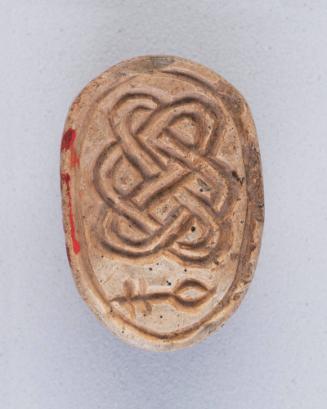
12th–18th Dynasties (1991–1292 BCE)
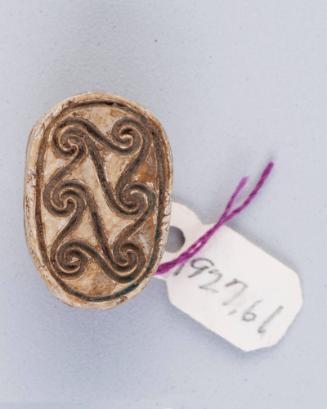
12th–18th Dynasties (1991–1292 BCE)
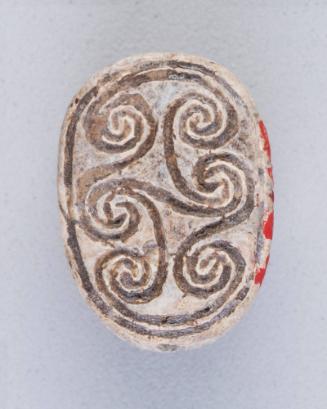
12th Dynasty (1991–1802 BCE)
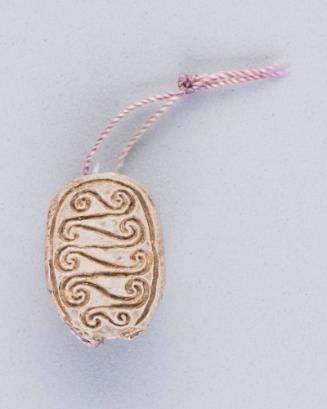
16th–18th Dynasties (1650–1292 BCE)
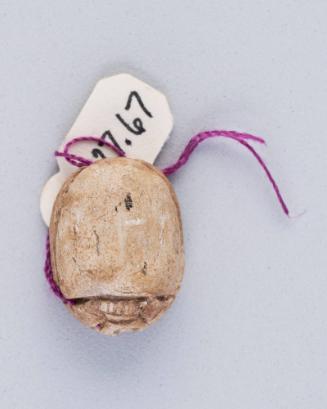
Possibly Hyksos, shortly before 1580 BCE
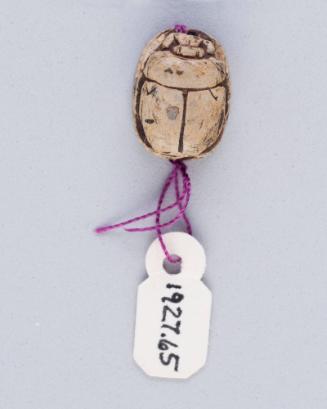
18th Dynasty (1550-1292 BCE), about 1400 BCE
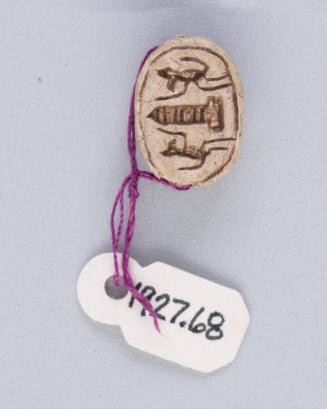
19th Dynasty or later (1292–30 BCE)
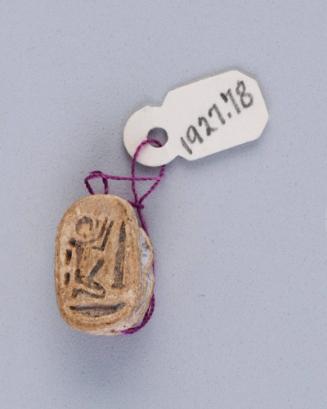
19th Dynasty (1292–1189 BCE)

18th Dynasty (1550-1292 BCE), about 1400 BCE
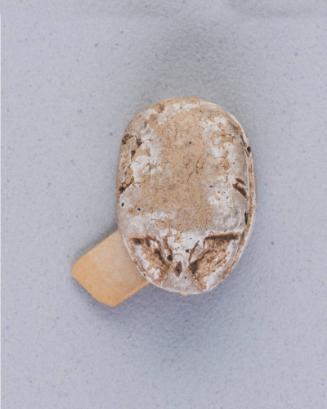
18th Dynasty (1550-1292 BCE), about 1500 BCE
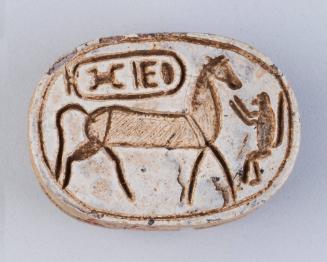
19th Dynasty (1292–1189 BCE)
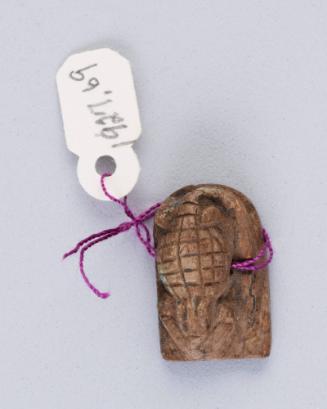
11th Dynasty (2130–1991 BCE)

Membership
Become a TMA member today
Support TMA
Help support the TMA mission