

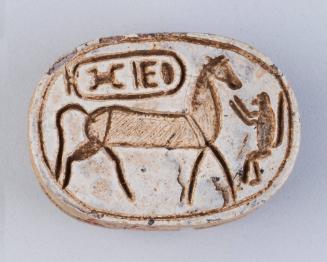
Scarab Seal with Geometric Pattern


Scarab Seal with Geometric Pattern
Place of OriginEgypt
DatePossibly Hyksos, shortly before 1580 BCE
DimensionsH: 5/8 in. (1.6 cm); W: 1/2 in. (1.2 cm); Depth: 1/4 in. (0.7 cm)
MediumSteatite; glazed.
ClassificationUtilitarian Objects
Credit LineGift of Henry W. Wilhelm
Object number
1927.67
Not on View
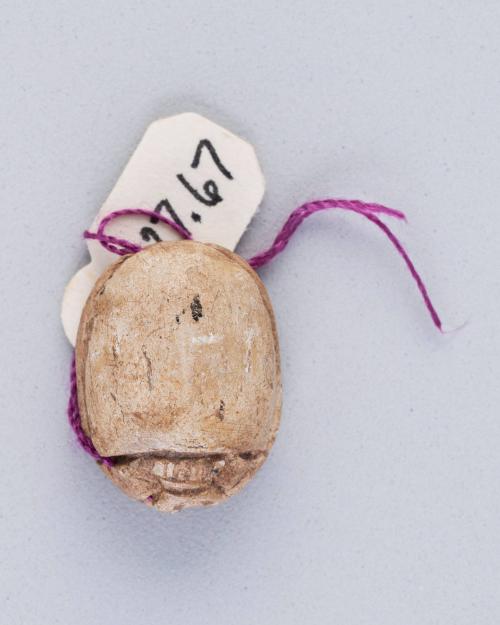
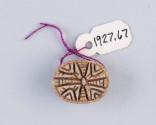
DescriptionA scarab-shaped seal carved from steatite. The back is of medium height and rather flat with a "conventionalized" or simplified appearance: the prothorax (pronotum) and elytra (wing cases) are unmarked, with no incised lines or nicks separating them. The legs are summarily rendered by a single relief line without striations or differentiation between pairs, except slightly at the rear. The object is pierced lengthwise. The original glaze has entirely deteriorated, leaving the surface a light brown color. The base features a deeply incised geometric design.
Label TextThis scarab dates to the "Hyksos Period," a time when Egypt was divided and ruled partly by Canaanite kings. The design on the underside is purely geometric, a style that became very popular during this era of cultural mixing. The beetle’s back is simplified, lacking the detailed wing markings found on earlier or later examples. It was likely used as a personal seal and a protective amulet, ensuring safety during uncertain times.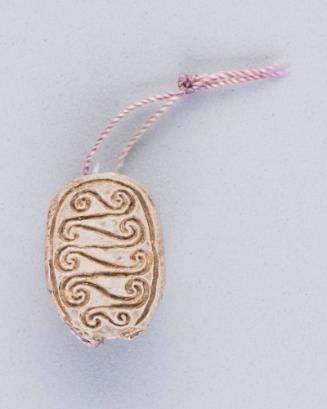
16th–18th Dynasties (1650–1292 BCE)
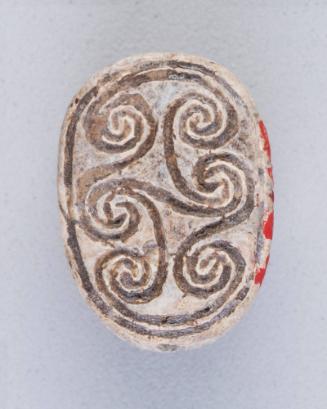
12th Dynasty (1991–1802 BCE)
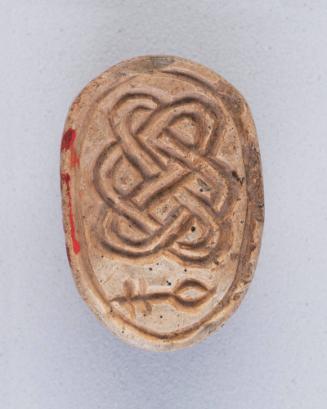
12th–18th Dynasties (1991–1292 BCE)
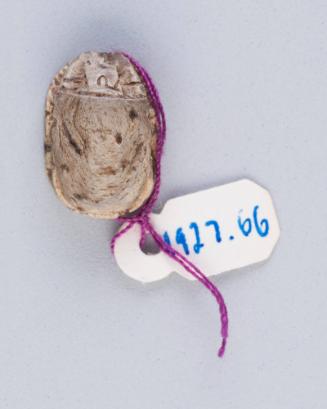
Hyksos, 17th-16th century BCE
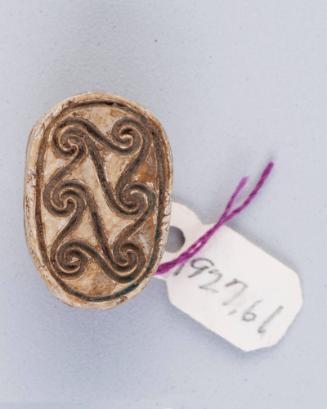
12th–18th Dynasties (1991–1292 BCE)
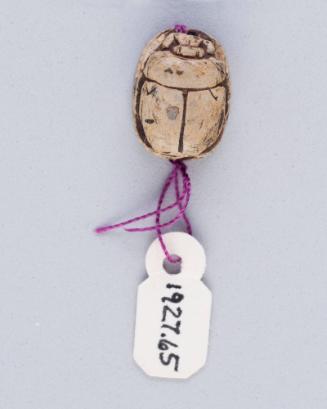
18th Dynasty (1550-1292 BCE), about 1400 BCE
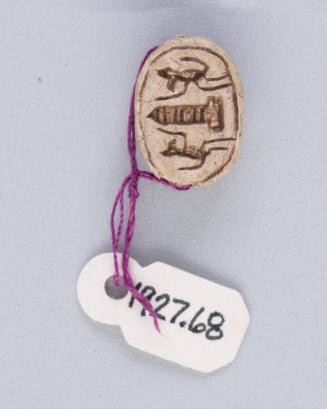
19th Dynasty or later (1292–30 BCE)
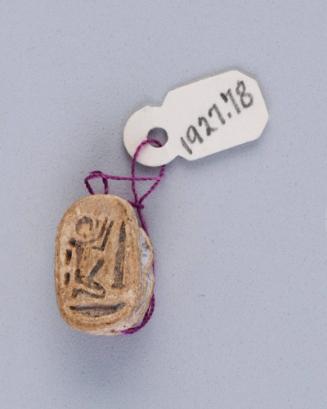
19th Dynasty (1292–1189 BCE)

18th Dynasty (1550-1292 BCE), about 1400 BCE
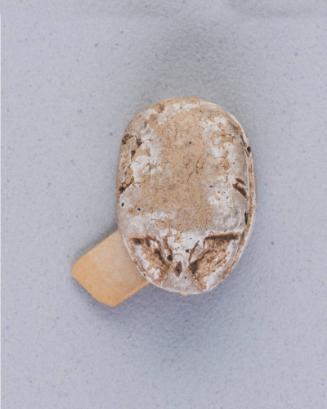
18th Dynasty (1550-1292 BCE), about 1500 BCE
19th Dynasty (1292–1189 BCE)

18th Dynasty (1550-1292 BCE), about 1381 BCE

Membership
Become a TMA member today
Support TMA
Help support the TMA mission