

Islamic Mosaic Bowl with White and Blue Pattern


Islamic Mosaic Bowl with White and Blue Pattern
Place of OriginSyria, reportedly from Hama
Date8th century
DimensionsH: 13/16 in. (2.1 cm); Lip Diam: 1 31/32 in. (5.0 cm)
MediumGlass, mold-fused and abraded
ClassificationGlass
Credit LinePurchased with funds from the Libbey Endowment, Gift of Edward Drummond Libbey
Object number
1951.377
Not on View
DescriptionA miniature bowl composed of mosaic glass. The vessel is constructed from fused sections of glass canes, creating a geometric checkerboard pattern. Dark sapphire-blue glass squares alternate with squares containing millefiori ("thousand flowers") or white geometric designs. The surface is highly polished, possibly a result of modern treatment. The vessel has a simple, hemispherical form with a slightly rounded bottom.
Label TextThis miniature bowl is a rare example of the "Abbasid Revival" of mosaic glass. While the technique of fusing multi-colored glass canes (millefiori) was perfected by the Romans, it was rediscovered and celebrated centuries later by Islamic glassmakers in Syria and Iraq (c. 8th–9th century). Unlike the floral swirls of earlier Roman glass, this vessel features a bold, geometric checkerboard pattern of dark blue and white squares, reflecting the mathematical precision often prized in Islamic art. Its tiny size suggests it may have held precious cosmetics, like kohl, or perhaps was intended to be set into a plaster wall as a glittering architectural decoration.1st century BCE - 1st century CE

1st century BCE - 1th century CE

Early 1st century CE
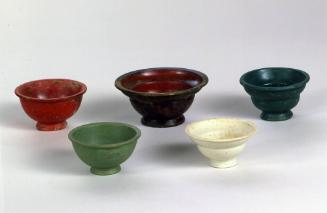
Early 1st century CE
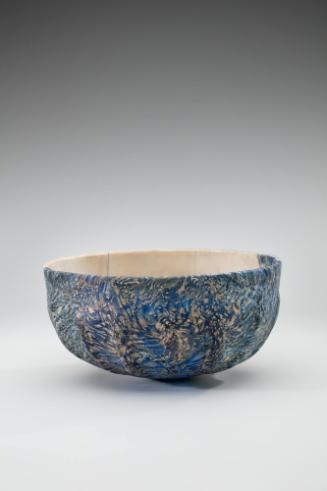
Late 1st century BCE to early 1st century CE
Late 1st century BCE to early 1st century CE
Late 1st century BCE to early 1st century CE
Early 1st century CE
Late 1st century BCE to early 1st century CE
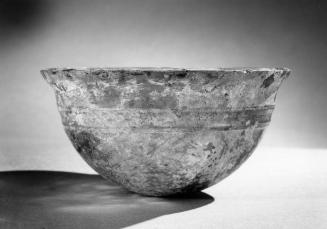
2nd-1st century BCE
Membership
Become a TMA member today
Support TMA
Help support the TMA mission