

Statuette of a Recumbent Lion
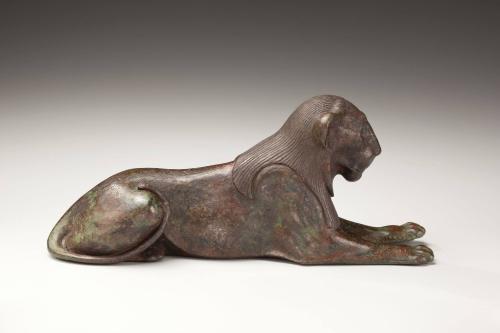


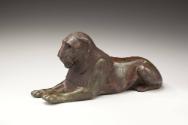
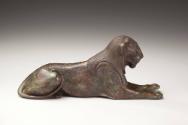
Statuette of a Recumbent Lion
Place of OriginEgypt, reportedly Damanhur (Hermopolis Mikra)
DatePtolemaic or Roman Period (350 BCE - 100 CE)
Dimensions5 1/8 × 4 1/8 × 11 3/8 in. (13 × 10.5 × 28.9 cm)
MediumCast bronze
ClassificationSculpture
Credit LinePurchased with funds from the Libbey Endowment, Gift of Edward Drummond Libbey
Object number
1950.9
On View
Toledo Museum of Art (2445 Monroe Street), Gallery, 02, Classic
DescriptionA cast bronze figure of a male lion depicted in a recumbent pose. The animal lies flat with both forepaws extended forward in parallel; the tail curves around the right haunch, resting on the distinct base. The head is held erect, featuring a stylized mane composed of incised, striated lines that form a ruff around the neck and extend down the chest. The facial features include a broad nose and deep, empty eye sockets which originally held inlaid materials (likely glass paste, copper, or silver). The ears are rounded and prominent. The underside of the lion is open with a large rectangular cavity, indicating it was originally attached to a larger architectural element or piece of furniture. The surface presents a dark brown metallic finish, having been chemically stripped of a heavy green patina in 1950.
Label TextThis majestic lion, with its attentive gaze and extended paws, was likely created to guard a sacred space. The hollow rectangular opening beneath its body suggests it was originally attached to a larger structure, such as the door bolt of a temple shrine or a piece of ceremonial furniture. The object's function is indicated by a large cavity on the underside, suggesting it served as a tenon or attachment point. It likely surmounted a shrine lock or decorated the corner of a naos (shrine) dedicated to a leonine deity. The provenance reported by the vendor, E.S. David, places the findspot at Damanhur (Hermopolis Mikra). However, Egyptologist John Cooney argued for an origin at Leontopolis (Tell al-Muqdam), the center of the cult of Maahes (Mahes), the lion-headed son of Bastet or Sekhmet.Published References"Fiftieth Anniversary," Toledo Museum of Art Museum News, no. 130, Nov.-Dec. 1951, repr.
Toledo Museum of Art, A Guide to the Collections, Toledo, 1966, repr. p. 4
Luckner, Kurt T., "The Art of Egypt, Part 2," Toledo Museum of Art Museum News, new series, vol. 14, no. 3, Fall 1971, p. 75, repr.
Peck, William H., Sandra E. Knudsen and Paula Reich, Egypt in Toledo: The Ancient Egyptian Collection at the Toledo Museum of Art, Toledo, Toledo Museum of Art, 2011, p. 90, repr. (col.).
Exhibition HistoryToledo Museum of Art, The Egypt Experience: Secrets of the Tomb, October 29, 2010-January 8, 2012.
Comparative ReferencesSee also Agyptische Altertumer aus der Skulpturensammlung Dresden, Staatliche Kunstsammlungen Dresden, Ausstellung im Albertinum, Mai 1977; p. 37, nos. 34-36, pls. 84-85.cf. Müller H.W., "Löwenskulpturen in der Ägyptischen Sammlung des Bayerischen Staats," Münchner Jahrbuch der Bildenden Kunst, Dritte Folge Band XVI, 1965, pp. 7-46.
cf. Jones, H. Stuart (ed.), A Catalogue of the Ancient Sculptures Preserved in the Municipal Collections of Rom, The Sculptures of the Museo Capitolino, Oxford, 1912, p. 358, nos. 8, 9, pl. 90, nos. 8, 9.
1st century BCE - 3rd century CE
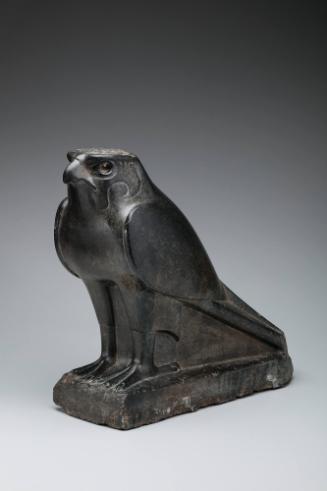
Ptolemaic Period (332–30 BCE)
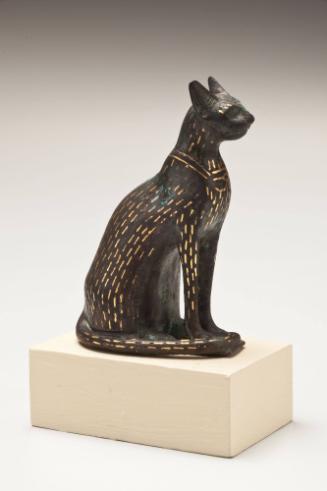
26th Dynasty (664–525 BCE), about 600 BCE
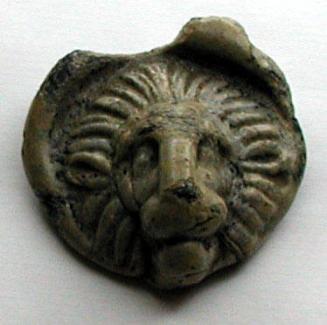
1st century BCE - 1st century CE
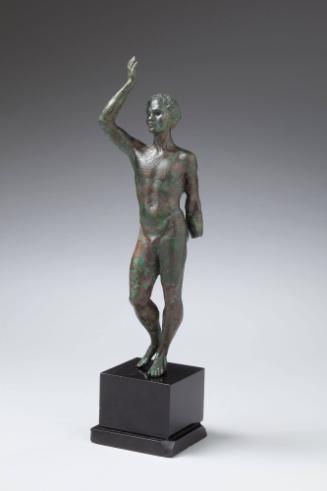
about 150-50 BCE
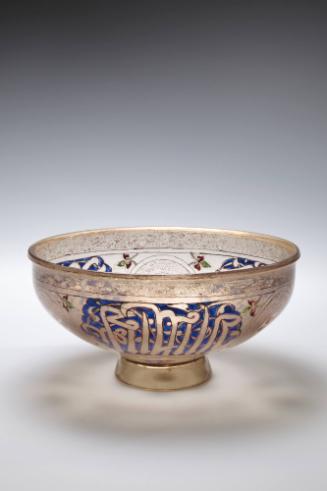
about 1350-1360
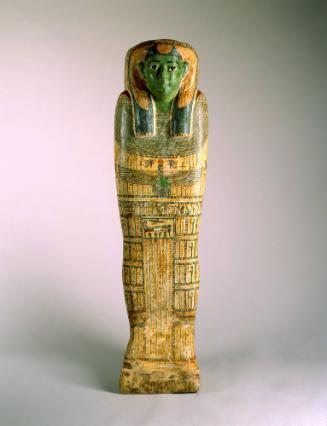
Late 2nd or early 3rd century CE
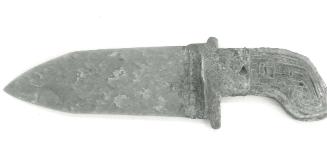
Shang Dynasty (1766-1045 BCE)

Membership
Become a TMA member today
Support TMA
Help support the TMA mission