

Statuette of a Cat Wearing an Amulet
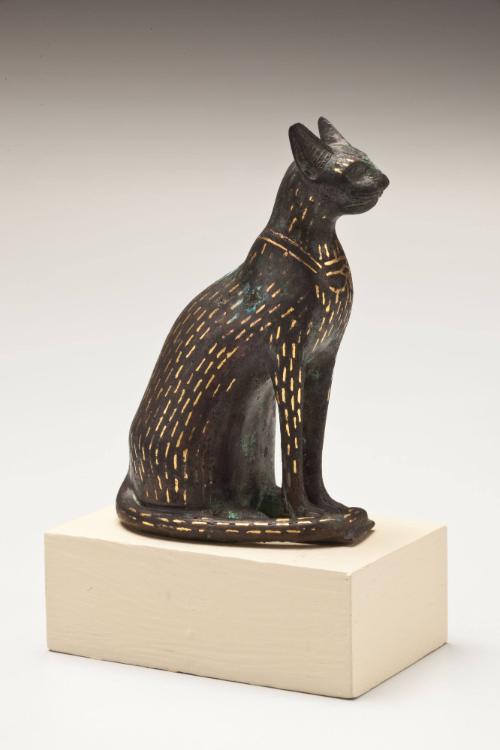


Statuette of a Cat Wearing an Amulet
Place of OriginEgypt
Date26th Dynasty (664–525 BCE), about 600 BCE
DimensionsH. 3 1/2 in. (8.9 cm)
MediumHollow cast bronze with gold and silver (?) inlay.
ClassificationSculpture
Credit LinePurchased with funds from the Libbey Endowment, Gift of Edward Drummond Libbey
Object number
1967.155
On View
Toledo Museum of Art (2445 Monroe Street), Gallery, 02, Classic
DescriptionA small, hollow-cast bronze figure of a domestic cat seated in a traditional frontal pose upon a shaped base. The cat's tail curls forward around the right side of the body, the tip resting near the forepaws. The surface is decorated with incised lines inlaid with precious metal (gold) to simulate fur, specifically on the chest, body, and tail. The figure wears an incised collar or necklace featuring a pendant in the form of a wedjat eye (Eye of Horus) suspended on a cord, also inlaid with gold. The ears are pierced, likely for earrings now lost. The eyes and potentially the inner ears contain traces of a different metal inlay, possibly silver or electrum, contrasting with the bronze. A tang extends from the underside of the base for attachment.
Label TextCats were sacred to the goddess Bastet and the statues representing her and her sacred animal are among the most appealing animal images to be preserved from ancient Egypt. Bastet protected pregnant women; she was also the pleasure-loving patron of music and dance. In this small statuette, inlaid with gold, her sacred animal wears an amulet in the shape of a wedjat (the eye of Horus) symbolic of completeness (a similar amulet is displayed in this case). Most Bastet cat statuettes served as votive offerings in shrines to the goddess or in tombs.Published References"La Chronique des Arts," Gazette des Beaux-Arts, vol. 75, no. 1213, Feb. 1970, repr. p. 44, no. 210.
Peck, William H., Sandra E. Knudsen and Paula Reich, Egypt in Toledo: The Ancient Egyptian Collection at the Toledo Museum of Art, Toledo, Toledo Museum of Art, 2011, p. 84, repr. (col.).
Comparative ReferencesSee also Fechheimer, Hedwig, Kleinplastik der Ägypter, Berlin, 1921, plate.cf. Posener, Georges, Dictionary of Egyptian Civilization, New York, 1959, p. 36f.

Ptolemaic or Roman Period (350 BCE - 100 CE)

Before 1880
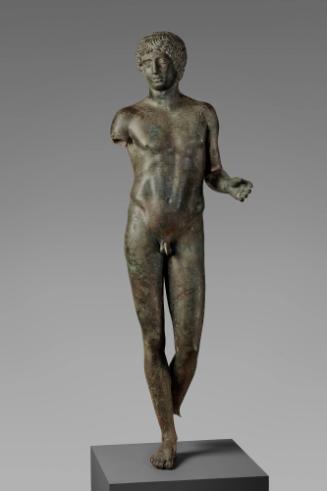
mid-2nd to early 3rd century CE (Severan?)

750-650 BCE

about 600 BCE
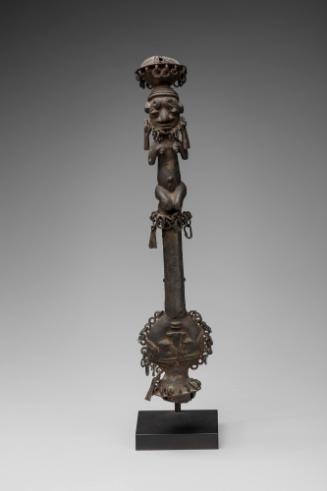
late 19th-early 20th century
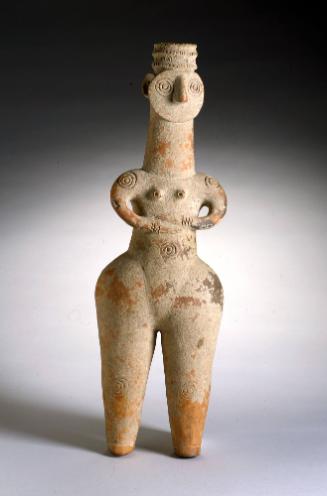
Early 1st millennium BCE

Workshop of the potter Nikosthenes
about 520 BCE
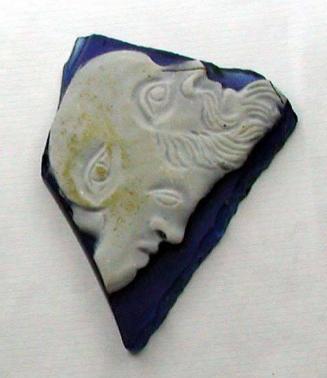
1st century BCE - 3rd century CE
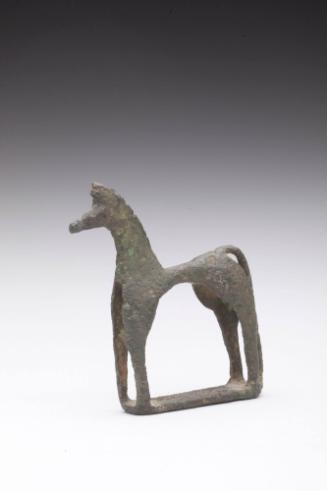
8th century BCE

3rd Century BCE


Membership
Become a TMA member today
Support TMA
Help support the TMA mission