

Bowl Inscribed for the Rasulid Sultan of Yemen

Bowl Inscribed for the Rasulid Sultan of Yemen
Place of OriginEgypt, Cairo
Dateabout 1350-1360
DimensionsH: 17 cm (6 11/16 in.); Diam: 36.8 cm (14 1/2 in.)
MediumGlass, blown, tooled on the pontil, enameled and gilded on the interior; applied foot
ClassificationGlass
Credit LinePurchased with funds from the Libbey Endowment, Gift of Edward Drummond Libbey
Object number
1944.33
Not on View
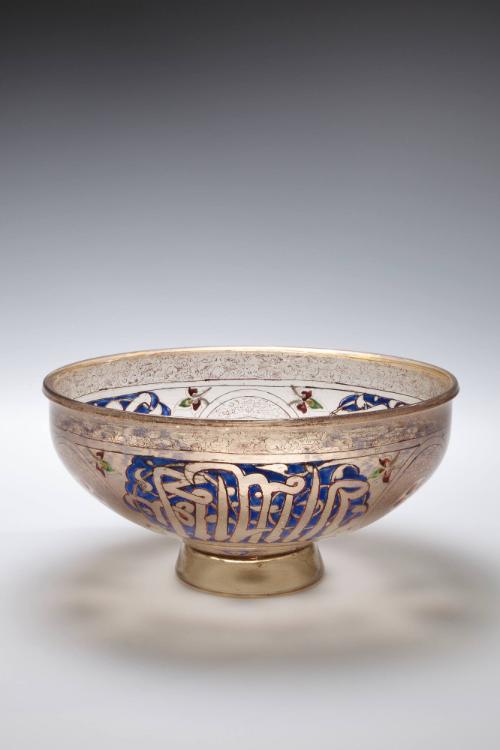
DescriptionThis large, deep bowl is blown from transparent glass with a warm, honey-colored tint. The surface is richly decorated with gold and colorful enamels in red, blue, white, green, and yellow. The most prominent feature is a bold inscription written in gold Arabic letters against three cloud-shaped panels of deep blue. These panels are separated by round medallions, each containing a red five-petaled rose (rosette). Narrow bands of gold near the rim and foot contain delicate drawings of scrolling vines and small birds. Unusually, the main inscription on the outside is written in reverse; it is designed to be read correctly only when looking down into the bowl from above. A final hidden detail lies on the underside of the base: a six-pointed star pattern containing a small painting of a lion attacking a gazelle.
Label TextThis bowl is one of the few surviving glass objects not dedicated to a sultan or emir of the Mamluk Empire (centered in Egypt), but to the ruler of a less powerful dynasty with strong diplomatic ties to the Mamluks. The Rasulids ruled a region that corresponds approximately to modern Yemen. They controlled access to the Red Sea from the south, and it was essential for the Mamluks to keep the trading route to and from the Indian Ocean open. The bowl was likely a diplomatic gift from Cairo and carries the Rasulid emblem of a five-petaled rosette. The prominent enameled inscription praises the Rasulid sultan al-Mujahid Ali ibn Dawud (ruled 1321–63). The inscription is legible correctly only if one looks directly at the interior of the bowl or if the inscription’s shadow is projected onto another surface below. It is possible, therefore, that the bowl was in fact a lamp suspended by a metal ring and chains.Published ReferencesLamm, Carl Johan, Mittelalterliche Gläser und Steinschnittarbeiten aus dem Nahen Osten, Berlin, Verlag für Kunstwissenschaft, 1929–30, vol. 1, p. 403; vol. 2, pl. 180:9.
Sotheby’s, The Eumorfopoulos Collections: Catalogue of the Collection of Persian Ceramics & Islamic Glass, Egyptian, Greek and Roman Antiquities, Choice Medieval & Renaissance Works of Art, London, Sotheby & Co., 1940, p. 55, lot 120.
Porter, Venetia, “The Art of the Rasulids,” in Yemen: 3000 Years of Art and Civilisation in Arabia Felix, edited by Werner Daum, Innsbruck/Frankfurt‑am‑Main/Amsterdam, Pinguin‑Verlag/Umschau‑Verlag, 1987, pp. 232–253.
Porter, Venetia, “Enameled Glass Made for the Rasulid Sultans of Yemen,” in Gilded and Enamelled Glass from the Middle East, edited by Rachel Ward, London, British Museum Press, 1998, pp. 91–95, fig. 21.4.
Carboni, Stefano, and David Whitehouse,Glass of the Sultans, New Haven, Corning/New York/Athens/New Haven, Metropolitan Museum of Art/Corning Museum of Glass/Benaki Museum/Yale University Press, 2001, pp. 266–268, cat. no. 132.
Page, Jutta-Annette, The Art of Glass: Toledo Museum of Art, Toledo, Ohio, Toledo Museum of Art, 2006, p. 68-70, repr. (col.) p. 68-69.
Reich, Paula, Toledo Museum of Art: Map and Guide, London, Scala, 2009, p. 15, repr. (col.)
Spallanzani, Marco, Vetri Islamici a Firenze nel primo Rinascimento, Florence, Studio Per Edizioni Scelte, 2012, repr. (col.) pp. 74-75. Blair, Sheila and Jonathan Bloom, eds., God is Beautiful and Loves Beauty: the Object in Islamic Art and Culture, New Haven, Yale University Press, 2013, repr. (col.) p. 207.
Exhibition HistoryNew York, The Hagop Kevorkian Fund Special Exhibitions Gallery, The Metropolitan Museum of Art, The Five-Petaled Rosette: Mamluk Art for the Sultans of Yemen, 1995-96.Tampa Museum of Art, Fort Wayne Museum of Art, Clearly inspired: Contemporary glass and its origins, 1990, p.19, 124, repr. (col.), p. 19, 101 and back cover (col.).
Corning Museum of Glass, New York, Metropolitan Museum of Art; Athens, Benaki Museum, Glass of the Sultans, 2001-2002, no. 132, p. 266-68, repr. 267 (side view, col.), p. 28 (interior, col.)

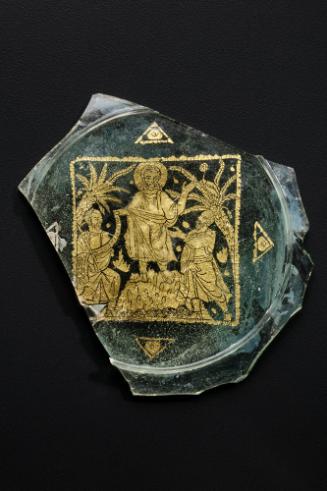
about 370-400 CE
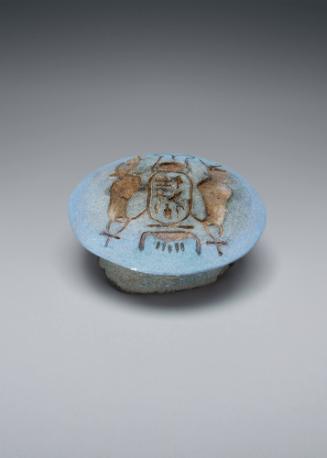
18th Dynasty (1550-1292 BCE), about 1347-1338 BCE
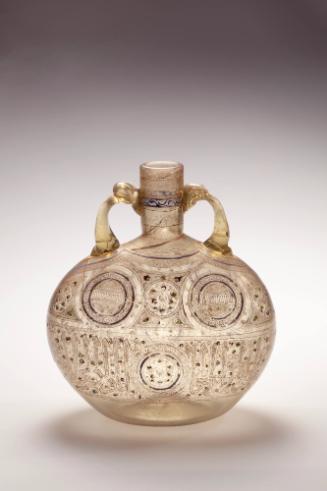

19th Dynasty (1292–1189 BCE)



Membership
Become a TMA member today
Support TMA
Help support the TMA mission