

Mosque Lamp of Nasir al-Din Muhammad
Image Not Available
for Mosque Lamp of Nasir al-Din Muhammad

Mosque Lamp of Nasir al-Din Muhammad
Place of OriginEgypt, Cairo
Date1331-1335
DimensionsH: 10 13/16 in. (27.5 cm); Rim Diam: 8 in. (20.3 cm)
MediumGlass; blown, with enamelled and gilded decoration
ClassificationGlass
Credit LinePurchased with funds from the Libbey Endowment, Gift of Edward Drummond Libbey
Object number
1940.118
Not on View
DescriptionA blown glass vessel featuring a wide, flaring neck, a bulbous body, and a high, splayed foot. The body is fitted with six applied glass suspension loops. The surface is densely decorated with polychrome enamels in blue, red, green, yellow, white, and pink, alongside gilding. The shoulder is encircled by a band of polylobed rosettes containing floral motifs and heart-shaped leaves. The main body displays a second large calligraphic register broken into six segments by the suspension loops, set against a background of scrolling vines and leaves. The lower section of the body and the foot are detailed with thinner bands of arabesques, roundels containing lotus blossoms, and geometric interlacings.<p>
The monumental Thuluth script on the neck and body provides the historical data necessary to date the object. The inscription translates: Neck: "This is one of the objects made for the child [son] of His High Excellency, our honored and well-served Lord Nasir al-Din Muhammad, [son of] His late High Excellency..." Body: "...Arghun, the Dawadar of al-Malik al-Nasir. May Allah, the Exalted, cover them with His mercy." The text identifies the owner as Nasir al-Din Muhammad, the son of Arghun al-Nasiri. Arghun served as the Dawadar (Secretary or Bearer of the Royal Inkwell) to Sultan al-Malik al-Nasir Muhammad ibn Qalawun. The inclusion of the honorific "the Late" (al-marhum) regarding Arghun indicates the lamp was produced after his death in 1331. As Nasir al-Din Muhammad died only four years later, the lamp can be securely dated to the brief window of 1331–1335.
Label TextElaborate lamps such as this were made to light tombs, mosques, madrasas (schools) and hospices. They were highly prized and probably rarely used. A small metal receptacle filled with oil was suspended inside the glass globe from the neck; the entire lamp would then be hung from the ceiling by chains through the loops around its body. The elaborate inscription running around the neck suggests that the lamp was made for Shams al-Din ‘Ali: “One of the things made for the son of the sublime excellency, the master, the revered, the masterful, [officer] of al-Nasir, Nasir al-Din Muhammad, [son of] the excellency.” The extensive use of gilding (much of it now worn away) as a background for the calligraphy and the use of pink—a rare enamel color—are exceptional in Mamluk glass.Published ReferencesDevonshire, "Some Moslem Objects in the Eumorfopoulos Collection," Apollo, January 1927, pp. 14-15.
Wiet, Gaston, Catalogue General du Musee Arabe du Caire, Lamps et Bouteilles en Verre Emaille, Egypt, 1929, p. 162.
Revaisse, P., Une Lampe Sepulcrale en Verre Emaille au nom D'Arghun En-Nasari, Paris, Geuthner, 1931, pp. 8, 10.
Wiet, Gaston, "Les Lamps d'Arghun," Syria, vol. XIV, 1933, pp. 203-206.
Mayer, A.L., "Note," Journal of the Palestine Oriental Society, vol. XIII.
Reifstahl, Rudolf M., "Ancient and Near Eastern Glass," Toledo Museum of Art News, New Series, Spring 1961, vol. 4, no. 2, repr. p. 45.
Reifstahl, Rudolf M., "The Complexities of Ancient Glass," Apollo, vol. 86, no. 70, December 1967, p. 437, repr. (col.) p. 435, pl. VI.
Labino, Dominick, Visual Art in Glass, Dubuque, 1968, pp. 36, 37, repr. fig. 23.
Art in Glass: A Guide to the Glass Collections, Toledo, Toledo Museum of Art, 1969, repr. (col.) p. 34.
Horowitz, Frederick A., More Than You See: A Guide to Art, New York, 1985, repr. p. 229.
Stewart, Marilyn G. and Eldon Katter, A Personal Journey, second edition, Worcester, MA, Davis Publications, 2009, repr. (col.) p. 111, fig. 4-22.
Exhibition HistoryDetroit Institute of Arts, Mamluk Art in Regional Collections, 1982.
![[IAv': Stikhi]](/internal/media/dispatcher/74730/thumbnail)

11th Century


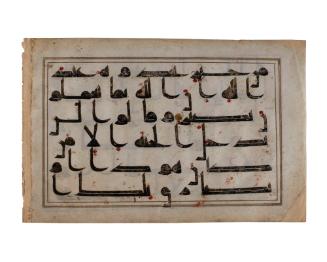
9th Century (Abbasid Period)
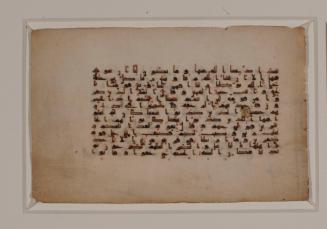
early 9th Century
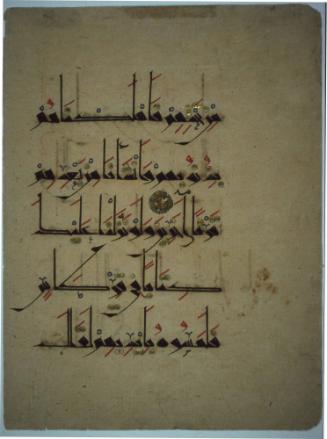
11th Century
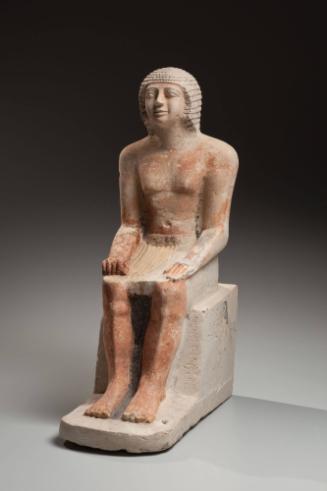
6th Dynasty (2345-2181 BCE)

Membership
Become a TMA member today
Support TMA
Help support the TMA mission