
Vase in the Form of a Lamp


Vase in the Form of a Lamp
Place of OriginIran, found at Gonbad-e Kāvūs (Gorgan)
Dateabout 1100
DimensionsH: 5 3/4 in. (14.7 cm); Max Diam: 3 3/4 in. (9.6 cm); Rim Diam: 2 5/8 in. (6.6 cm); Base Diam: 1 15/16 in. (4.9 cm)
MediumGlazed earthenware.
ClassificationCeramics
Credit LineMuseum Purchase
Object number
1971.148
Not on View
DescriptionThis earthenware vessel is shaped to resemble a hanging lamp. It features a bulbous body resting on a flared foot. The neck is wide and flaring, characterized by a series of openwork or pierced heart-shaped decorative cutouts around the upper rim. Two small, secondary spouts or handles are attached to the shoulder of the body. The entire exterior is covered in a green-toned glaze. There is evidence of slight surface iridescence caused by burial and two small chips are present on the rim.
Label TextThis turquoise vessel mimics the shape of a mosque lamp but functions as a vase or decorative object. It features a pierced neck and three smaller vessel-spouts attached to the shoulder. It was reportedly found in Gonbad-e Kāvūs, a region in northeastern Iran famous for its ceramic production during the Seljuq period. The site is located near the ancient city of Gorgan (Jurjan), a major center of trade and artistry that was destroyed during the Mongol invasions of the 13th century. The vibrant blue glaze is characteristic of wares produced in this region. This vessel was acquired in 1971 from the dealer Mohammed Yeganeh in Frankfurt.Comparative ReferencesSee also Wilkinson, Charles K., Iranian Ceramics, (exhibition: Asia House Gallery), New York, 1963, pls. 38, 60.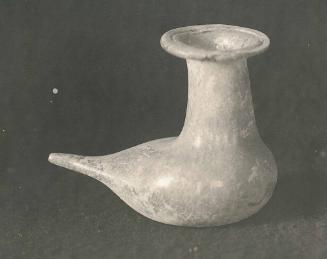
1st-2nd century CE
11th Dynasty (2130–1991 BCE)
New Kingdom Period
18th Dynasty (1550-1292 BCE), about 1350 BCE

25 CE- 220 CE
Probably mid-1st century

Han Dynasty (206 BCE-220 CE)
about 2400 - 2000 BCE
1st-2nd century CE
11th century

50 BCE-50 CE

Probably 1810-1850
Membership
Become a TMA member today
Support TMA
Help support the TMA mission