

Section of Mosaic Cane

Section of Mosaic Cane
Place of OriginEgypt
Date3rd to 1st century BCE
DimensionsH: 3/4 in. (1.9 cm); W: 3/4 in. (1.9 cm); Thickness:1/16 in. (0.2 cm)
Mediumglass
ClassificationGlass
Credit LineGift of Edward Drummond Libbey
Object number
1923.256
Not on View
DescriptionSquare section of mosaic cane composed of fused polychrome glass. The design shows a flower with four heart-shaped petals, each formed from opaque yellow and opaque white glass tipped in opaque red. The floral motif is set against a colorless ground streaked with purple. The upper and underside surfaces are flat, while the vertical edges are rough. The piece was cast and polished following assembly from colored canes.
Published ReferencesGrose, David F., Early Ancient Glass: Core-Formed, Rod-Formed, and Cast Vessels and Objects from the Late Bronze Age to the Early Roman Empire, 1600 B. C. to A. D. 50, New York: Hudson Hills Press in association with the Toledo Museum of Art, 1989, cat. no. 632, p. 363.3rd to 1st century BCE
3rd to 1st century BCE

3rd to 1st century BCE
3rd to 1st century BCE
3rd to 1st century BCE
1st century BCE (Ptolemaic?)
1st century BCE - 1th century CE
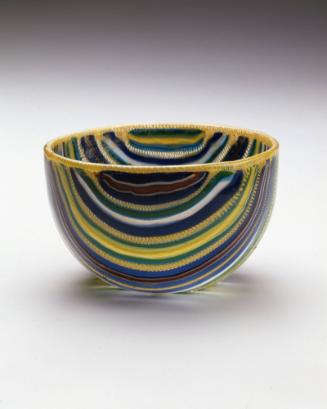
Late 1st century BCE - Early 1st century CE
3rd to 1st century BCE
Early Imperial Period, 1st century BCE - 3rd century CE

Membership
Become a TMA member today
Support TMA
Help support the TMA mission