

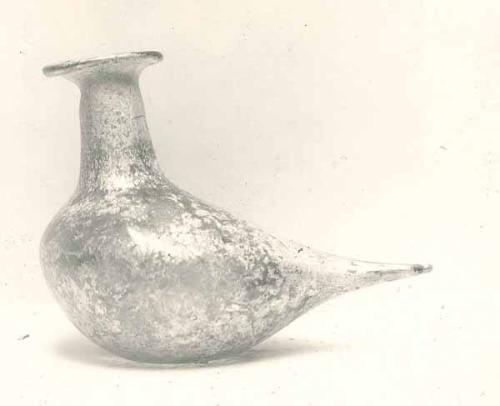
Bird-Shaped "Baby Feeder" (Dropper)

Bird-Shaped "Baby Feeder" (Dropper)
Place of OriginSyro-Palestinian Coast
Date1st-2nd century CE
DimensionsH: 2 7/8 in. (7.3 cm); Rim Diam: 1 1/8 in. (2.8 cm); Body Diam: 1 15/16 in. (5.0 cm)
MediumGlass; free blown and tooled
ClassificationGlass
Credit LineGift of Edward Drummond Libbey
Object number
1923.1227
Not on View
DescriptionThis bird-shaped vessel, classified as a free-blown and tooled glass filler, is made of medium thin transparent natural pale green glass (5 G 7/2) containing small bubbles. Shaped to resemble a bird, it features a large round opening where the head would have been, an everted rim folded outward, downward, upward, and inward, a tall cylindrical neck with a curved transition to the shoulder, and a bulbous triangular body with a short tail pierced lengthwise through the tip and rounded in flame. The base is flattened and the piece was formed without a pontil mark.
Label TextThis charming vessel, blown from pale green glass, takes the abstract form of a bird. While its shape is whimsical, its function was strictly practical. The tail of the bird is pierced with a tiny hole, allowing liquid to be dispensed in drops or a fine stream. Archaeologists and art historians have long debated the specific use of such vessels, often called guti. Early theories suggested they were infant feeders or "nursing bottles." However, given the fragility of the glass and the narrowness of the spout, it is now more commonly believed they served as fillers for oil lamps or droppers for medicinal liquids, expensive oils, or perfumes.Published ReferencesPuma, Richard Daniel de, Art In Roman Life: Villa to Grave, Rome, L'erma di Bretschneider, 2009, p. 130, no. 175.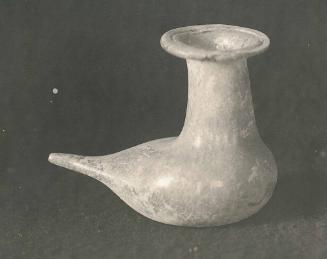
1st-2nd century CE
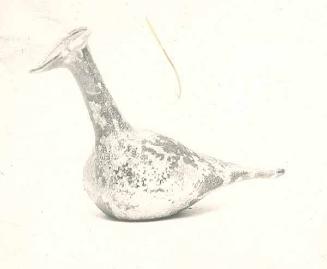
1st-2nd century CE
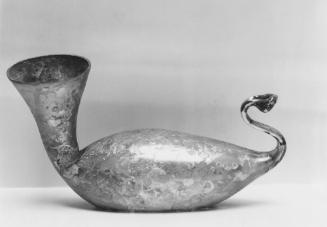
1st-2nd century CE
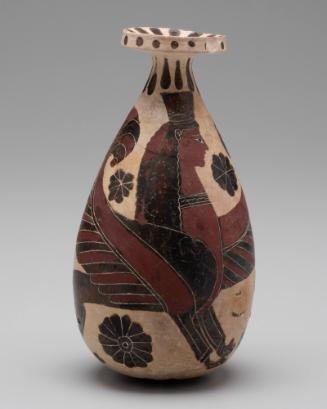
A painter near the Double-bodied Sphinx Painter
about 625 BCE
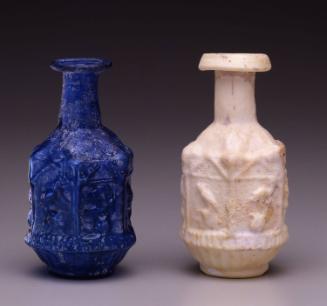
Probably second quarter of 1st century
1st-2nd century CE

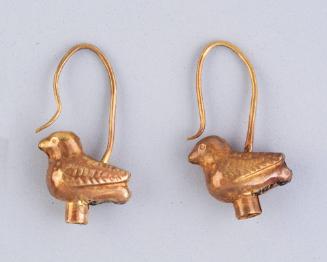
about 2nd century BCE
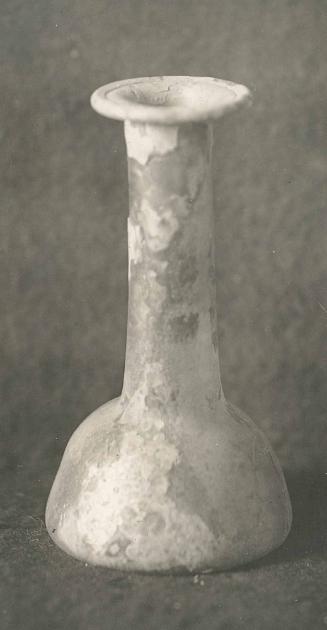
probably 2nd century CE
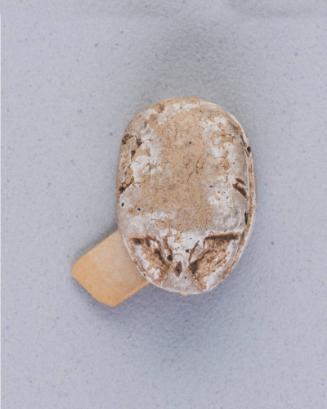
18th Dynasty (1550-1292 BCE), about 1500 BCE


Membership
Become a TMA member today
Support TMA
Help support the TMA mission