

Bird-Shaped "Baby Feeder" (Dropper)
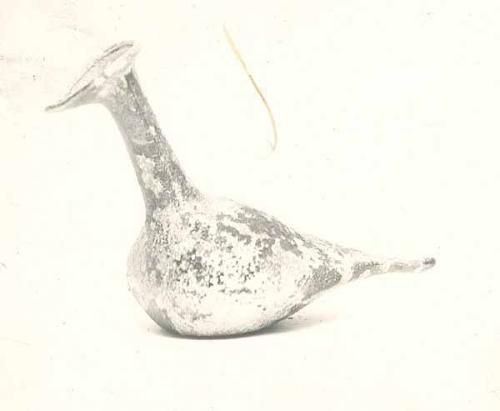

Bird-Shaped "Baby Feeder" (Dropper)
Place of OriginEastern Mediterranean
Date1st-2nd century CE
DimensionsH: 2 3/4 in. (7.0 cm); Rim Diam: 1 1/16 in. (2.7 cm); Body Diam: 1 1/2 in. (3.8 cm)
MediumGlass; free blown; tooled
ClassificationGlass
Credit LineGift of Edward Drummond Libbey
Object number
1923.1228
Not on View
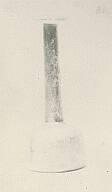
DescriptionThis bird-shaped vessel, classified as free-blown and tooled glass, is made of thin translucent to transparent manganese-colored glass with a pale green streak and weathering that makes the fabric undetermined. The vessel takes the form of a bird with a large spouted opening where the head would be, an everted rim rolled inward, and a tall, slightly tapering neck that transitions to a bulbous body. The short horizontally flattened tail is pinched at the tip and possibly pierced vertically. The base is flattened with a depression in the center.
Label TextThis charming vessel, blown from manganese-purple glass, takes the shape of a bird, a form known in antiquity as an askos (wineskin). While the shape is whimsical, its specific function remains a subject of debate among archaeologists. Historically categorized as a "baby feeder" (gutus) due to its spout, recent research suggests the opening is too narrow for viscous foods. It is more likely that this flask was used as a precise filler for oil lamps or a dropper for medicinal liquids. The iridescent sheen on the surface is not original; it is the result of natural weathering of the glass over centuries of burial.Published ReferencesHayes, John W., Roman and Pre-Roman Glass in the Royal Ontario Museum, Toronto, 1975, p. 54, no. 118. (A close parallel dated "probably c. A.D. 50-150").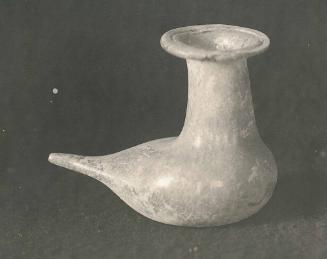
1st-2nd century CE
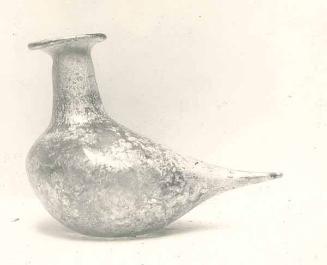
1st-2nd century CE
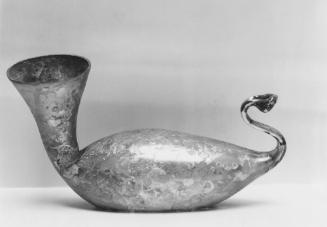
1st-2nd century CE

Perhaps late first or 2nd century
3rd-4th century CE

Late 2nd to mid-3rd century

Late 2nd to mid-3rd century
Late second to mid-3rd century

Membership
Become a TMA member today
Support TMA
Help support the TMA mission