
Patera (Libation Bowl) with Handle in the form of a Kouros
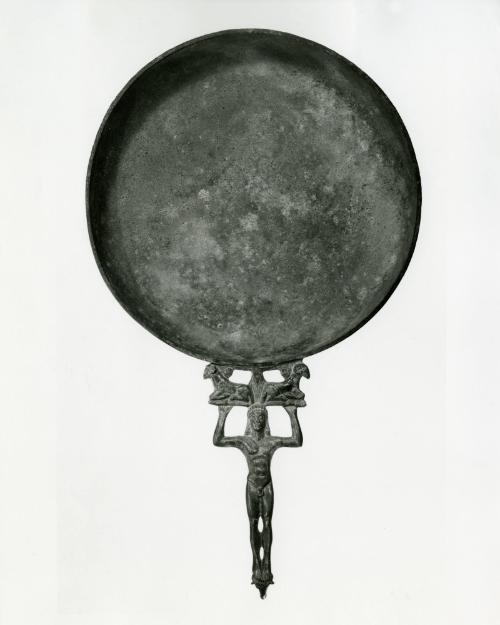

Patera (Libation Bowl) with Handle in the form of a Kouros
Place of OriginSouth Italy, attributed to Lokroi (Locri Epizefiri) or Rhegion
Dateabout 500 BCE
DimensionsH (max) 18 7/8 × H (handle) 8 1/2 × W (max) 11 1/8 × D (max) 1 5/8 × Diam (patera) 11 1/8 in. (47.9 × 21.6 × 28.3 × 4.1 × 28.3 cm)
MediumBronze (hammered bowl; solid cast and incised handle).
ClassificationMetalwork
Credit LinePurchased with funds from the Libbey Endowment, Gift of Edward Drummond Libbey
Object number
1967.130
On View
Toledo Museum of Art (2445 Monroe Street), Gallery, 02, Classic
DescriptionA shallow vessel composed of a hammered bronze bowl with a flat base and slightly outcurving walls, attached to a solid cast bronze handle. The handle takes the form of a nude youth (kouros) standing on a ram's head. The figure supports the rim of the bowl with upraised arms and the top of his head. Between the youth's head and the bowl is an openwork (à jour) relief section depicting two addorsed rams facing outward, seated on a base molding with thickened ends; behind each ram’s head is a volute, and a sketchily engraved palmette sits between them. On the reverse of the attachment plate, an engraved palmette surmounts a double volute. The youth is depicted with a slim torso, taut musculature, and long legs defined by deep lines separating them from the torso. His hair is styled in double waves over the forehead and horizontally hatched on the sides; on the back, the hair is incised with thick vertical strands. The bowl rim is flat and approximately 4 mm wide.
Label TextThis bronze phiale (or patera) represents a high point of metalwork from Magna Graecia (South Italy) at the turn of the 5th century B.C. The object is constructed in two parts: a hammered bronze bowl with a flat base and a solid cast bronze handle. The handle is fashioned as a nude kouros, a standard type of Archaic youth, serving as a caryatid. The youth stands with feet resting on a ram's head, while his upraised hands and head support an openwork connecting plate featuring two addorsed rams. The iconography of the ram is prevalent in such vessels, potentially alluding to the sacrificial animals associated with the libations poured from the bowl, or perhaps Hermes, the patron of herdsmen. Stylistically, the piece is attributed to workshops in Rhegion or Lokroi. The figure displays characteristics typical of Western Greek art, including a long face and specific proportional treatments of the legs and torso.Published ReferencesMünzen und Medaillen A.G., Kunstwerke der Antike: Auktion 34, Basel, May 6, 1967, p. 7, no. 6, illus. p. 2.
Toledo Museum of Art, "Treasures for Toledo," Toledo Museum of Art Museum News, new series, vol. 12, no. 4, Winter 1969, repr.
Hayes, John W, Greek, Roman, and Related Metalware in the Royal Ontario Museum: A Catalogue, 1984, p. 18.
Comparative ReferencesSee also Gjödesen, Mogen, "Bronze paterae with anthropomorphous handles," Acta Archaeologica, 15, 1944, 101 ff.cf. Jantzen, U., "Griechische Griffphialen," 114 Berliner Winkelmanns-program, 1958.
cf. Schefold, Meisterwerke Griechischer Kunst, 1960, 180 and Jantzen, Griffphialen 24 ff, pl. 17-18; Munich, Antikensammlung 3533 (Gjödesen no. 53), pl. 19-20; Karlsruhe (Gjödesen no. 69).
cf. Münzen und Medaillen AG Basel, auction 34, May 6, 1967, no. 6, repr.
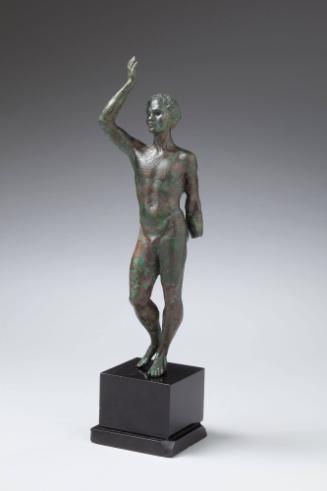
about 150-50 BCE
1st century BCE - 3rd century CE

Late 6th-5th century BCE
about 15 BCE - 25 CE (Roman, Augustan)
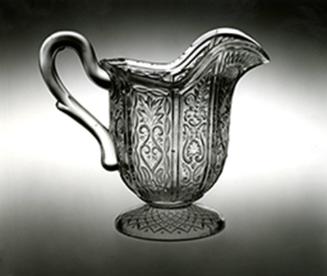

7th century BCE or later

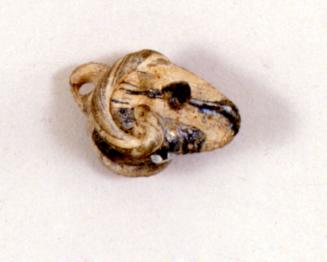
Late 6th through 5th century BCE
1st century BCE - 3rd century CE
6th-5th century BCE

Membership
Become a TMA member today
Support TMA
Help support the TMA mission