

Bell Krater with Seated Woman and Youth

Bell Krater with Seated Woman and Youth
Place of OriginItaly, Apulia
Dateabout 350-325 BCE
DimensionsH: 10 1/2 in. (26.7 cm); Rim Diam: 11 5/8 in. (29.5cm); Base Diam: 5 3/4 in. (14.6 cm)
MediumEarthenware, wheel-thrown, decorated in the red-figure technique.
ClassificationCeramics
Credit LineGift of the Popplestone Family
Object number
2006.87
Not on View
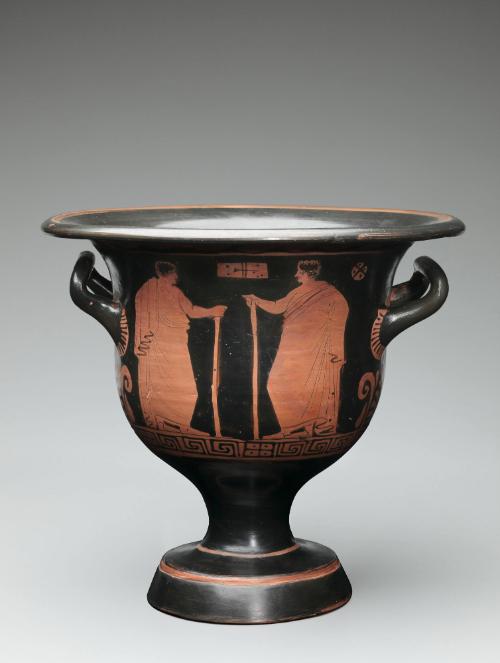
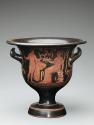
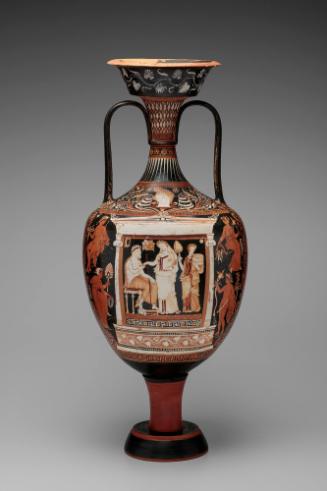
DescriptionA wheel-thrown ceramic bell krater decorated in the red-figure technique. The obverse depicts a female figure seated on a stylized stack of rocks, wearing a chiton and holding a thyrsos and phiale; she faces a nude male youth who stands holding a thyrsos and offering a wreath. A fillet hangs in the field between them. The reverse displays two standing youths draped in himations, leaning on staffs, with a diptych (writing tablet) suspended between them. The rim is decorated with a laurel wreath band, and a meander pattern with dotted cross-squares runs below the figural scenes. Palmettes with scrolling tendrils decorate the areas beneath the handles.
Label TextThis mixing bowl for wine and water (bell krater) illustrates the vibrant ceramic tradition of Magna Graecia (Greek-colonized Southern Italy). The front scene depicts a courtship or ritual offering within the circle of Dionysus, the god of wine. A young man, possibly a satyr, offers a wreath to a seated woman holding a thyrsos (fennel stalk staff) and a phiale (shallow bowl for pouring liquid offerings). The stylized stack of rocks she sits upon is a common artistic shorthand for an outdoor setting. On the back, two draped youths stand in conversation near a hanging writing tablet (diptych), a symbol of education and civic training. Such imagery reflected the values of the local elites who used these vessels at their drinking parties (symposia) and often placed them in tombs to ensure a blessed afterlife.Published ReferencesFragments of Time, Art from the Ancient World XII (2001) no. 19.

1st-2nd century CE

about 15 BCE - 25 CE (Roman, Augustan)



6th century BCE
Unidentified, Gorgoneion Group
about 560 BCE
about 540 BCE

Membership
Become a TMA member today
Support TMA
Help support the TMA mission