

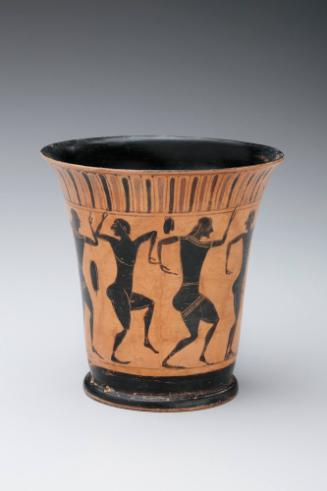
Mixing Bowl (Column Krater) with Dancing Satyrs
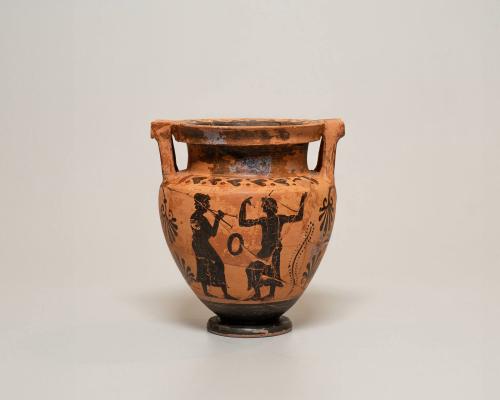

Mixing Bowl (Column Krater) with Dancing Satyrs
Artist
Painter of the Group of Munich 892
(Etruscan, active c. 500-475 BCE)
Period
Early Etruscan
(Etruscan, 9th century-4th century BCE)
Place of OriginItaly, excavated near Bisenzio (Bolsena)
Date470-460 BCE
Dimensions9 7/8 × 9 in. (25.1 × 22.9 cm)
Mediumearthenware
ClassificationCeramics
Credit LineGift of Edward Drummond Libbey
Object number
1912.1240
Not on View
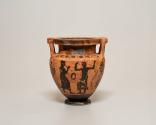
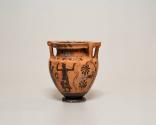
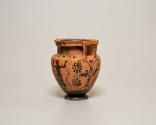
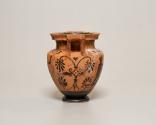
DescriptionA wheel-thrown ceramic column krater characterized by a wide mouth, flat rim with handle plates, and a tapered body resting on a stepped foot. The vessel features figural decoration in the black-figure technique, although the surface is heavily compromised by modern repainting. Side A depicts a thiasos scene with a dancing satyr gesturing towards a draped female figure (Maenad). Side B depicts two female figures, one playing the double-aulos (flute) and the other dancing. The handle plates and rim are decorated with vegetal and geometric motifs, including ivy vines and palmettes.
Label TextThis vessel was designed for the symposium, a ritualized drinking party adopted by the Etruscans from the Greeks. The painted scenes—dancing satyrs and flute-playing women—evoke the ecstatic energy of the wine god Dionysos (known to the Etruscans as Fufluns). For the Etruscans, these images were not merely festive decoration; when placed in tombs, they symbolized a promise that the deceased would enjoy an eternal banquet in the afterlife. This krater was likely unearthed during the 1880s excavations led by Napoleone Brenciaglia at Bisenzio (ancient Visentium), a major Etruscan city on the shores of Lake Bolsena. Brenciaglia, a local landowner and politician, sponsored extensive digs that brought Etruscan culture to light. Before reaching Toledo in 1912, the vase underwent a restoration, where a modern hand overpainted figures to "complete" the vessel for the art market—a practice that is now part of its historical journey.Published ReferencesSchwarz, S.J., "A Vulci Vase in the Getty Museum," in Greek Vases in the J. Paul Getty Museum, Malibu, 1983, p. 125, nr. 9 (attributed to Group of Munich).
Henriksson, Britten, Satyrs in Etruria. A study of a theme on Etruscan black-figure vases, Göteborg, 2007, revised 2008, pl. 67, n. 3.58.
Comparative ReferencesCf. Bischeri, Mattia, Gli scavi Paolozzi-Brenciaglia del 1884-1885 a Bisenzio. Materiali dai Musei Nazionali di Firenze, Chiusi e Arezzo, Pisa, Edizioni ETS, 2022.Cf. Bischeri, Mattia, “La collezione di antichità di Napoleone Brenciaglia a Capodimonte,” Ocnus. Quaderni della Scuola di Specializzazione in Beni Archeologici, vol. 30, 2022, pp. 9–32.
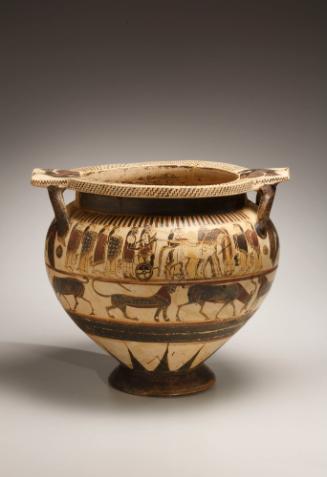
Unidentified, Gorgoneion Group
about 560 BCE
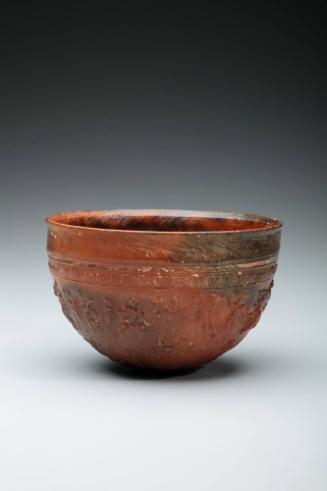
about 540 BCE


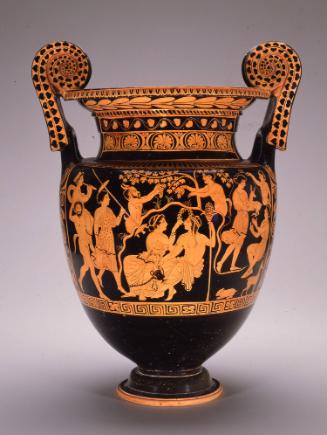
about 350-325 BCE


Membership
Become a TMA member today
Support TMA
Help support the TMA mission