

Cameo glass medallion
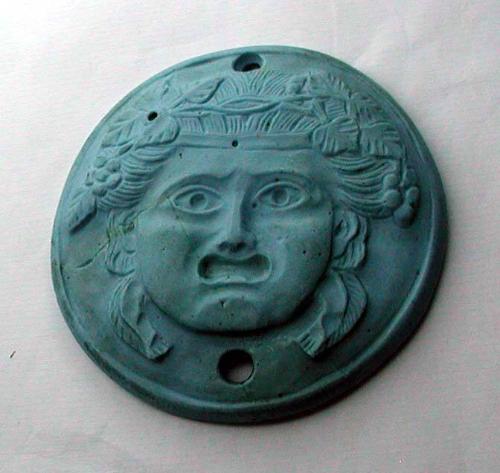

Cameo glass medallion
Place of OriginRoman Empire
Date1st century BCE - 1st century CE
DimensionsDiam: 2 1/8 in. (5.3 cm)
MediumMonochrome glass; mold-pressed and cut.
ClassificationGlass
Credit LineGift of Edward Drummond Libbey
Object number
1923.1514
Not on View
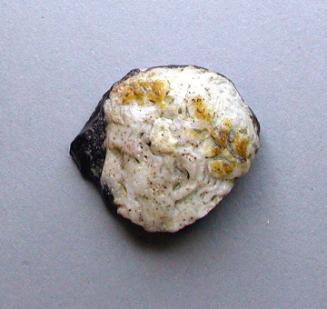
DescriptionThis round, convex medallion is made of opaque pale blue glass and was produced using mold-pressing and deep cutting techniques. The design features a theater mask that fills the entire surface. The broad face is carved in high detail, with large eyes, incised pupils and eyelids, a furrowed brow, and an open mouth—all contributing to a dramatic, worried expression. The hair is deeply striated and styled in thick, leonine locks, encircled by a fillet at the hairline and a wreath of grape leaves and grape clusters across the temples. Ribbon-like elements trail back from either side. Holes drilled above and below the mask suggest the medallion may have been mounted or suspended.
1st century - 4th century CE
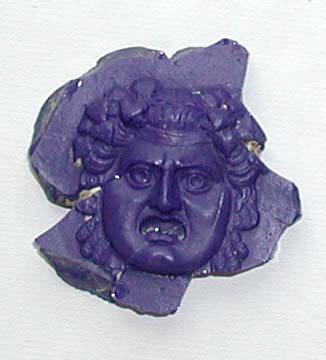
1st century BCE - 4th century CE
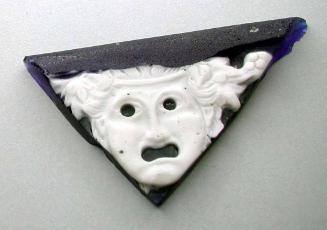
Roman or 19th century?

1st century BCE - 4th century CE
1st century BCE - 4th century CE
1st century CE

1st century BCE - 4th century CE

Late 19th century

about 200 CE

Late Roman or early Arabic, 4th-7th century

Possibly 1st century BCE

Membership
Become a TMA member today
Support TMA
Help support the TMA mission