

Neck Torc from a Bronze Age Treasure
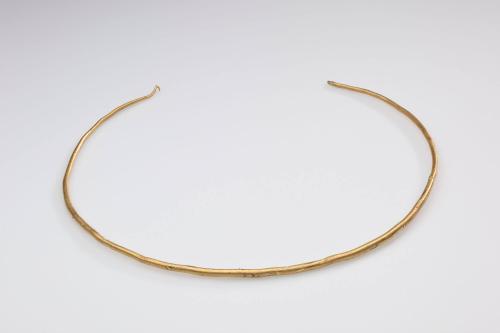

Neck Torc from a Bronze Age Treasure
Place of OriginEngland, Yorkshire, discovered at Cantley
Dateabout 1200-650 BCE
DimensionsMax L: 6 1/4 in. (15.9 cm); W: 5 3/4 in. (14.6 cm); Depth: 1/8 in. (0.4 cm); Weight: 36.18 grams
MediumGold.
ClassificationJewelry
Credit LineGift of the Popplestone Family
Object number
2006.102
Not on View
DescriptionA circular ornament formed from a single rod of solid gold wire, tapering towards the terminals. One terminal remains intact, forming a simple recurved hook; the opposing terminal is broken and missing, likely originally a loop or matching hook. The wire is circular in cross-section and undecorated. The surface shows minor pitting, scuffs, and small stress cracks along the curve.
Label TextThis gold neck ring, or torc, was discovered in 2001 by metal detectorists in a muddy field in Northern England (Cantley, Yorkshire). While often associated with the later "Celtic" tribes of the Iron Age, gold torcs were actually first worn in Britain over a thousand years earlier, during the Bronze Age. Simple and elegant, this band is made of 81% pure gold. It would have been worn by a high-status individual as a symbol of power and prestige. The single hook terminal suggests it once clasped shut, likely with a matching loop that is now lost. Though buried for three millennia, the metal remains as bright as the day it was worn.
The discovery of the Cantley torc in 2001 highlights the United Kingdom's unique legal framework for archaeological finds. Under the Treasure Act 1996, anyone who finds an object containing at least 10% precious metal and dating back at least 300 years must report it to the local Coroner within 14 days. These items are declared "Treasure" and offered to museums for purchase at market value. If no museum can raise the funds or wishes to acquire the item—as happened with the Cantley torc—it is "disclaimed" and returned to the finder, who is then free to sell it. This system balances the preservation of heritage with the rights of landowners and hobbyists, ensuring that significant finds are recorded even if they remain in private hands.
Published ReferencesClassical Numismatic Group, Auction 64, Lancaster, PA and London, September 24, 2003, Lot 1608, ill.
Roman Period, about 50 CE
1st century BCE
250-150 BCE

330-200 BCE

about 1450-1500
about 375-325 BCE

about 375-325 BCE
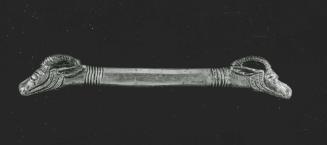

11th or 10th century BCE (Early Western Zhou Dynasty)

2nd-1st century B.C.E.

Membership
Become a TMA member today
Support TMA
Help support the TMA mission