

Strap Necklace with Amphora Pendants


Strap Necklace with Amphora Pendants
Place of OriginSouth Italy or Egypt
Date330-200 BCE
Dimensions17 1/2 × 2 11/16 × 5/16 in. (44.5 × 6.8 × 0.8 cm)
MediumGold with Egyptian faience beads
ClassificationJewelry
Credit LinePurchased with funds from the Libbey Endowment, Gift of Edward Drummond Libbey
Object number
1971.132
On View
Toledo Museum of Art (2445 Monroe Street), Gallery, 02, Classic
DescriptionThis wide strap necklace consists of four loop-in-loop chains linked together, ending in rectangular box terminals with brazed loops. It was likely worn pinned at the shoulders across the chest. Two rows of amphora-shaped pendants hang from the strap—larger fluted pendants suspended on short chains alternate with smaller, smooth-walled pendants. Each pendant carries three turquoise faience beads threaded on gold wire with gold discs. Rosette details mask the jump loops and suspension junctures, possibly once colored with enamel. Five pendant elements are missing.
Label TextThis dazzling necklace was designed to be draped across the body from shoulder to shoulder, rather than worn around the neck. The tiny gold pendants are shaped like amphoras (storage jars), a popular motif in the Hellenistic world. An ancient inventory from the temple of Artemis on the island of Delos records a dedication of a "necklace of amphoras" identical to this type. What makes this example special is the use of turquoise faience (a glazed ceramic) for the beads at the bottom of the fringe. Faience was a specialty of Egyptian craftsmen, suggesting this Greek-style jewelry may have been produced in Alexandria, Egypt, where Greek and Egyptian cultures merged under the Ptolemaic kings.Published References"Recent accessions...;" Art Quarterly, vol. 35, no. 4, 1972, p. 435, repr. p. 444.
"La Chronique des Arts," Gazette des Beaux-Arts, vol. 81, no. 1249, repr. p. 103.
Luckner, Kurt T., "Greek gold jewelry," Toledo Museum of Art Museum News, vol. 17, no. 1, 1974, pp. 3-6, repr. fig. 1, p. 4.
Exhibition HistoryChicago, Art Institute, The Search for Alexander, 1981, no. S-14, repr.New Orleans Museum of Art, The Search for Alexander, supplement, 1982, no. S-2.
St. Petersburg Museum of Fine Arts, Infinite riches; jewelry through the ages, 1989, no. 26, p. 29, repr.
Comparative ReferencesSee also Marshall, F.H., Catalogue of the Jewellery, Greek, Etruscan and Roman, in the Department of Antiquities, British Museum, London, British Museum, 1911, pl. XXV, no. 1947, p. 213, no. 1947.cf. Higgens, R.A., Greek and Roman Jewelry, London, Methuen and Co. Ltd., 1961, pl. 49, p. 168.
cf. Hoffmann, Herbert and Patricia F. Davidson, Greek Gold, The Brooklyn Museum, 1965, pp. 113-146.
cf. Hoffmann, Herbert, Collecting Greek Antiquities, New York, Clarson N. Potter, Inc., 1971, p. 191, p. 193, fig. 171.
cf. Michel, Charles, Recueil d'inscriptions greques, Paris, 1900, pp. 681-188, no. 833, Délos, Inventaires des trésors des temples, 279 B.C., lines 23-25.
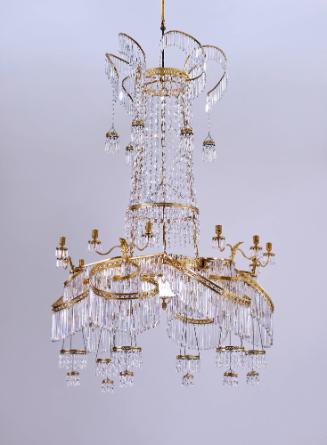
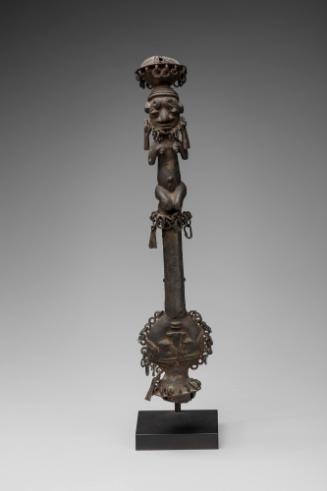
late 19th-early 20th century
25th–31st Dynasties (747–332 BCE)
4th century - 7th century CE

Late 20th century (pastiche or forgery)

about 220-130 BCE
late 19th century
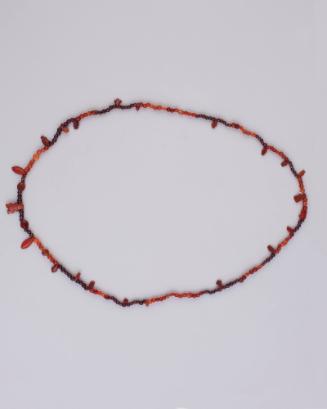
18th–19th Dynasties (1550–1189 BCE)
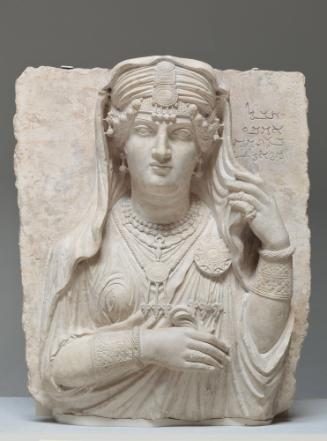
about 200 CE

mid 18th century

18th Century
700-200 BCE

Membership
Become a TMA member today
Support TMA
Help support the TMA mission