

Kohl Tube in the form of a Palm Column
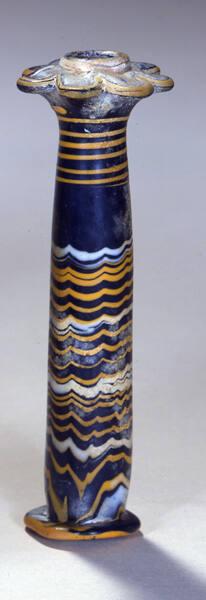

Kohl Tube in the form of a Palm Column
Period
New Kingdom Period
(Ancient Egyptian, 1550–1070 BCE)
Dynasty
Dynasty 18
(Ancient Egyptian, 1550–1295 BCE)
Place of OriginEgypt
Dateabout 1400-1225 BCE
DimensionsH: 4 3/8 in. (11.2 cm); diam: 1 3/8 in. (3.5 cm); Pad-Base diam: 1 1/16 in. (2.7 cm)
MediumCore-formed (rod-formed) glass.
ClassificationGlass
Credit LinePurchased with funds from the Libbey Endowment, Gift of Edward Drummond Libbey
Object number
1966.114
Not on View
DescriptionThis kohl tube is designed in the shape of a miniature palm column. It features a dark blue ground decorated with opaque white and opaque yellow (appearing orange) glass trails. The top consists of a horizontal rim-disk with seven rounded projecting fronds, mimicking a palm capital. Below the rim, a tall cylindrical body tapers upward from a circular pad-base. The decoration includes a white thread around the lip and yellow threads wound spirally and tooled into festoon patterns across the body.
Label TextIn ancient Egypt, glass was as precious as gemstones. This vibrant blue tube imitates the shape of a monumental palm column, like those found in the palaces of the pharaohs. To create it, artisans wound molten glass around a clay core, adding colorful threads to form wavy "festoons." This vessel was designed to hold kohl, a dark mineral powder used as eyeliner by both men and women to protect their eyes from the sun’s glare and to symbolize health and status. Produced during the height of Egypt's power in the New Kingdom, such luxury objects were likely made in royal workshops for the king’s immediate circle.Published References5000 Jahre aegyptisched Kunst, ex. cat., Kunsthaus Zurich, February 11-April 16, 1961, p. 86, no. 281
"Recent Important Acquisitions," Journal of Glass Studies 9, 1967, p. 133, no. 1
"Accessions of American and Canadian Museums," Art Q 30, 1967, p. 153
Nolte, Birgit, Die Glasgefasse im alten Aegypten, Munchner Aegyptologische Studien, no. 14, Berlin, 1968, pp. 140-141, no. 5, pl. 31
The Toledo Museum of Art, Art in Glass: A Guide to the Glass Collections, Toledo, Ohio, 1969, p. 16, ill.
"Art in Glass," The Glass Industry 51, July 1970. p. 315, ill.
Otto Wittmann, ed., The Toledo Museum of Art. A Guide to the Collections, Toledo, Ohio, 1976, p. 7, fig. 6
Grose, David F., "Ancient Glass," Toledo Museum of Art Museum News, Toledo, Ohio, 1978, pp. 70-71, fig. 1
Grose, David F., "The Origins and Early History of Glass," in The History of Glass, eds. Dan Klein an dWard Lloyd, pp. 9-38, London, 1984, p. 15, ill.
Grose, David F., Early Ancient Glass: Core-formed, Rod-Formed, and Cast Vessels and Objects from the Late Bronze Age to the Early Roman Empire, 1600 B.c. to A.d. 50, New York, Hudson Hills Press in association with the Toledo Museum of Art, 1989, Catalog No. 10, p. 62, repr. (col.) p. 42, drawing, p. 397.
Grose, David F., "Innovation and change in ancient technologies: The anomalous case of the Roman glass industry," in High-technology ceramics, Westerville, OH, 1986, p. 1, fig. 67.
Page, Jutta-Annette, The Art of Glass: Toledo Museum of Art, Toledo, Ohio, Toledo Museum of Art, 2006, p. 18, repr. (col.) 1C, p. 19.
Toledo Museum of Art, Toledo Museum of Art Masterworks, Toledo, 2009, p. 65, repr. (col.).
Peck, William H., Sandra E. Knudsen and Paula Reich, Egypt in Toledo: The Ancient Egyptian Collection at the Toledo Museum of Art, Toledo, Toledo Museum of Art, 2011, p. 60-61, repr. (col.) p. 61.
Exhibition HistoryCincinnati, Cincinnati Art Museum; Brooklyn, Brooklyn Museum, Mistress of the house, mistress of heaven: Women in ancient Egypt, 1996-97, no. 23, p. 80, repr. 81 (col.)Toledo, Toledo Museum of Art, The Egypt Experience: Secrets of the Tomb, October 29, 2010-January 8, 2012.

Late 18th or 19th Century (1400-1225 BCE)
5th-4th century BCE, possibly later
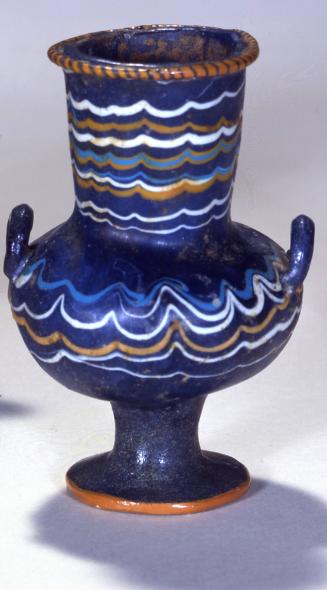
about 1400-1350 BCE

Mid-4th to early 3rd century BCE
2nd through mid-1st century BCE
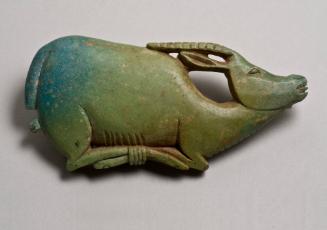
New Kingdom Period
18th Dynasty (1550-1292 BCE), about 1350 BCE

about 1350-1300 BCE
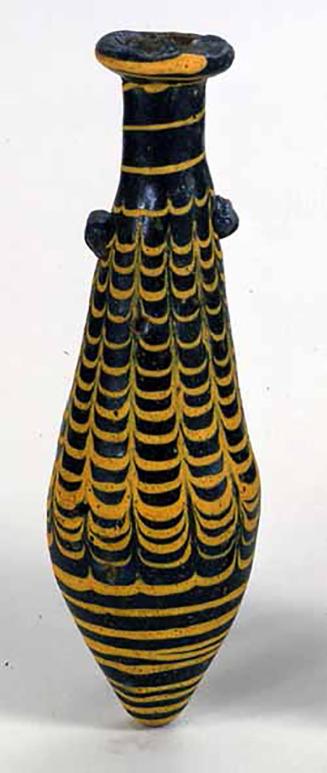
2nd through mid-1st century BCE
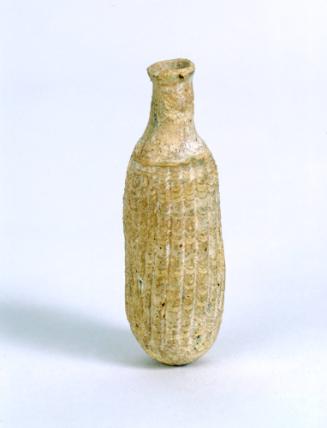
Late 8th or 7th century BCE
18th Dynasty (1550-1292 BCE), about 1400 to 1350 BCE

Membership
Become a TMA member today
Support TMA
Help support the TMA mission