

Guttus with Bear-Head Spout
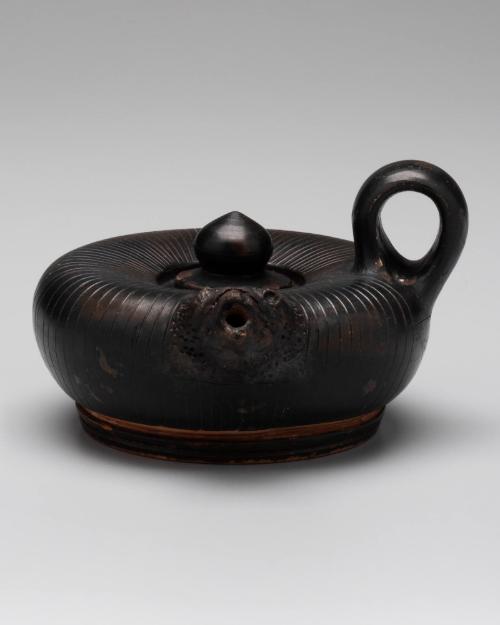


Guttus with Bear-Head Spout
Place of OriginItaly, reportedly found in a tomb in Campania
DateLate 4th century BCE
DimensionsH (to top of handle): 2 7/8 in.; H (to shoulder): 1 3/4 in.; Diam (body): 4 3/8 in.; Diam (body with spout): 5 1/4 in.; Base Diam: 3 5/16 in.
MediumMolded earthenware with black slip and applied decoration
ClassificationCeramics
Credit LineGift of an anonymous donor
Object number
1983.103A-B
Not on View
DescriptionA squat, rounded vessel (guttus, 1983.103A) formed from two mold-made halves joined at the shoulder. The body features vertical incised ribbing (reeding) and is coated in a lustrous black slip. A ring handle is applied vertically to the shoulder. The spout is molded in the form of a bear's head with stippled fur texture where it joins the body. The vessel rests on a profiled foot with a reserved (unpainted) resting surface. It is surmounted by a separate wheel-thrown lid (1983.103B) with a knob shaped like a stylized pine cone.
Label TextThis elegant little vessel, known as a guttus, was designed to pour liquid drop by drop—likely perfumed oil used to refill clay lamps. Its glossy black surface was intended to mimic the appearance of expensive tarnished silver, a popular style in the Greek colonies of Southern Italy. While many such vessels feature spouts shaped like lion heads, this example sports a rare and finely detailed bear’s head. The ribbed body and metallic sheen are characteristic of "Calene" ware, produced in the Campanian town of Cales.Comparative ReferencesSee also Lamb, W., Corpus Vasorum Antiquorum, Great Britain fasc. 6, Cambridge, fasc. 1, London, 1930, pl. XLI, no. 13.
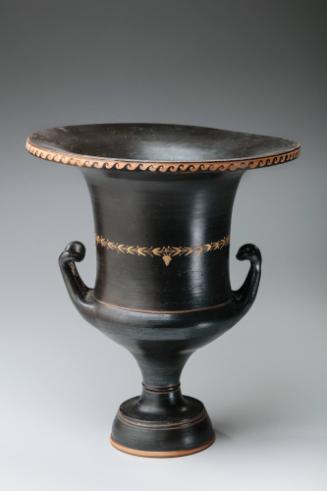
about 330-320 BCE

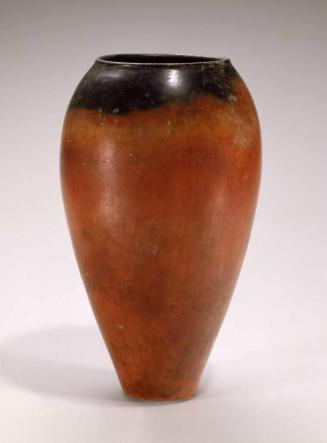
Predynastic Period, Naqada I–II, about 3400–3200 BCE

9th-10th century
1st century BCE - 1st century CE
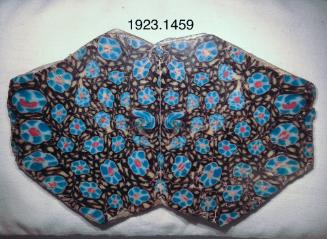
1st century BCE - 1th century CE
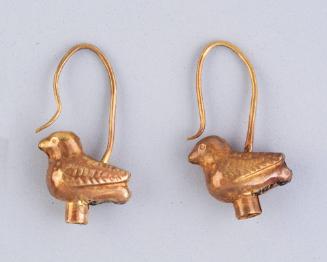
about 2nd century BCE

425-350 BCE


Membership
Become a TMA member today
Support TMA
Help support the TMA mission