

Stater of Carthage
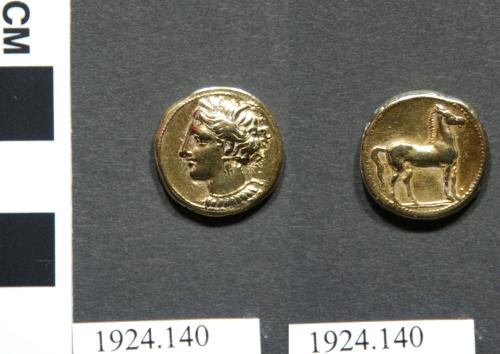


Stater of Carthage
Place of OriginTunisia, Carthage, reportedly found in North Sicily
Dateabout 310-290 BCE
DimensionsDiam. 3/4 in. (1.9 cm)
MediumElectrum
ClassificationMetalwork
Credit LineGift of Mrs. George E. Pomeroy
Object number
1924.140
Not on View
DescriptionAn electrum stater (19 mm) struck at the mint of Carthage. Obverse: Profile head of a female deity facing left, identified as Tanit or Persephone. She wears a wreath of grain ears (identifying her with agriculture/fertility), a necklace, and pendant earrings. Reverse: A free horse standing on a ground line, facing right.
Label TextThis coin was minted by Carthage, the great North African rival of Rome, during a period of intense conflict over the island of Sicily. The front features the goddess Tanit (often equated with the Greek Persephone), crowned with ears of wheat to symbolize the fertile agricultural wealth of the Punic empire. The reverse displays a standing horse, the emblem of Carthage. Unlike pure gold or silver issues, this coin is struck from electrum, a natural or artificial alloy of both metals. This specific coin was reportedly found in northern Sicily, a testament to the movement of armies and money during the wars between Carthage and the Greek tyrants of Syracuse.Published ReferencesVisona, Paolo, The Mint and the Message: 1000 Years of Currency from Darius to Justinian, Ann Arbor, The Kelsey Museum, 1981, no. 28, p. 3.
Exhibition HistoryAnn Arbor, University of Michigan Kelsey Museum of Archaeology, The Mint and the Message: 1000 Years of Currency from Darius to Justinian, 1981, no. 28.
Comparative ReferencesSee also Jenkins, S.K. and R.B. Lewis, Carthaginian Gold and Electrum Coins, Royal Numismatic Society Special Publication no. 2, London, 1963, pl. 10, no. 250, group V, p. 96, 32. Found in S. Italian hoards of time of Agathoples.
477-388 BCE

26th Dynasty (664–525 BCE), about 600 BCE

about 880 BCE
340-300 BCE


about 99-94 BCE

Membership
Become a TMA member today
Support TMA
Help support the TMA mission