

Heart Scarab of Nesypa with "Heart Spell"


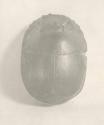
Heart Scarab of Nesypa with "Heart Spell"
Place of OriginEgypt
Date26th Dynasty (664–525 BCE), about 600 BCE
Dimensions2 1/2 × 1 3/4 × 7/8 in. (6.4 × 4.4 × 2.2 cm)
MediumGreywacke
ClassificationJewelry
Credit LineGift of Henry W. Wilhelm
Object number
1927.142
On View
Toledo Museum of Art (2445 Monroe Street), Gallery, 02, Classic
DescriptionThis amulet is carved from dark stone in the form of a scarab beetle. The upper surface features a high back with a defined prothorax, prominent eyes, and serrated details on the clypeus and tibiae. Fine relief lines contour the outer edges of the wing cases (elytra) and prothorax, which are separated by incised lines. The underside is flat and incised with seven horizontal lines of hieroglyphic text reading from right to left.
The base carries seven lines of incised hieroglyphs containing a version of Spell 30B from the Book of the Dead. The text invokes the heart of the deceased, identified here as Nesypa (Nsy-p3...), commanding it not to "create opposition" or "weigh heavy" against him in the presence of the divine judges. The theophorous name "Nesypa..." (meaning "He who belongs to...") is a common formation in the Third Intermediate and Late Periods.
Label TextDue to its associations with the daily rebirth of the sun, the scarab had a strong connection with life after death. An important use of its image was as an amulet, a sculpted magical charm. Placed with a mummified body, it was a substitute for the heart should the real one—considered the seat of thought, emotions, and the soul—be damaged. This example is inscribed underneath with the deceased’s name, Nesypa, and with the “Heart Spell” from the magical texts called the Book of the Dead. The Heart Spell ensures that the deceased’s heart does not betray him during the Weighing of the Heart ceremony, where it is balanced against the feather of Maat—the goddess of truth and cosmic harmony—in the presence of Osiris. Passing this test granted Nesypa access to the afterlife.Published ReferencesPeck, William H., Sandra E. Knudsen and Paula Reich, Egypt in Toledo: The Ancient Egyptian Collection at the Toledo Museum of Art, Toledo, Toledo Museum of Art, 2011, p. 81, repr. (col.).
Exhibition HistoryToledo Museum of Art, The Egypt Experience: Secrets of the Tomb, October 29, 2010-January 8, 2012.
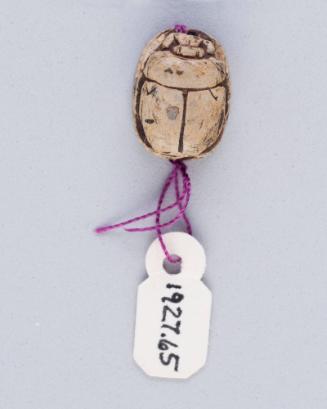
18th Dynasty (1550-1292 BCE), about 1400 BCE
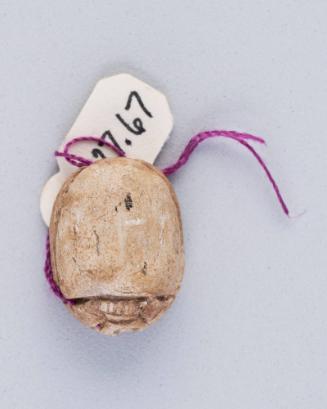
Possibly Hyksos, shortly before 1580 BCE
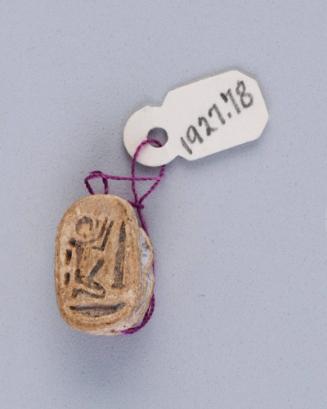
19th Dynasty (1292–1189 BCE)

18th Dynasty (1550-1292 BCE), about 1400 BCE

18th Dynasty (1550-1292 BCE), about 1381 BCE
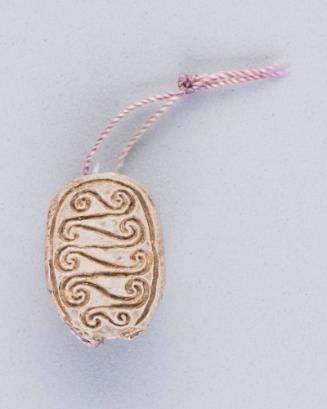
16th–18th Dynasties (1650–1292 BCE)
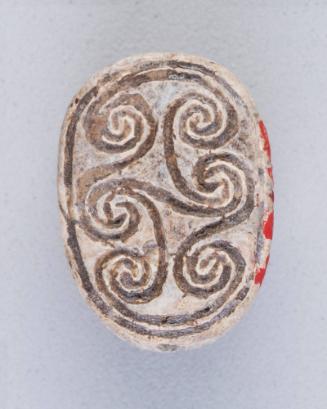
12th Dynasty (1991–1802 BCE)
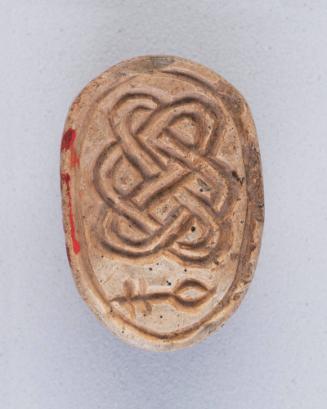
12th–18th Dynasties (1991–1292 BCE)
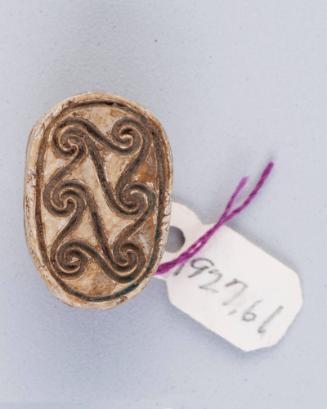
12th–18th Dynasties (1991–1292 BCE)

19th Dynasty (1292–1189 BCE)

Predynastic Period, Naqada II, about 3600-3200 BCE


Membership
Become a TMA member today
Support TMA
Help support the TMA mission