

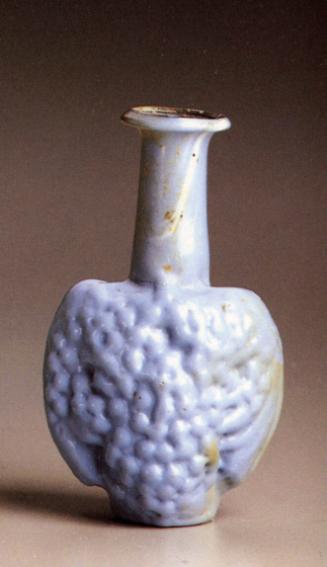
Bottle in the Shape of a Bunch of Grapes
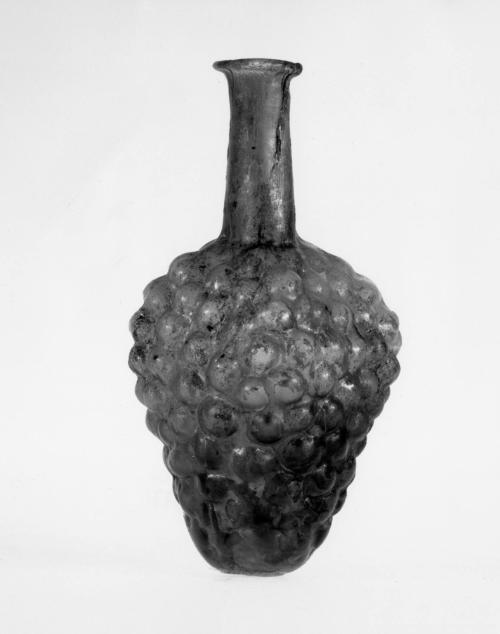


Bottle in the Shape of a Bunch of Grapes
Place of OriginSyria, reportedly from Aleppo
Date150-200
DimensionsH: 5 1/2 in. (14 cm)
MediumGlass; blown in mold in shape of bunch of grapes.
ClassificationGlass
Credit LinePurchased with funds from the Libbey Endowment, Gift of Edward Drummond Libbey
Object number
1951.373
Not on View
DescriptionA mold-blown glass flask in the naturalistic shape of a grape cluster. The body is formed from translucent manganese-colored (mulberry/purple) glass, blown into a two-part mold with a visible vertical seam. The vessel features a tall, free-blown cylindrical neck that terminates in a rim folded outward, upward, and inward. The body is covered in high-relief hemispherical bosses simulating individual grapes, with four smaller, distinct clusters modeled on the shoulder. The base is rounded and poorly flattened, rendering the vessel unstable without support. The surface exhibits weathering, iridescence, and incipient pitting.
Label TextThis bottle is blown in the shape of a luscious bunch of grapes, a symbol of Bacchus (Dionysus), the Roman god of wine and festivity. While the shape evokes wine, the narrow neck suggests this vessel was actually used to hold expensive perfumed oils (unguentaria). Produced in a two-part mold, this "handleless" type is characteristic of glass workshops in the Roman East (modern Syria and Lebanon), distinct from the two-handled versions made in Roman Europe. The "mulberry" purple color was achieved by adding manganese to the raw glass. It was purchased by the Museum in 1951 from Susette Khayat, a dealer known for bringing excavated glass from the Levant to the United States.Exhibition HistoryWorcester Art Museum; Cleveland Museum of Art; Baltimore Museum of Art, Antioch: the Lost Ancient City, 2000-2001.
1st century CE

about 1750
about 330-320 BCE
Second half of the 1st century CE

Second half of the 1st century CE

18th–20th Dynasties (1550–1077 BCE)

1st century BCE - 1st century CE

about 15 BCE - 25 CE (Roman, Augustan)
Probably 3rd century
1st century BCE - 4th century CE
1st century - 4th century CE
Roman or 19th century?

Membership
Become a TMA member today
Support TMA
Help support the TMA mission