

Phrygian Spouted Jug with Geometric Decoration
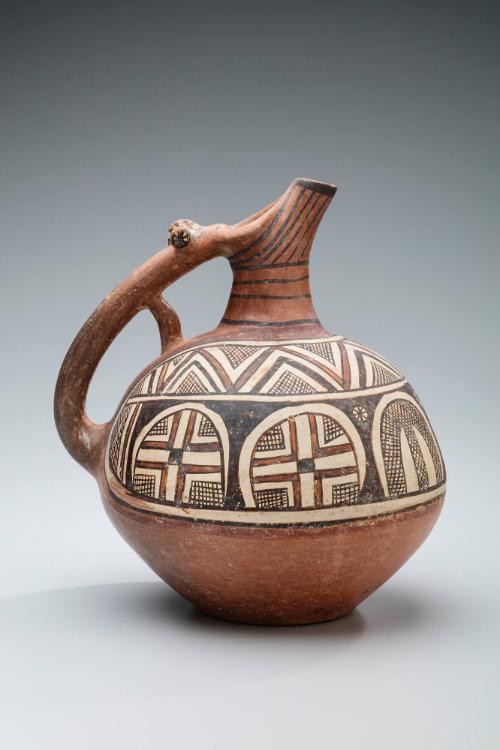


Phrygian Spouted Jug with Geometric Decoration
Place of OriginTurkey, region of Phrygia
Date700-675 BCE
Dimensionswith handle: 12 1/8 × 11 in. (30.8 × 27.9 cm)
Body without handle: 9 1/2 × 4 1/8 in. (24.1 × 10.5 cm)
Rim: 3 1/8 in. (7.9 cm)
Body without handle: 9 1/2 × 4 1/8 in. (24.1 × 10.5 cm)
Rim: 3 1/8 in. (7.9 cm)
MediumSlip-decorated earthenware
ClassificationCeramics
Credit LineGift of Duane Wilder
Object number
1980.1003
On View
Toledo Museum of Art (2445 Monroe Street), Gallery, 02, Classic
DescriptionA large, wheel-thrown earthenware jug with a bulbous, spherical body that tapers sharply to a narrow neck and a long, beak-like spout. The vessel is coated in a reddish-brown slip and decorated with bold geometric patterns in black and white slip. The primary decorative zone on the shoulder features a broad frieze of cross-hatched triangles and chevrons. Below this, a register of semicircular panels (metopes) contains cross-hatched quadrant motifs. The neck is encircled by horizontal bands. A heavy, tubular handle arches from the shoulder to the rim, connected to the neck by a small horizontal strut. At the junction of the handle and rim, two applied plastic discs ("rotelles") mimic the rivets found on metal prototypes.
Label TextThis bold, geometric jug comes from the kingdom of Phrygia, the land of the legendary King Midas. The Phrygians were master metalworkers, and this clay vessel mimics a metal pitcher: the discs at the top of the handle imitate the rivets used to attach handles on bronze or silver cups. The long, trough-shaped spout was designed for pouring wine or beer at elite banquets, likely straining out sediment through a sieve built into the neck. The intricate "checkerboard" and triangle patterns are painted in slip (liquid clay), a hallmark of Phrygian ceramic art found in the great royal burial mounds at Gordion.Published ReferencesLuckner, Kurt, The Museum Collects: Treasures by Sculptors and Craftsmen, Toledo, 1980, pp. 4-5.
Boulter, Cedric and Kurt T. Luckner, Corpus Vasorum Antiquorum, The Toledo Museum of Art fasc. 2, U.S.A. fasc. 20, Mainz, 1984, pl. 65, p. 4.
Exhibition HistoryToledo Museum of Art, "The Museum Collects: Treasures by Sculptors and Craftsmen," December 7, 1980 - January 25, 1981. Comparative ReferencesSee also Starr, C.G., A History of the Ancient World, New York, 1965, pp. 103, 262 (for general information on the Phrygians).cf. Bossert, H.T., Altanatolien, Berlin, 1942, pls, 1069-1074 (for the shape, ant to some extent the decoration).
cf. Akurgal, Phrygische Kunst, Au kara, 1955, pls. 26-27 (for this and comparable jugs).
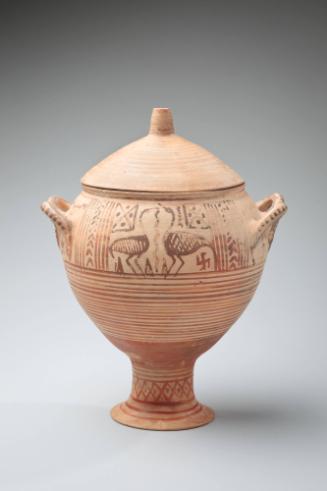
about 700 BCE
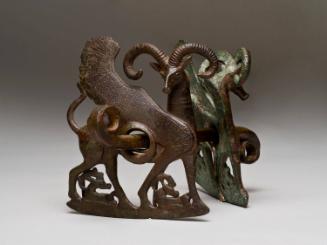
750-650 BCE


probably 1870-1890

600-550 BCE
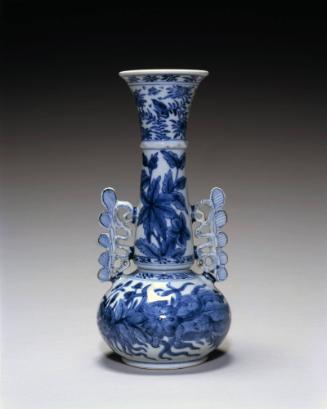
Late 17th century, (Kangxi Period 1662-1722)

about 490 BCE
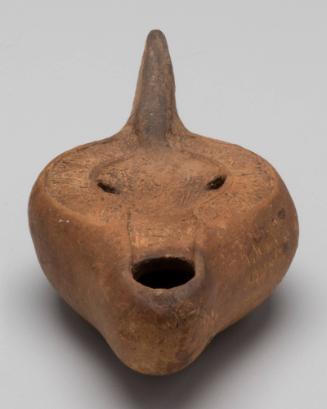
about 420-550 CE

about 600 BCE
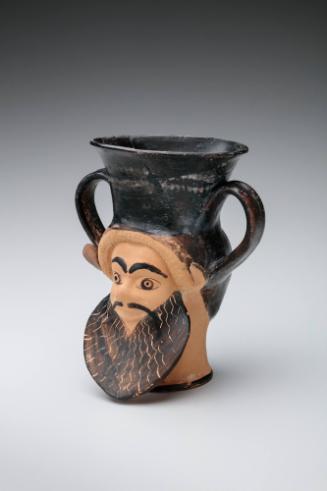
500-450 BCE

about 730 BCE (Late Geometric IIa )

Membership
Become a TMA member today
Support TMA
Help support the TMA mission