

Statuette of Mercury (Hermes)
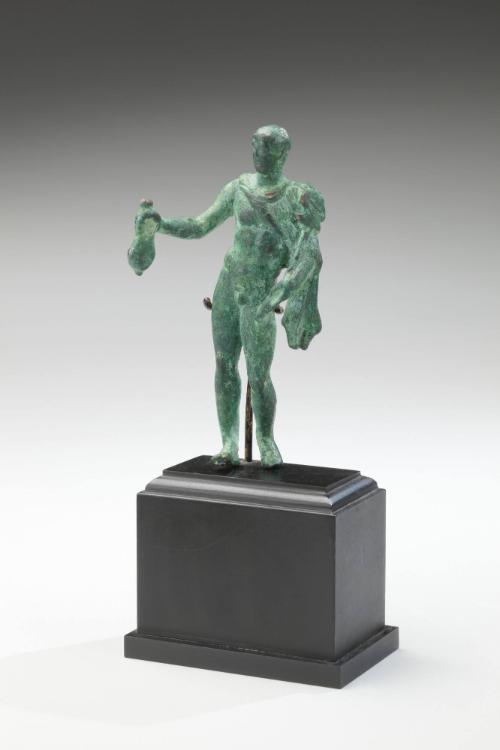


Statuette of Mercury (Hermes)
Place of OriginLikely Italy
Date1st to 3rd century CE
DimensionsH: 3 3/16 in. (8.1 cm); L: 1 1/2 in. (3.8 cm); W: 1 1/8 in. (2.9 cm)
MediumBronze, solid cast
ClassificationSculpture
Credit LineGift of the Popplestone Family
Object number
2006.95
Not on View
DescriptionA solid-cast bronze statuette depicting the nude god Mercury standing in a contrapposto pose, his weight on his right leg. He holds a purse (marsupium) in his extended right hand and a caduceus (kerykeion) in his left hand, which rests against his shoulder. A traveler's cloak (chlamys) is draped over his left shoulder and arm. He wears a winged petasos on his head. The figure is mounted on a modern base. The surface patina is green with some areas of wear and isolated pitting on the chest.
Label TextThis small bronze statuette depicts Mercury (the Greek Hermes), the Roman god of commerce, travel, and communication. He is easily recognized by his winged hat (petasos) and the herald’s staff (caduceus) cradled in his left arm. In his right hand, he holds a purse, symbolizing his role as the bringer of profit and prosperity. Small figures like this were mass-produced in the Roman Empire and commonly kept in household shrines called lararia, where families would offer daily prayers for success and safe journeys. The statue’s athletic, nude form mimics famous Greek sculptures from centuries earlier, showing how Romans adapted Greek art for their own religious needs.Published ReferencesSotheby's New York, Antiquities, December 7, 2001, lot 309.
late 2nd century AD
6th Dynasty (2345-2181 BCE)
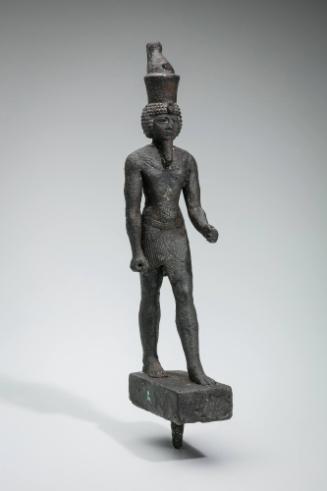

4th Dynasty (2613–2498 BCE)
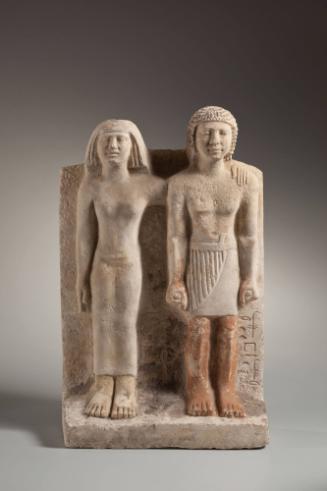
6th Dynasty (2345-2181 BCE)

about 880 BCE

about 15 BCE - 25 CE (Roman, Augustan)

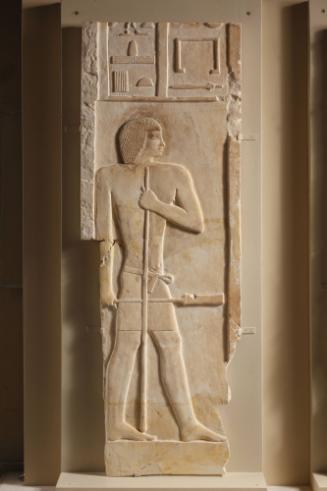
4th Dynasty (2613–2498 BCE)

Membership
Become a TMA member today
Support TMA
Help support the TMA mission