

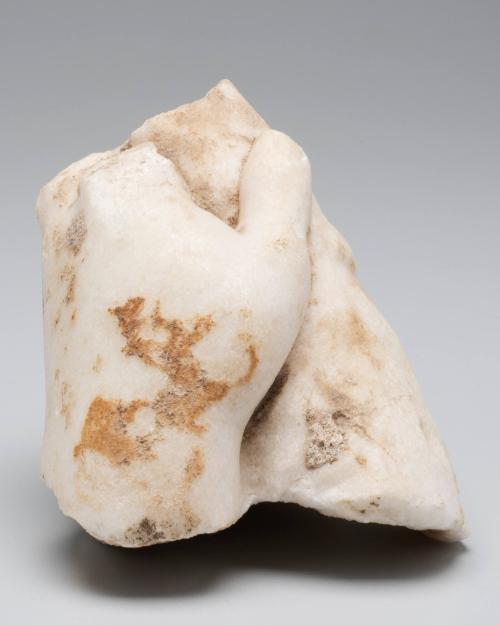
Hand from a Statue of Tyche (Fortuna) Holding Cornucopia

Hand from a Statue of Tyche (Fortuna) Holding Cornucopia
Place of OriginRoman Empire
Date1st-2nd century CE
DimensionsL: 6 5/8 in. (16.8 cm); W: 4 1/8 in. (10.5 cm); H: 5 1/8 in. (13 cm)
MediumMarble.
ClassificationSculpture
Credit LineGift of the Popplestone Family
Object number
2006.90
Not on View
DescriptionA fragmentary sculpture carved from white marble, representing an over life-size human left hand. The hand is severed at the wrist and is depicted firmly grasping a cylindrical object, identified as the lower termination point or base of a cornucopia. The fingers wrap around the object, though the thumb and knuckles show signs of wear. The surface of the marble exhibits weathering and some surface deposits.
Label TextThis marble fragment preserves the powerful grip of a left hand clutching the base of a cornucopia, or "horn of plenty." The scale of the hand—described as over life-size—suggests it originally belonged to a monumental statue, likely depicting a deity or personification. The cornucopia is the primary attribute of Fortuna (the Greek Tyche), the goddess of fortune and luck, who is typically depicted holding the vessel of abundance in her left hand while guiding a rudder with her right. In Roman art, this symbol was also associated with the personification Abundantia and the imperial family to signify the prosperity of the empire.
about 1st century CE

about 150 CE

1st-2nd century CE

18th Dynasty (1550-1292 BCE), about 1390 BCE

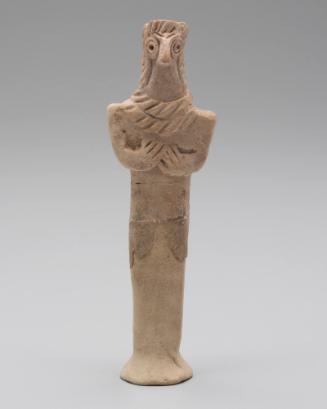
1st millennium BCE
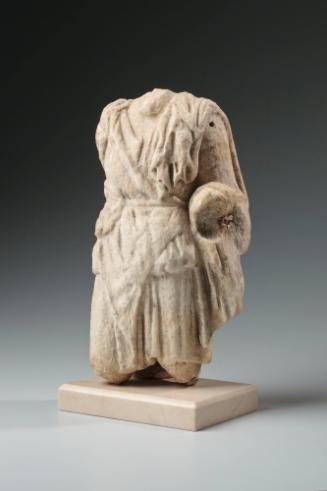
about 2nd century CE

late 2nd century AD

668-627 BCE

150-200 CE
Libbey Glass Company, an operating division of Owens-Illinois Glass Company
1940-1945
Libbey Glass Company, an operating division of Owens-Illinois Glass Company
1940-1945

Membership
Become a TMA member today
Support TMA
Help support the TMA mission