

Statuette of Dionysus (Bacchus)
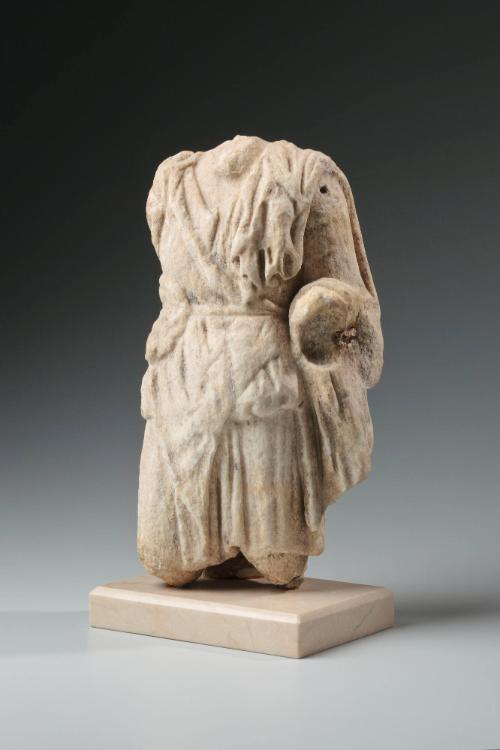

Statuette of Dionysus (Bacchus)
Place of OriginRoman Empire (likely Italy or Eastern Mediterranean provinces)
Dateabout 2nd century CE
DimensionsL: 6 3/4 in. (17.1 cm); W: 5 1/8 in. (13 cm); H: 14 1/2 in. (36.8 cm)
MediumMarble.
ClassificationSculpture
Credit LineGift of the Popplestone Family
Object number
2006.89
Not on View
DescriptionThis fragmentary white marble statuette depicts a standing male figure wearing a short, knee-length chiton (tunic) belted at the waist. A nebris (animal skin) is draped diagonally across the torso from the right shoulder to the left hip, secured by a knot. A heavy mantle (himation) is draped over the left shoulder and wrapped around the left arm, falling in deep, vertical folds along the side of the body. The drapery is carved with deep drill channels creating thick, voluminous folds that cling to the underlying form. The figure is missing the head, the right arm from the shoulder, the left hand, and the legs below the knees. The back is finished but less detailed than the front.
Label TextThis marble statuette depicts Dionysus (Roman Bacchus), the god of wine and theater. Unlike the heroic nudity often seen in large-scale cult statues of the god, this figure wears a short tunic and a panther skin (nebris) draped across his chest—attire symbolizing his dominion over the wild and his mythological travels. The deep carving of the drapery folds suggests it was made during the 2nd century A.D., a period when sculptors used running drills to create dramatic contrasts of light and shadow. Small-scale figures like this were typically crafted for private devotion in household shrines (lararia) or as decoration for domestic gardens, bringing the protection and festive spirit of the god into the Roman home.
1st-2nd century CE

about 150 CE

late 2nd century AD

4th century BCE

Gupta Period (320-647), about 600

100 BCE to 150 CE

668-627 BCE
mid-5th century BCE

2nd century CE

6th century BCE
1st to 3rd century CE
Membership
Become a TMA member today
Support TMA
Help support the TMA mission