

Relief of Zezennakht
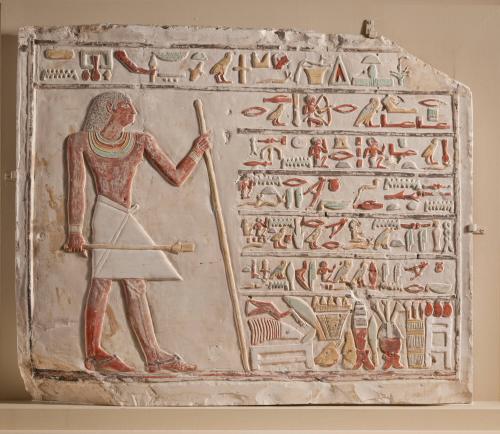





Relief of Zezennakht
Dynasty
Dynasty 11 (second half)
(Ancient Egyptian, 2030–1981 BCE)
Period
First Intermediate Period
(Ancient Egyptian, 2150–2030 BCE)
Place of OriginEgypt, Naga ed-Deir (ancient Thinis), Tomb of Zezennakht
Date11th Dynasty (2130–1991 BCE), about 2000 BCE
Dimensions26 1/4 × 31 5/8 × 3 1/2 in. (66.7 × 80.3 × 8.9 cm)
MediumPolychrome painted limestone with stucco.
ClassificationSculpture
Credit LinePurchased with funds from the Libbey Endowment, Gift of Edward Drummond Libbey
Object number
1947.61
On View
Toledo Museum of Art (2445 Monroe Street), Gallery, 02, Classic
DescriptionA rectangular limestone stele carved in medium-high relief for figures and sunk relief for inscriptions, covered in stucco and painted. To the left, a large standing male figure faces right, wearing a short curled wig, a broad collar, bracelets, and a projecting triangular starched kilt with a belt; he wears sandals and holds a staff and scepter. To the right, four horizontal lines of hieroglyphic text act as a header. Below the text is a scene of piled offerings, including a calf’s head, a leg of beef, ribs, organ meats, bread, onions, pomegranates, and lotus buds.
Label TextExecuted in high relief, in which the background of the limestone slab was carved away, the image of Zezen-nakht confronts the standard offering formula, which begins at upper right with two hieroglyphs meaning “an offering.” The inscriptions at right also include his names, titles, and accomplishments, as well as a dense collection of offerings. A powerful man, Zezen-nakht is depicted wearing a curled wig, sandals, and starched linen kilt. His collars and bracelets are of gold vibrantly combined with turquoise and carnelian.Published ReferencesDunham, Dows, Naga-ed-Dêr Stelae of the First Intermediate Period, Humphrey Milford, London, 1937, p.v.
Toledo Museum of Art Museum News, no. 129, October, 1951, repr.
Pautler, Margo L., "Books and Manuscripts," Toledo Museum of Art Museum News, new series, vol. 9, no. 2, Summer 1966, pp. 27-46, repr. p. 29.
Luckner, Kurt T., "The Art of Egypt, Part 1," Toledo Museum of Art Museum News, new series, vol. 14, no.1, Spring 1971, pp. 14-15, repr. fig. 14 and on cover (col.).
Turley, Robert, Humanities: the Western creative heritage, a student handbook, Dubuque, 1991, repr. p. ii.
The Toledo Museum of Art, Toledo Treasures, Toledo, 1995, p. 33, repr. (col.).
Reich, Paula, Toledo Museum of Art: Map and Guide, London, Scala, 2005, p. 7, repr. (col.).
Toledo Museum of Art, Toledo Museum of Art Masterworks, Toledo, 2009, p. 61, repr. (col.).
Reich, Paula, Toledo Museum of Art: Map and Guide, London, Scala, 2009, p. 7, repr. (col.)
Jay, Jacqueline E. "Naga-ed-Deir to Thebes to Abydos: The Rise and Spread of the 'Couple Standing before Offerings' Pose on FIP and MK Offering Stelae." Journal of the American Research Center in Egypt 46 (2010), pp. 63–80. Peck, William H., Sandra E. Knudsen and Paula Reich, Egypt in Toledo: The Ancient Egyptian Collection at the Toledo Museum of Art, Toledo, Toledo Museum of Art, 2011, p. 42-43, repr. (col.) p. 10, 42-43, (det.) p. 41.
Exhibition HistoryToledo, Toledo Museum of Art, The Egypt Experience: Secrets of the Tomb, October 29, 2010-January 8, 2012.Comparative ReferencesSee also Clère, J.J., "La Stèle de Police (MR-SNT)," Revue d'Egyptologie, Paris, 1950, pp. 19-32, T. VII, repr. pl. III.See also Dunham, Dows, The Egyptian Department and its excavations, Museum of Fine Arts, Boston, 1958, pp. 64-66.
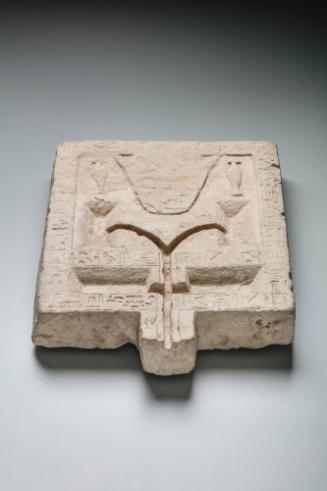
12th Dynasty (1991–1802 BCE)

9th Dynasty (2130–2040 BCE)
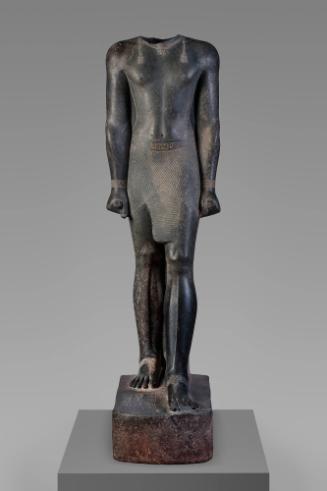

11th-12th Century
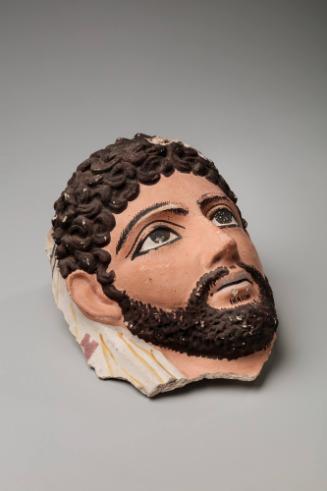
2nd century CE

Ptolemaic Period (332–30 BCE), about 246–222 BCE
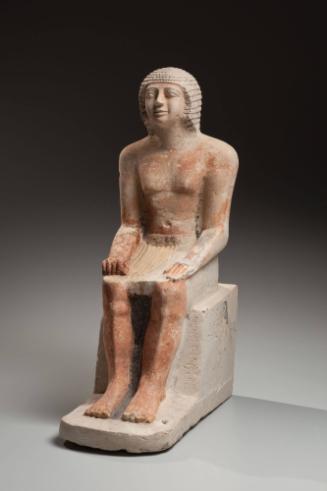
6th Dynasty (2345-2181 BCE)
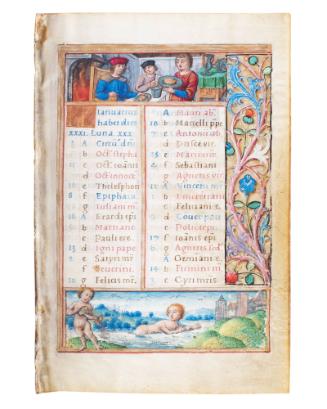
about 1500

3rd century, possibly early 4th century
1st century BCE - 1st century CE
1st or 2nd century CE
about 510 BCE

Membership
Become a TMA member today
Support TMA
Help support the TMA mission