

Strigil (Athlete's Scraper)
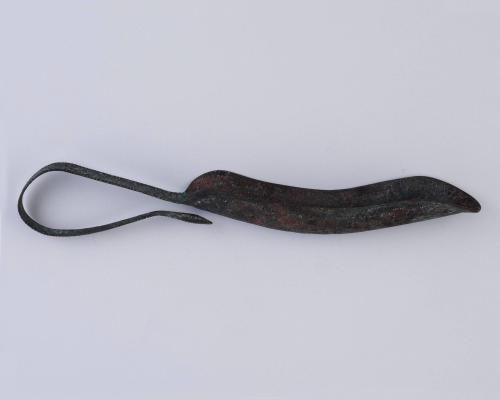

Strigil (Athlete's Scraper)
Place of OriginReportedly South Italy
Date400-300 BCE
DimensionsL: 8 31/32 in. (25.3 cm); Max W (blade): 1 7/32 in. (3.1 cm)
MediumBronze.
ClassificationUtilitarian Objects
Credit LineGift of an Anonymous Donor
Object number
1989.128
Not on View
DescriptionA cast and hammered bronze strigil characterized by a deeply curved, scoop-like blade and a looped rectangular handle. The blade is concave, designed for scraping, and tapers towards a rounded point. The handle extends from the upper end of the blade, looping back to rejoin the blade's base. The handle edges feature a beaded decorative motif. A delicate dot pattern runs along the exterior of the blade, approximately 1/4 inch from the edge. The surface exhibits significant pitting and texture consistent with stabilized corrosion.
Label TextBefore the invention of soap, ancient Greek athletes and bathers used curved tools like this strigil to clean their bodies. After exercising in the gymnasium, an athlete would cover his skin with olive oil to loosen dust, sweat, and grime. He would then scrape off the mixture using the strigil’s concave bronze blade. This daily ritual was so central to Greek life that strigils became common symbols of athleticism and are frequently found in tombs, signifying the deceased's participation in gymnasia culture. This example, likely made in the Greek colonies of southern Italy, features delicate beaded decoration along the handle.
Although the surface now shows the rough texture of age, it would originally have shone with the golden color of polished bronze.
Published ReferencesUnpublished.Comparative ReferencesSee also Comstock, M. and C. Vermeule, Greek, Etruscan and Roman Bronzes in the Boston Museum of Fine Arts, Boston, Greenwich, Connecticut, 1971, p. 425, no. 613.Shang Dynasty (1766-1045 BCE)
12th-11th century BCE
about 2400 - 2000 BCE
Unidentified
Predynastic Period, Naqada I–II, about 3800–3300 BCE
10th-12th century

Membership
Become a TMA member today
Support TMA
Help support the TMA mission