

Votive Figurine of a Bull


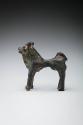
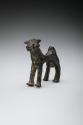
Votive Figurine of a Bull
Place of OriginGreece
Date700-600 BCE
Dimensions2 7/8 × 2 1/8 × 1 in. (7.3 × 5.4 × 2.5 cm)
MediumSolid cast bronze
ClassificationSculpture
Credit LineGift of Mrs. J. P. Harris
Object number
1963.41
On View
Toledo Museum of Art (2445 Monroe Street), Gallery, 02, Classic
DescriptionA small, solid-cast bronze figurine of a standing bull. The animal is rendered in a stylized manner typical of the Geometric and Sub-Geometric periods, featuring a tubular, cylindrical torso and straight, pillar-like legs. The neck is thick and deep-chested, merging into a triangular forequarter mass. The head is simplified with a "split" mouth, slab-like ears or horns, and protruding, lump-like eyes. The surface shows evidence of cleaning, with a stable but slightly pitted texture. The proper left front leg was previously noted as loose or detached.
Label TextThis small but sturdy bronze bull was made not to be admired in a home, but to be left as a gift for the gods. In ancient Greece, the bull was a symbol of power and fertility, sacred to both Zeus, the king of gods, and Poseidon, the god of the sea. Wealthy worshippers might sacrifice a live animal, but most ordinary people dedicated permanent bronze substitutes like this one at temple sanctuaries. Its simplified, tubular shape is typical of the "Geometric" style, where artists reduced animals to their essential forms. Originally kept in the Museum's study collection, it was identified in the 1960s as a genuine ancient offering, likely from a rural shrine.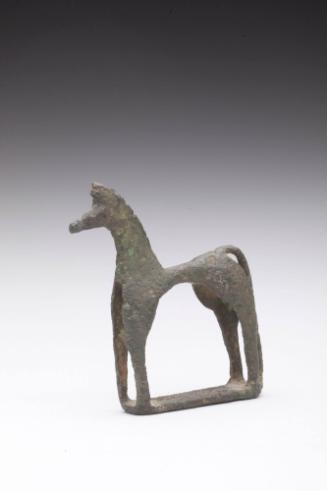
8th century BCE
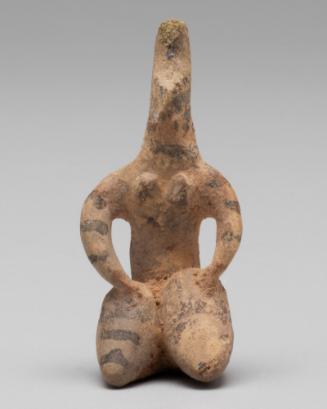
Late 6th millennium BCE (or Late 5th to 4th millennium BCE?)
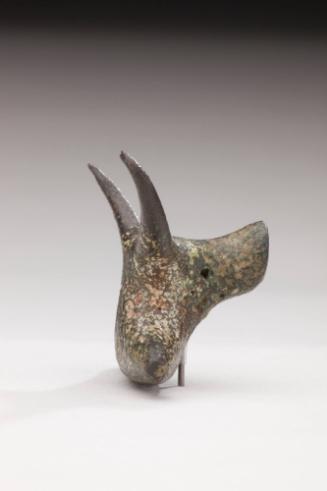
about 2400 - 2000 BCE
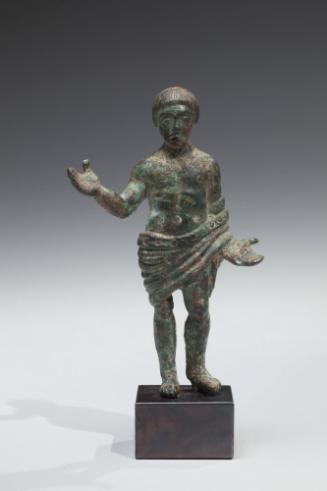
4th century BCE

325-300 BCE

1st to 3rd century CE (Roman Period)
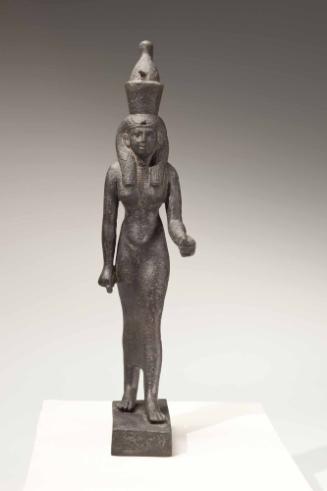
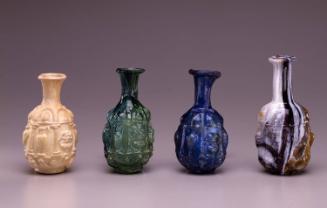
Probably mid-1st century
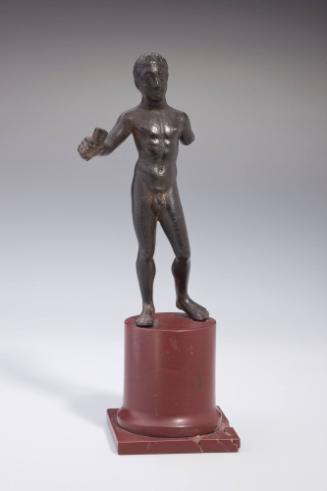
late 4th-late 1st Century BCE
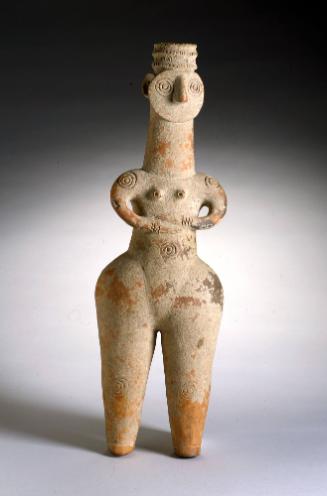
Early 1st millennium BCE

Membership
Become a TMA member today
Support TMA
Help support the TMA mission