

Cylindrical Box with Conical Lid (Pyxis)
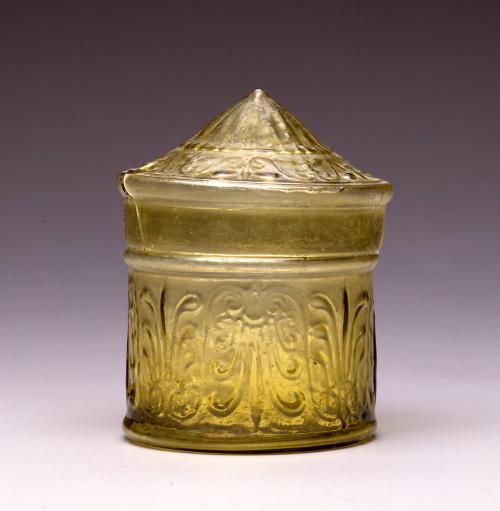


Cylindrical Box with Conical Lid (Pyxis)
Place of OriginItaly, Campania, Piedimonte d'Alife (ancient Allifae)
DateSecond half of the 1st century CE
DimensionsH (with lid): 3 1/8 in. (7.9 cm);
H (without lid): 2 1/8 in. (5.35 cm);
Max Diam: 2 5/16 in. (5.95 cm);
Rim Diam: 2 3/16 in. (5.6 cm);
Rim Thickness: 1/16 in. (0.09 cm);
Base Diam: 2 5/16 in. (5.82 cm);
Lid H: 1 7/16 in. (3.6 cm);
Lid Max Diam: 2 1/2 in. (6.3 cm);
Lid Rim Diam: 2 5/16 in. (5.9 cm);
Lid Rim Thickness: 1/16 in. (0.08 cm)
H (without lid): 2 1/8 in. (5.35 cm);
Max Diam: 2 5/16 in. (5.95 cm);
Rim Diam: 2 3/16 in. (5.6 cm);
Rim Thickness: 1/16 in. (0.09 cm);
Base Diam: 2 5/16 in. (5.82 cm);
Lid H: 1 7/16 in. (3.6 cm);
Lid Max Diam: 2 1/2 in. (6.3 cm);
Lid Rim Diam: 2 5/16 in. (5.9 cm);
Lid Rim Thickness: 1/16 in. (0.08 cm)
MediumGlass; mold-blown.
ClassificationGlass
Credit LinePurchased with funds from the Libbey Endowment, Gift of Edward Drummond Libbey
Object number
1967.5
Not on View
DescriptionThis transparent light olive-amber glass vessel consists of a cylindrical body and a separate conical lid. The body was blown into a three-part mold, resulting in a continuous frieze of eight seven-leaf palmettes that alternate between upright and inverted orientations. The upright palmettes feature thick, out-turned leaves, while the inverted examples have thinner leaves curling inward. The lid, blown into a two-part mold, is decorated with sixteen downturned tongues bordered by a band of ten three-leaf palmettes. The rims of both the box and lid are unworked, and the flat base of the box features four raised concentric circles around a central boss. The lid has been reassembled from fragments, with losses visible in the lip and lower section.
Label TextProvenance research indicates this piece was found at Piedimonte d'Alife (ancient Allifae) in Campania, Italy. This findspot is significant; while the style is strongly associated with the Sidonian workshops of the Syro-Palestinian coast (reminiscent of the Ennion workshop), the discovery of this piece and similar fragments in the Campanian region (including Pompeii) suggests that these luxury glass wares were either extensively traded or that Eastern craftsmen were operating local workshops in Italy during the 1st century. The object was formerly in the collection of Giorgio Sangiorgi and was published in his 1914 catalog.Published ReferencesSambon, Arthur, “Les Verres antiques,” Le Musée: Revue d’art mensuelle, vol. III, 1906, p. 501, fig. 58.
Sangiorgi, G., Collezione di Vetri Antichi dalle Origini al V secolo D. Chr, Milan and Rome, 1914, no. 102, pl. 18.
Harden, Donald B., "Romano-Syrian Glasses with Mould-blown Inscriptions," Journal of Roman Studies, 25, 1935, p. 185, app. B, III, no. a.
Kern, J.H.C., "A Fragmentary Mould-Blown Glass Pyxis from Pompeii," Oudheidkundige Mededelingen uit het Rijksmuseum van Oudheden te Leiden 35, 1954, p. 33, fig. 6.
The Toledo Museum of Art, Art in Glass: A Guide to the Glass Collections, Toledo, Ohio, 1969, 24, ill.
Stern, E. Marianne, Roman Mold-Blown Glass: The First Through Sixth Centuries, Rome, Italy, "L'Erma" di Bretschneider in association with the Toledo Museum of Art, 1995, cat. no. 79, p. 169-171, color pl. 14 and 15, p. 55.
Second half of the 1st century CE
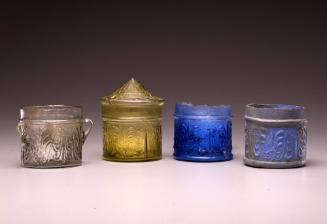
Second half of the 1st century CE
Probably second half of the 1st century CE

Second to third quarter of 1st century CE

Early to mid-1st century CE
11th century

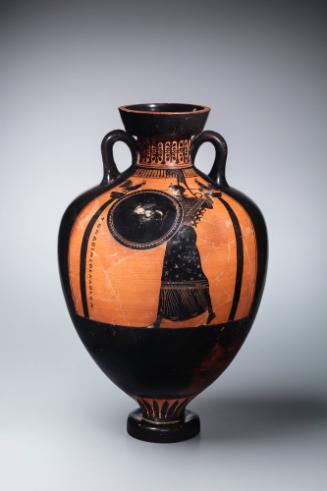
Manner of the Kleophrades Painter
about 490 BCE
Probably second half of 1st century

Membership
Become a TMA member today
Support TMA
Help support the TMA mission