

Fragmentary Male Torso
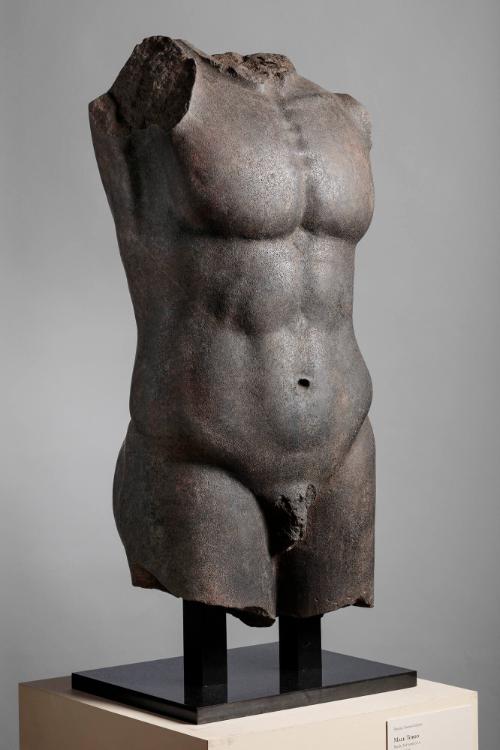


Fragmentary Male Torso
Place of OriginSyria or Turkey
Datec. 2nd century CE
Dimensions37 13/16 × 17 1/8 × 13 1/2 in. (96 × 43.5 × 34.3 cm)
MediumBasalt or a similar stone, likely quarried in the Hauran region (modern-day southern Syria).
ClassificationSculpture
Credit LineGift of Edward Drummond Libbey, Henry W. Wilhelm, Madame Georges Henri Riviere, Thomas Whittemore, and the American Institute for Persian Art and Archaeology, by exchange
Object number
2017.25
On View
Toledo Museum of Art (2445 Monroe Street), Gallery, 02, Classic
DescriptionThe life-size basalt torso depicts a well-muscled male figure from the neck to upper thighs. The surface is dark and slightly mottled, with signs of wear and historical fractures. The legs are truncated mid-thigh and no arms or head remain. The stone is dense and smooth, showing subtle modeling of the abdomen and pectorals.
Label TextCarved from the black, hard stone basalt, this over life-size figure comes from the Eastern part of the Roman Empire, probably from modern-day Turkey or Syria. The well-muscled nude would have likely depicted an athlete, a hero, or a god, although the absence of an identifiable attribute and the lack of pubic hair indicate that the figure instead may be an idealized youth. The deeply carved grooves between muscles give the figure a powerful, captivating presence.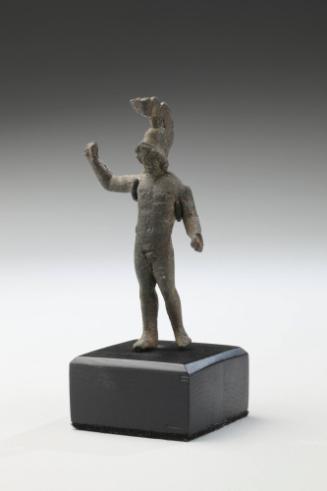
1st-2nd century CE
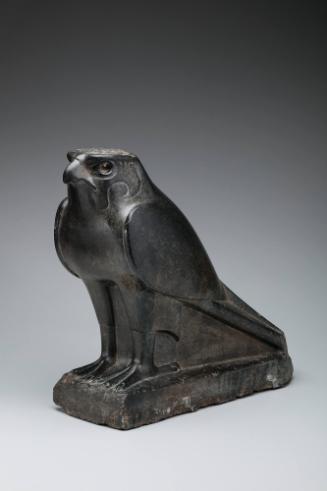
Ptolemaic Period (332–30 BCE)

about 880 BCE

Before 1880
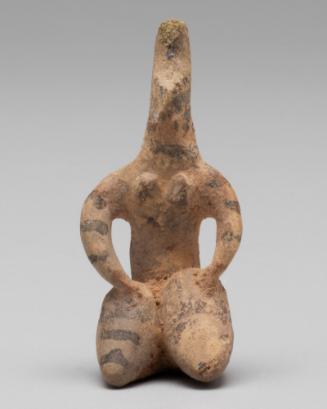
Late 6th millennium BCE (or Late 5th to 4th millennium BCE?)
1st century BCE - 4th century CE
Late 1st century BCE to early 1st century CE

150-200 CE
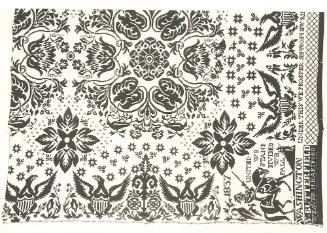


18th Dynasty (1550-1292 BCE)


Membership
Become a TMA member today
Support TMA
Help support the TMA mission