

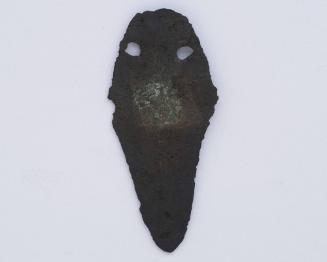
Bronze Dipping Rod
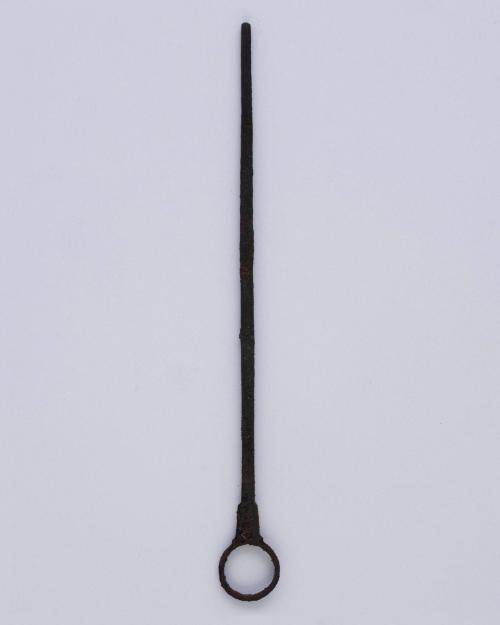



Bronze Dipping Rod
Place of OriginCyprus, excavated by 1873
Dateabout 475 BCE-150 CE
Dimensions7 1/16 in. (17.9 cm)
Mediumbronze
ClassificationMetalwork
Credit LineGift of Edward Drummond Libbey
Object number
1916.144
Not on View
The bronze objects (1916.134–1916.149) reflect Cyprus’s early mastery of copper, a resource so central to the island that its Latin name, cuprum, derives from Cyprus itself. Bronze Age weapons, including a dagger (1916.149), attest to early casting traditions, while later Roman-period tools reveal long-term continuity in everyday practices. Tweezers (1916.147), cosmetic implements (1916.144–145), mirrors (1916.135–136), and a rare buckle (1916.146) point to routines of personal care across centuries.
The glass vessels (1916.150–1916.165) document a different technological transformation. Most are Roman blown glass, produced after the invention of the blowpipe in the first century BCE, a development that shifted glassmaking from a luxury craft to large-scale production. One earlier ribbed bowl (1916.153), formed by slumping glass over a mold, preserves an older and more labor-intensive technique.
The acquisition also included several dozen ceramic vessels. Over time, the scope of the museum’s collection evolved, and most of these ceramics were later deaccessioned. Two Archaic vessels from Cyprus, a stamnos (1916.79) and an oinochoe (1916.96), remain in the collection as representatives of this early phase of collecting.
Comparative ReferencesSee also Vessberg, Olof and Alfred Westholm, The Swedish Cyprus Expedition, Stockhom, 1955, vol. IV, part 3, fig. 53, no. 14.

325 BCE-250 CE

325 BCE-250 CE
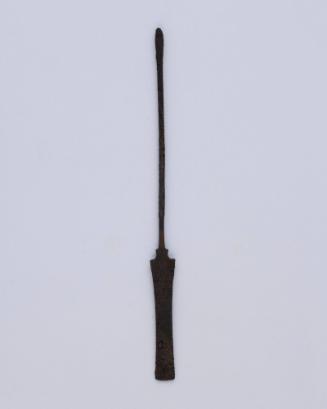
around 475 BCE-150 CE
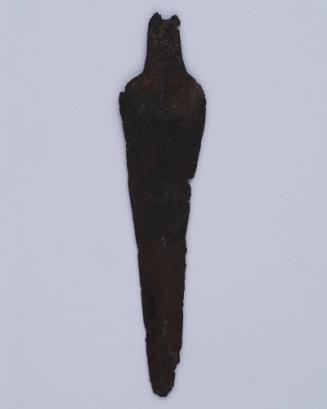
1900-1050 BCE
1900-1050 BCE

about 480 BCE
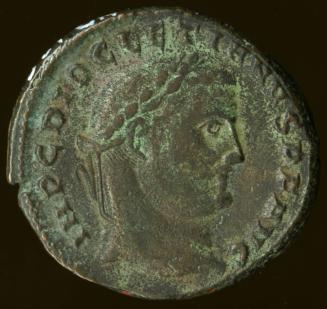

about 300 CE

337-361 CE


Membership
Become a TMA member today
Support TMA
Help support the TMA mission