

Statuette of Isis-Fortuna

Statuette of Isis-Fortuna
Place of OriginRoman Empire
Date1st-2nd century CE
DimensionsL: 1 7/8 in. (4.8 cm); W: 1 1/2 in. (3.8 cm); H: 3 1/2 in. (8.9 cm)
MediumBronze
ClassificationSculpture
Credit LineGift of the Popplestone Family
Object number
2006.97
Not on View
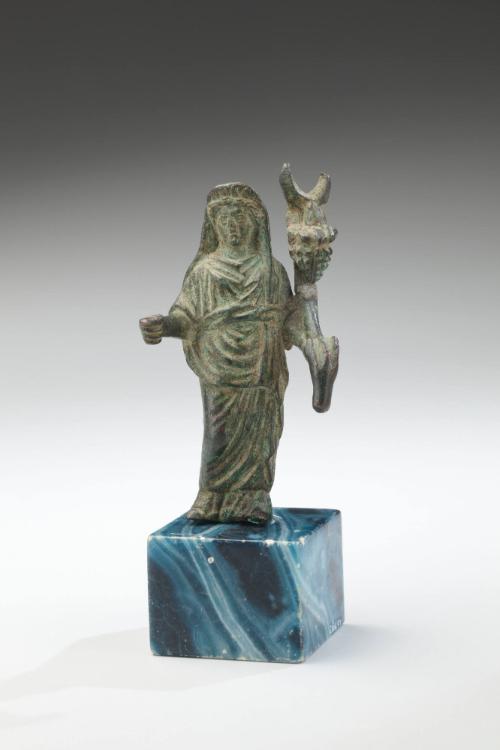
DescriptionA solid-cast bronze statuette of the syncretic goddess Isis-Fortuna, standing with her weight on one leg. The figure is clothed in a tunic and mantle. Her left arm cradles a large cornucopia (horn of plenty). Her right hand is open with a hole through the palm, indicating a lost attribute
Label TextThis small bronze figure merges two powerful goddesses: Isis, the Egyptian goddess of magic, and Fortuna, the Roman goddess of luck. In the multicultural Roman Empire, blending deities, or syncretism, was common. She holds a cornucopia, or "horn of plenty," a symbol of the abundance and prosperity that Fortuna provided. Her other hand, now empty, likely held a ship's rudder, symbolizing her power to steer human destiny. Small, personal figures like this were central to daily life. Roman families kept them in household shrines, called lararia, making daily offerings and prayers for protection and good fortune.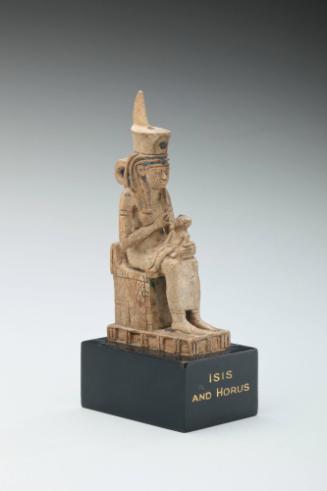
26th Dynasty (664–525 BCE), about 650 BCE

about 150 CE

100 BCE to 150 CE
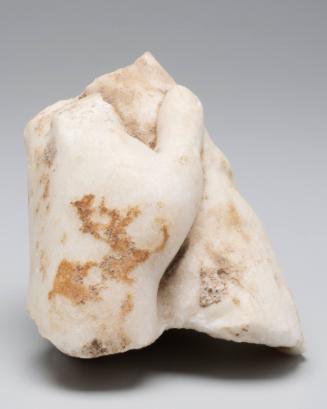
1st-2nd century CE
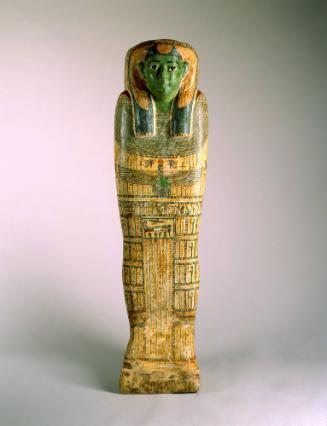

1st-2nd century CE

2nd century BCE

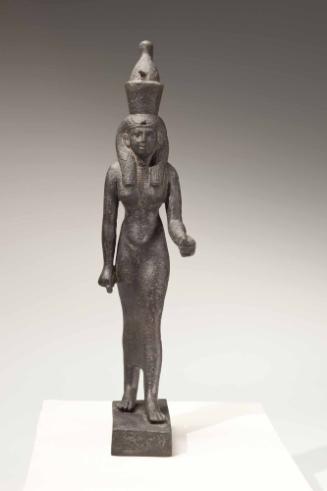

325-300 BCE

6th century BCE

Membership
Become a TMA member today
Support TMA
Help support the TMA mission