
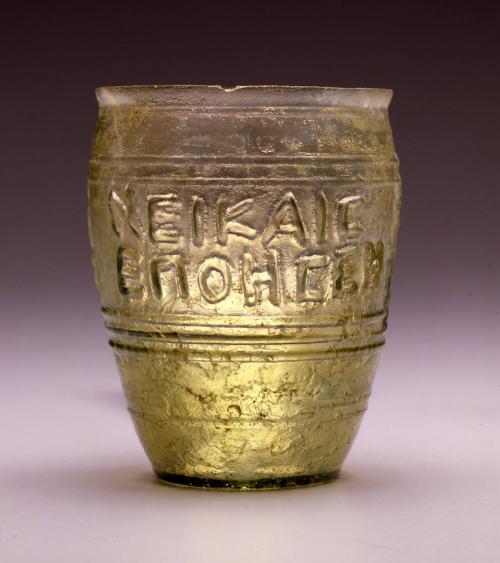
Barrel-Shaped Cup Signed by Neikais

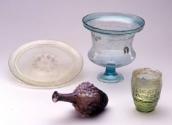
Barrel-Shaped Cup Signed by Neikais
Place of OriginLikely made in Sidon, present-day Lebanon; reportedly found in Aleppo, present-day Syria
DateMid-1st century CE
DimensionsH: 3 3/8 in. (8.5 cm); Rim Diam: 2 5/8 in. (6.7 cm); Base Diam: 1 5/8 in. (4.1 cm); Max Diam: 2 13/16 in. (7.08 cm); Rim Thickness: (0.07cm)
MediumMold-blown transparent green glass.
ClassificationGlass
Credit LinePurchased with funds from the Libbey Endowment, Gift of Edward Drummond Libbey
Object number
1930.5
Not on View
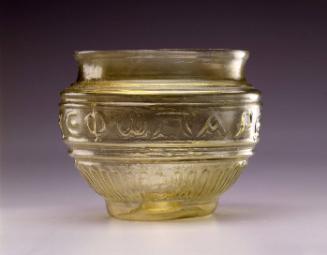
DescriptionA barrel-shaped beaker composed of transparent, naturally colored grayish-green glass. The vessel was blown into a three-part mold consisting of two vertical sections joined to a cup-shaped base section. The rim is unworked and outsplayed, featuring a constriction immediately below. The body is decorated with a central frieze containing a Greek inscription, bordered by two horizontal ridges above and three horizontal ridges below.<p><p>The inscription is divided into two panels by vertical palm fronds, which cleverly conceal the seams where the mold sections joined. Side A reads: NEIKAIC / EPOHCEN ("Neikais made it") Side B reads: MNHCTHH / O AGORACAC ("Let the buyer remember") Two diametrically opposed vertical palm fronds separate the inscription into two panels and conceal the vertical mold seams. The base is flat with a circular depression surrounding a central boss.
Label TextThis delicate green cup is a rare example of ancient branding. It was blown into a mold carved with the maker's name, "Neikais," and a slogan: "Let the buyer remember." While many ancient artisans remained anonymous, glassmakers in the Syro-Palestinian region during the 1st century often signed their work to guarantee quality.
Recent research suggests "Neikais" may be a female name, indicating this workshop was owned or directed by a woman—one of the few female entrepreneurs known from antiquity. The slogan "Let the buyer remember" is likely a Greek translation of a traditional Semitic blessing, wishing good fortune upon the purchaser of the cup.
Published ReferencesFröhner, Wilhelm. Verre antique de la collection Fr. von Gans, Paris, Imprimerie Georges Petit, 1913, p. 5-8, no. 5, pl. 4.Zahn, Robert, Galerie Bachstitz [or Sammlungen der Galerie Bachstitz,], vol. II, Berlin, Galerie Bachstitz, 1921, p. 56, no. 154, pl. 60.
Eisen, Gustav A., with Fahim Kouchakji, Glass: Its Origin, History, Chronology, Technic and Classification to the Sixteenth Century, 2 vols., New York, W. E. Rudge, 1927, vol. I, p. 272, pl. 59.
Harden, Donald B., "Romano-Syrian Glasses with Mould-blown Inscriptions," Journal of Roman Studies, vol. 25, 1935, p. 170, Group D, no. a and pl. XXIV, nos. c and d.
Riefstahl, Rudolf M., "The Tradition of Glass: Ancient and Near Eastern Glass," Toledo Museum of Art Museum News, vol. 4, 1961, p. 37, ill.
Neuberg, Frederic, Ancient Glass, London, 1962, fig. 43.
Harden, Donald B., "Syrian Glass from the Earliest Times to the 8th Century A.D., BullAIHV, vol. 3, 1964, p. 22, fig. 4, nos. a and b.
Labino, Dominick, Visual Art in Glass, Dubuque, IA, 1968, p. 22, fig. 8.
The Toledo Museum of Art, A Guide to the Collections, Toledo, OH, 1966, repr.
The Toledo Museum of Art, Art in Glass: A Guide to the Glass Collections, Toledo, OH, 1969, p. 24, ill.
Burford, Alison, Craftsmen in Greek and Roman Society, London, 1972, ill. opp. p. 80.
Stern, E. Marianne, Roman Mold-Blown Glass: The First Through Sixth Centuries, Rome, Italy, "L'Erma" di Bretschneider in association with the Toledo Museum of Art, 1995, pp. 100-101, cat. no. 5, color pl. 2, p. 51.
Stern, E. Marianne, "Neikas-a Woman Glassblower of the First Century A. D. ?" in Komos: Festschrift Für Thuri Lorenz Zum 65, Geburtstag, Wien, 1997, pp. 130-132, abb. 79-80.
Thiel, Friedrich, Am Oberen Grenzweg, Duisburg, Druckerei Ferd. Kleinagel, 2018, p. 178-179, 213-214, repr. (col.) p. 173.
Exhibition HistoryWorcester Art Museum; Cleveland Museum of Art; Baltimore Museum of Art, Antioch: The Lost Ancient City, 2000-2001, no. 80, p. 193-194, repr. (col.).
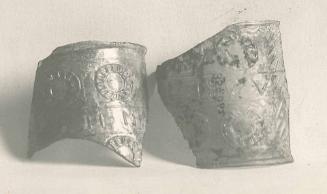
First half of 1st century
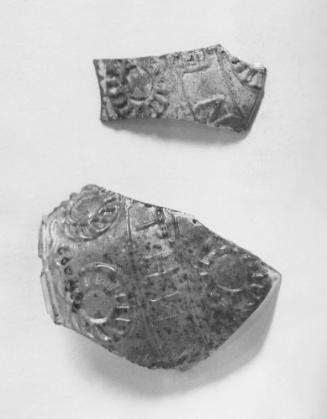
First half of 1st century

First half of 1st century
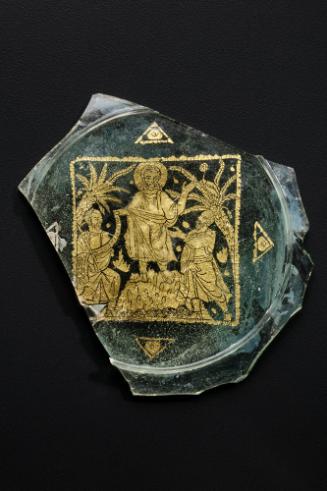
about 370-400 CE

Late 18th or 19th Century (1400-1225 BCE)

about 50-100 CE
Probably second half of the 1st century

Mid-1st century CE
19th or 20th century
Second half of the 1st century CE

Membership
Become a TMA member today
Support TMA
Help support the TMA mission