

"Two Fingers" Amulet
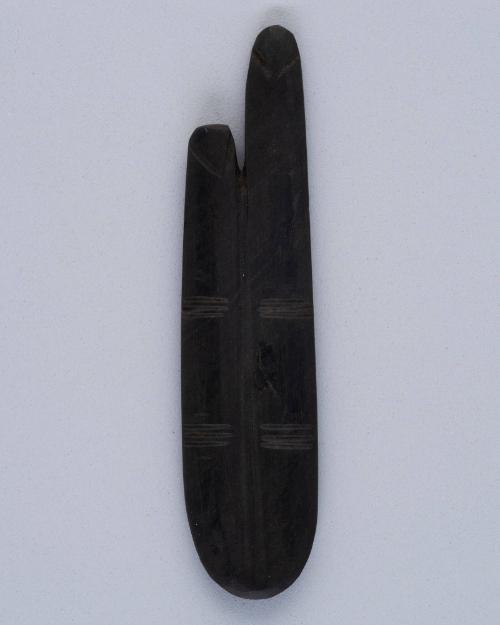



"Two Fingers" Amulet
Artist
Unidentified
Period
Late Period
(Ancient Egyptian, 664–332 BCE)
Period
Ptolemaic Period
(Ancient Egyptian, 304–30 BCE)
Dynasty
Dynasty 26 (Saite)
(Ancient Egyptian, 664–525 BCE)
Place of OriginEgypt
Date26th Dynasty–Ptolemaic Period (664–30 BCE)
Dimensions2 3/4 in. (6.9 cm)
Mediumslate
ClassificationJewelry
Credit LineGift of Edward Drummond Libbey
Object number
1906.54
Not on View
DescriptionRepresenting two outstretched fingers, the first and second of right hand.
Label TextThis small stone object is an example of a “Two Fingers” amulet, a type of ancient Egyptian charm used in burials. It shows two outstretched fingers—usually the index and middle fingers of the right hand—and was placed on the body during mummification. The embalmers made a cut on the left side of the body to remove the organs, and this amulet was laid near that incision to protect and magically heal the wound. Ancient Egyptians believed the body had to remain whole and unharmed for the person to live again in the afterlife. The two fingers may represent the hand of Anubis, the jackal-headed god of embalming, whose role was to care for and protect the dead. Made of dark stone, this amulet comes from the Late Period or Ptolemaic Period (roughly 664–30 BCE), when magical tools like this played an important role in preparing the dead for eternal life.
26th–30th Dynasties (664–343 BCE)


1st millennium BCE

1st century BCE-1st century CE



Membership
Become a TMA member today
Support TMA
Help support the TMA mission