

Stupa Railing Medallion with Lotus
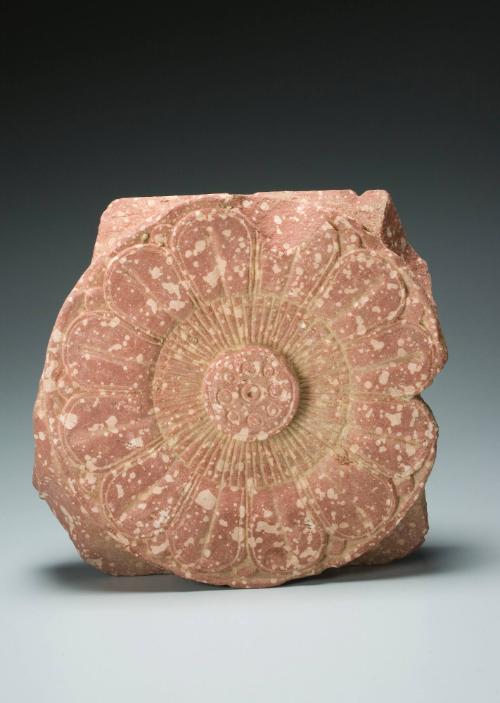

Stupa Railing Medallion with Lotus
Place of OriginIndia, likely Mathura (Uttar Pradesh) or Bharhut (Madhya Pradesh)
DateShunga Dynasty (185-75 BCE)
DimensionsH: 9 1/8 in. (230.2 mm); W: 9 3/4 in. (240.8 mm); Depth: 3 in. (70.6 mm)
MediumCarved mottled red sandstone.
ClassificationSculpture
Credit LineGift of the Popplestone Family
Object number
2006.140
On View
Toledo Museum of Art (2445 Monroe Street), Gallery, 35
DescriptionA carved stone fragment, roughly square in profile, featuring a central circular medallion in low relief. The medallion contains a fully bloomed lotus flower (padma) with radiating petals surrounding a central seed pod. The stone is a deep reddish-brown hue with mottled spotting characteristic of certain Indian sandstone varieties. The surface shows signs of wear and accretion, with noted wax deposits on the reverse and top.
Label TextThis stone fragment once formed part of a vedika, the sacred railing surrounding a stupa—a massive dome-shaped monument housing relics of the Buddha. Pilgrims would walk around the stupa in a ritual clockwise path, separated from the outside world by these railings. The central carving depicts a lotus (padma), a potent symbol in Buddhism representing purity and spiritual birth; just as a lotus blooms immaculately from muddy waters, the enlightened mind rises above worldly suffering. The flattened, rhythmic style of the carving identifies it with the Shunga dynasty, an era of prolific early Buddhist art.Published ReferencesUnpublishedComparative ReferencesCf. Lee, Sherman E., A History of Far Eastern Art, 4th ed., New York: Harry N. Abrams, 1982, pp. 83-85.

about 1100-1200
early 12th century

Gupta Period (320-647), about 600

Ptolemaic Period (332–30 BCE), about 246–222 BCE
21st–31st Dynasties (1069–332 BCE) or Ptolemaic Period (332–30 BCE)

early 17th century

18th Dynasty (1550-1292 BCE), about 1390 BCE


mid-19th century


Unidentified
Predynastic Period, Naqada I–II, about 3800–3300 BCE
1st century BCE - 1st century CE

Membership
Become a TMA member today
Support TMA
Help support the TMA mission