

Kylix (Drinking Cup)
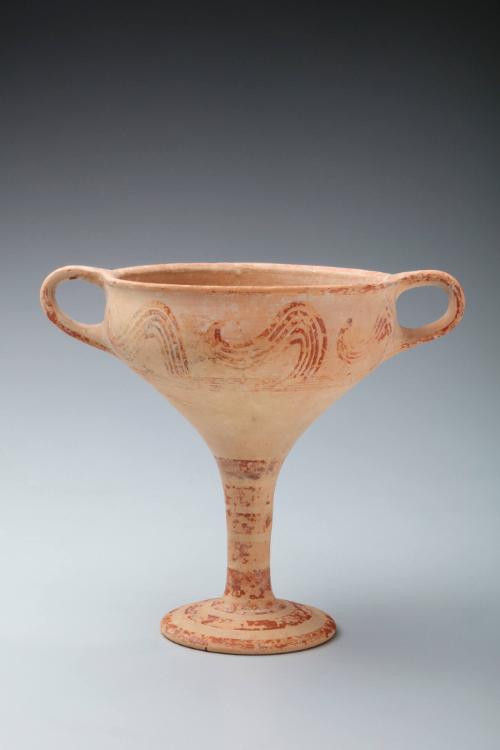


Kylix (Drinking Cup)
Place of OriginGreece, reportedly found in the Argolis
Date1400-1300 BCE
Dimensions8 1/8 × 9 1/8 × 6 1/4 in. (20.6 × 23.2 × 15.9 cm)
to top of handles: 7 3/4 in. (19.6 cm)
to rim: 7 11/16 in. (19.5 cm)
6 1/4 × 3 3/4 in. (16 × 9.6 cm)
to top of handles: 7 3/4 in. (19.6 cm)
to rim: 7 11/16 in. (19.5 cm)
6 1/4 × 3 3/4 in. (16 × 9.6 cm)
MediumWheel-thrown, slip-decorated earthenware.
ClassificationCeramics
Credit LinePurchased with funds from the Libbey Endowment, Gift of Edward Drummond Libbey
Object number
1930.11
On View
Toledo Museum of Art (2445 Monroe Street), Gallery, 02, Classic
DescriptionA wheel-thrown ceramic kylix (stemmed cup) with a deep, conical bowl, two vertical loop handles attached at the rim, and a tall stem terminating in a discoid foot. The clay body is buff or yellow-brown, decorated with red-brown slip. The interior of the rim and the outer surfaces of the handles are solid slipped. The primary decorative zone on the upper body features a "Multiple Stem and Tongue" pattern (FM 19), consisting of groups of curved parallel lines rising from the groundline. Below this frieze, the lower body is encircled by thin bands, while the stem and foot feature thicker horizontal bands.
Label TextThis elegant stemmed cup, known as a kylix, was the standard wine-drinking vessel of the Mycenaean world. Found in great quantities in palaces and tombs, these cups were used during feasts and rituals that bonded the warrior-elite society of Bronze Age Greece. The decoration on the upper bowl features a series of curved, parallel lines known as the "Multiple Stem and Tongue" pattern. While early scholars sometimes mistook these sweeping curves for stylized nautilus shells—reflecting the Mycenaeans' deep connection to the sea—modern archaeologists identify them as an abstract floral motif. This vessel was reportedly found in the Argolis, the region surrounding the great citadel of Mycenae itself.Published ReferencesBoulter, Cedric G., and Kurt T. Luckner, Corpus Vasorum Antiquorum, Toledo Museum of Art, fasc. 2, U.S.A. fasc. 20, Mainz, 1984, pl. 61, 2.

1375-1300 BCE

1375-1300 BCE
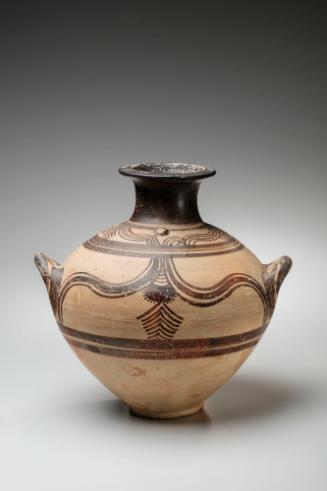
about 1150 BCE
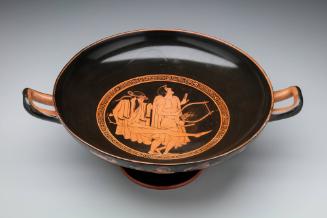
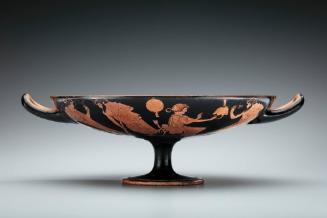

600-550 BCE

late 4th century BCE
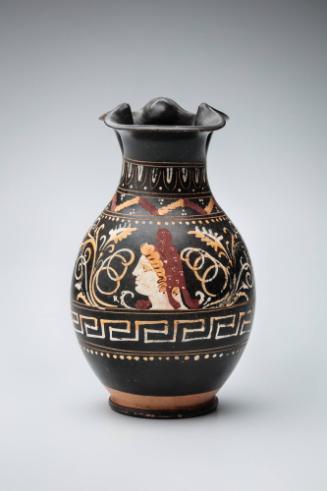
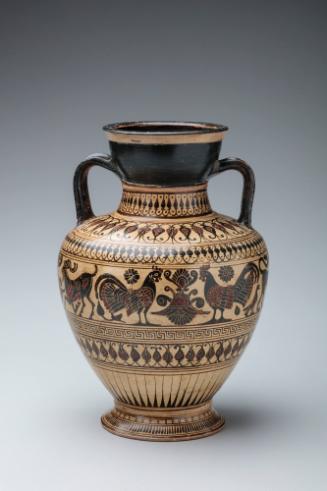
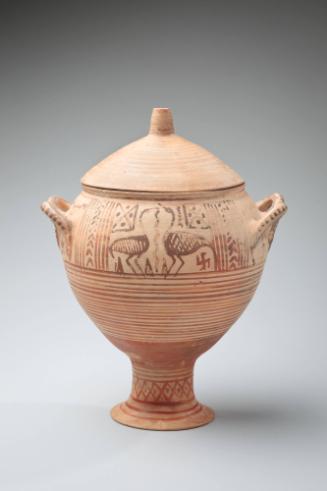
about 700 BCE

700-675 BCE

Workshop of the potter Nikosthenes
about 520 BCE

Membership
Become a TMA member today
Support TMA
Help support the TMA mission