

Door Key


Door Key
Artist
Unidentified
Period
Roman Empire
(Ancient Roman, 27 BCE-395 CE)
Place of OriginRoman Empire
Datepossibly 2nd Century CE
Dimensions2 3/8 in. (6 cm)
MediumIron
ClassificationUtilitarian Objects
Credit LineGift of Dr. Arthur F. Bissell
Object number
1911.45
Not on View
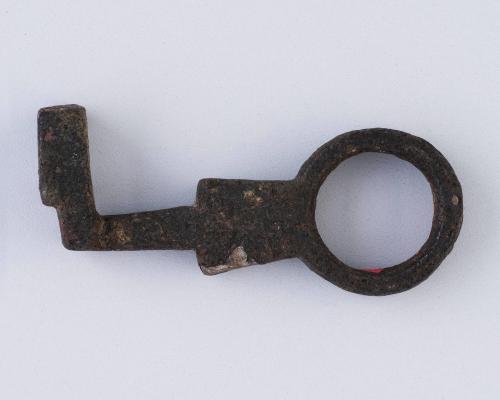
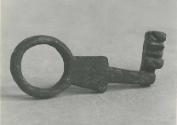
DescriptionThis iron key features a large, circular bow (handle) attached to a short, solid, rectangular shank. The bit extends perpendicularly from the end of the shank and contains distinct clefts or teeth for engaging a lock mechanism.
Label TextThis iron latch lifter is an example of a simple Roman key designed for lifting and releasing latches rather than for serious security. The Romans commonly used latch lifters, which consisted of a metal shaft with a hooked or toothed end that could pass through a hole in a door to manipulate an interior latch. Latch lifters like this one were functional but not highly secure, intended primarily as a convenience to unlock doors from the outside. Such devices were found in many ancient cultures before the Romans, suggesting that they adapted this design rather than inventing it.Published ReferencesPuma, R. D. de, Art in Roman Life: Villa to Grave, Roma, "L'Erma" di Bretschneider, 2009, no. 189, p. 134.
Exhibition HistoryDayton Art Institute, The Roman World: Religions and Everyday Life (featuring the Brooklyn Museum exhibition Tree of Paradise: Jewish Mosaics from the Roman Empire), September 21, 2007 - January 6, 2008.

400-300 BCE


19th century



Membership
Become a TMA member today
Support TMA
Help support the TMA mission