
Celtic Silver Tetradrachm Imitating Thasos Type
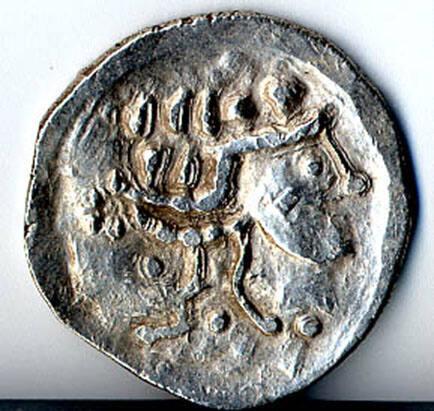

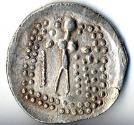
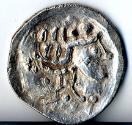
Celtic Silver Tetradrachm Imitating Thasos Type
Place of OriginDanube Region
Date2nd-1st century BCE
Dimensions1 3/8 × 1 1/4 × 1/8 in., 13g (3.5 × 3.2 × 0.3 cm, 13g)
MediumSilver.
ClassificationMetalwork
Credit LineGift of the Popplestone Family
Object number
2006.111
On View
Toledo Museum of Art (2445 Monroe Street), Gallery, 02, Classic
DescriptionA silver tetradrachm minted by Eastern Celtic tribes (Danubian region), imitating the coinage of Thasos. The design features a stylized head of Dionysos and a schematic figure of Herakles, showing abstraction of the Greek prototype (ref: Göbl OTA Class V).
Label TextThis coin is an ancient "knock-off," but one created with artistic intent. Celtic tribes in the Danube region encountered Greek mercenaries paid in Thasian silver (like object 2006.105) and began minting their own versions. Over time, the realistic Greek portraits dissolved into energetic, abstract patterns. Here, the hair of Dionysos and the muscles of Herakles are transformed into rhythmic lines and dots, creating a distinctively Celtic aesthetic that prioritized pattern over naturalism.
after 146 BCE

2nd Century BCE

1st century BCE

about 450-423 BCE

2nd-1st century B.C.E.
Second half of the 1st century CE

about 15 BCE - 25 CE (Roman, Augustan)
about 15 BCE - 25 CE (Roman, Augustan)


Membership
Become a TMA member today
Support TMA
Help support the TMA mission