

Sestertius of Hadrian with Personification of Africa (Gonzaga Collection Mark)
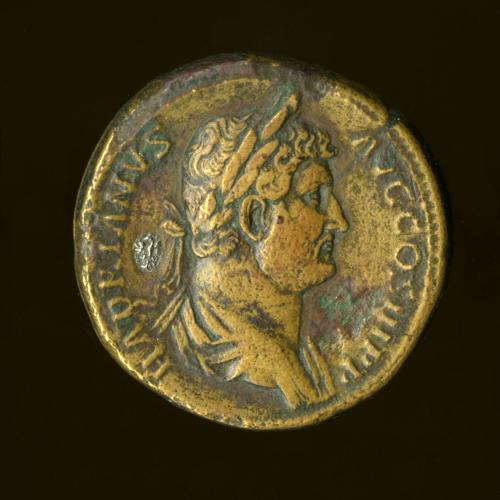


Sestertius of Hadrian with Personification of Africa (Gonzaga Collection Mark)
Place of OriginItaly, Rome
Date134-138 CE
DimensionsMax Diam: 32.74 mm (3.3 cm); Weight: 26.37 grams
MediumOrichalcum (brass alloy), with a silver-inlaid countermark
ClassificationMetalwork
Credit LineGift of the Popplestone Family
Object number
2006.106
Not on View
DescriptionA Roman orichalcum sestertius (134–138 CE) from Hadrian's "Province Series." The reverse depicts a personification of Africa wearing an elephant-skin headdress. The obverse bears a silver-inlaid eagle countermark from the Gonzaga collection (ref: RIC II.3 2416; Martini Gonzaga 12).
Label TextThe design belongs to Hadrian’s celebrated province series, in which the empire’s territories were represented by allegorical female figures. These images projected both the abundance of Rome’s provinces and the emperor’s role as unifier of a vast and diverse empire. Africa, with its fertile farmlands and exotic animals, was essential to Rome’s grain supply and to its vision of imperial plenty. Hadrian (117–138 CE) is remembered as one of Rome’s most cosmopolitan rulers. Unlike his predecessors, he traveled widely, personally visiting the provinces depicted on his coinage. His reign emphasized consolidation rather than conquest, investing in infrastructure and civic life across the empire. The province series, struck in Rome but honoring distant lands, symbolized this policy of cultural integration under imperial authority. This coin also bears an unusual later addition: a small stamped eagle inlaid in silver, known as the Gonzaga countermark. It was applied by the dukes of Mantua, powerful Renaissance rulers who assembled one of Europe’s first princely collections of antiquities. From about 1433 until the dispersal of their treasures in 1628, the Gonzaga sought out ancient coins, gems, and marbles, leaving their distinctive mark on many pieces. Though technically a defacement, the countermark is now an important witness to early modern collecting.
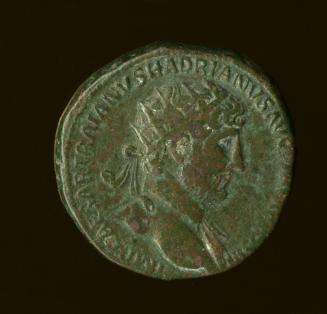
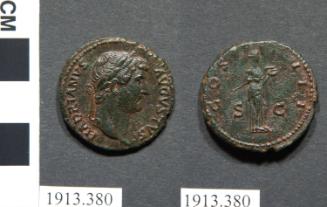

134-138 CE

late 19th century

19th century

late 19th century

19th century

Membership
Become a TMA member today
Support TMA
Help support the TMA mission