

Collared Jar (Kandila)
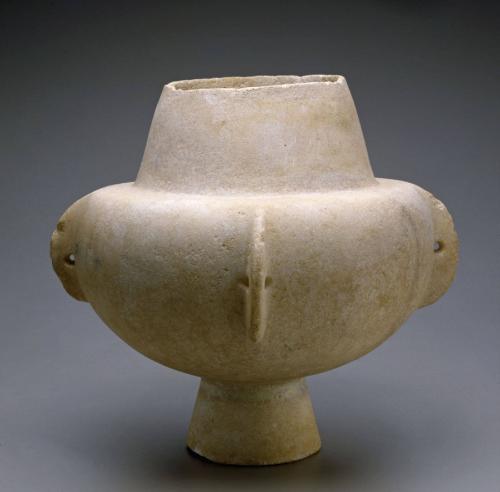


Collared Jar (Kandila)
Place of OriginGreece, Cycladic Islands
DateEarly Cycladic I, about 3000-2800 BCE
Dimensions12 1/8 × 13 1/4 × 13 1/4 in. (30.8 × 33.7 × 33.7 cm)
MediumMarble
ClassificationSculpture
Credit LineGift of Dr. and Mrs. James L. Apostolakis; George P. Ballas Foundation; Mr. and Mrs. Nicholas C. Bekos; Mr. and Mrs. William V. Coulacos; Mr. and Mrs. George Dimit; Mr. and Mrs. Andreas Dionyssiou; Dr. and Mrs. S.J. Kakissis; Dennis R. Kapp; Mr. and Mrs. Bruce Lung; Mr. and Mrs. William H. Price II; Dr. and Mrs. Don E. Stathulis; Mr. and Mrs. Michael Vassiliou; Chris J. and Persilla Zervos; The Latin Students of Donnell Jr. High School, Findlay; funds from the Libbey Endowment, Gift of Edward Drummond Libbey; and the Museum Art Fund.
Object number
1987.67
On View
Toledo Museum of Art (2445 Monroe Street), Gallery, 02, Classic
DescriptionA vessel carved from white marble, featuring three distinct sections: a high, tapering conical neck (collar), a broad, bulbous hemispherical body, and a high, hollowed conical foot. Four vertical suspension lugs are spaced evenly around the body's maximum diameter; each lug is pierced horizontally. The marble is translucent when backlit. The interior of the neck and foot are hollowed. The surface is polished smooth.
Label TextThis monumental jar, known as a kandila due to its resemblance to later Greek church lamps, is a masterpiece of Early Bronze Age sculpture. Carved from a single block of white marble using only stone, wood, and bone tools and polished with emery, its thin walls are translucent against the light. While the shape is functional—the four lugs allowed it to be suspended by ropes—its form is also abstractly anthropomorphic; the body recalls a rounded human head, the neck a high headdress, and the lugs a nose or ears. This vessel is among the largest of its type known to exist. It was acquired through the generosity of the local Greek community and a bake-sale donation from the Latin students of Donnell Jr. High School in Findlay, Ohio.Published ReferencesGetz-Gentle, Pat, Stone vessels of the Cyclades in the early Bronze Age, University Park, PA, 1996, p. 30, 250, pl. 18d, fig. 3e, p. 9, fig. 41h, p. 76, fig. 90c, p. 158.Exhibition HistoryToledo Museum of Art, Inspired Giving: The Apollo Society 25th Anniversary Exhibition, October 15, 2010-February 13, 2011 (not in catalog).Comparative ReferencesSee also Thimme, J. (ed.), Art and Culture of the Cyclades, Chicago, 1977, nos. 263, 268, 269.
cf. Archäologischer Anzeiger, 1978, p. 8, fig. 10.
cf. Sotheby's London, Dec. 10-11, 1984, lot. no. 287.
cf. Buchholz, H.G. and V. Karageorghis, Prhistoric Greece and Cyprus, New York, 1973, no. 1137.


Predynastic Period, Naqada II-III, about 3500-3000 BCE

about 150 CE
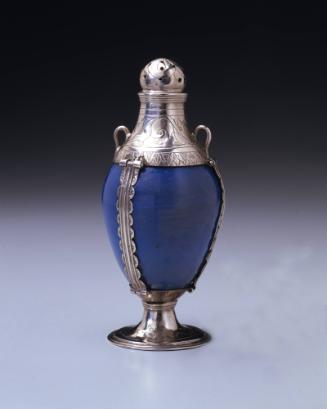
about 1580
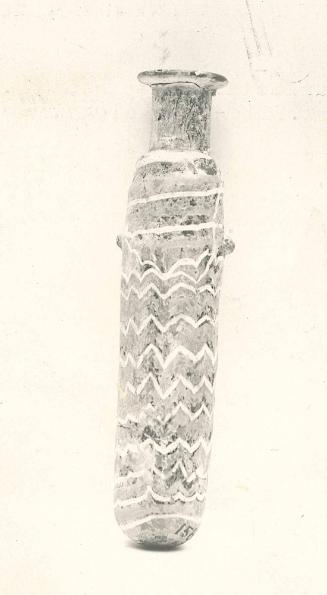
mid 4th-early 3rd century BCE

4th-3rd century BCE

Mid-4th through early 3rd century BCE

4th-3rd century BCE
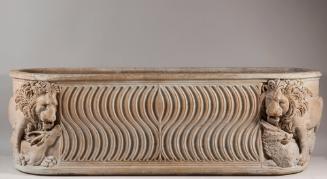
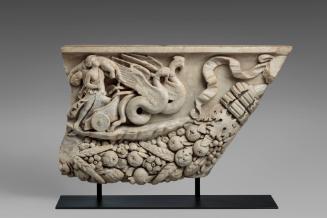
about 130 CE
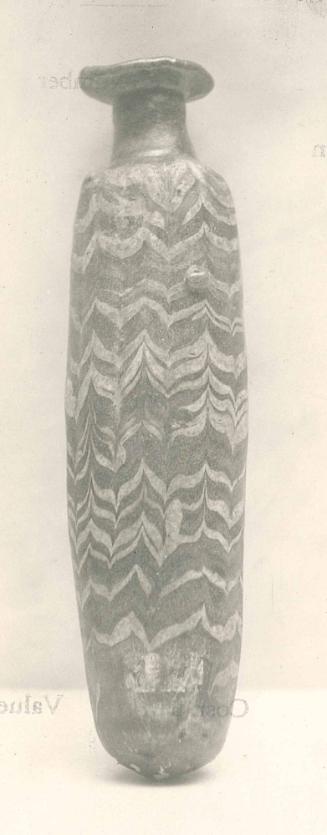
Mid-4th through early 3rd century BCE
1st-2nd century CE

Membership
Become a TMA member today
Support TMA
Help support the TMA mission