

Hadra Hydria (Cinerary Urn)
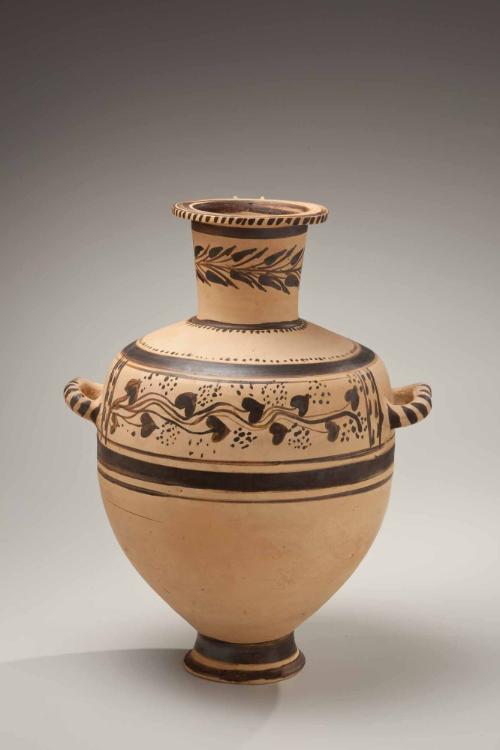


Hadra Hydria (Cinerary Urn)
Place of OriginEgypt, found at Alexandria (Hadra necropolis)
Date3rd century BCE
DimensionsH: 14 9/16 in. (37 cm); Diam (rim): 4 23/32 in. (12 cm); Diam (body): 9 1/16 in. (23 cm); Diam (foot): 3 15/16 in. (10 cm); Diam (with handles): 7 15/32 in. (19 cm)
MediumWheel-thrown earthenware with slip decoration
ClassificationCeramics
Credit LinePurchased with funds from the Libbey Endowment, Gift of Edward Drummond Libbey
Object number
1928.166
Not on View
DescriptionThis hydria is formed from wheel-thrown earthenware and decorated with bands of slip-painted ornament. The body is adorned with stylized vine scrolls and buds, with rotellae applied at the handle junctions. The form includes a broad shoulder, a narrow neck with flaring rim, and a ring foot.
Label TextThough shaped like a water jar (hydria), this vessel never held liquid. It held the ashes of a Greek expatriate—perhaps a mercenary or a diplomat—who died in Alexandria in the 3rd century B.C. While Egyptians mummified their dead, the Greek immigrants in the Ptolemaic capital preferred cremation. This urn, decorated with the ivy of Dionysus (god of rebirth), served as a final, familiar "Greek" resting place for someone buried in a foreign land.
Excavated at Alexandria's Hadra cemetery in 1884, this urn was collected by Elbert Farman, the U.S. diplomat famous for bringing "Cleopatra's Needle" to New York. It sat in the gilded parlors of Henry Marquand and the storerooms of the Metropolitan Museum of Art before Toledo acquired it in 1928.
Published ReferencesCatalogue American Art Association, New York, 1903, no. 976 (listed as MMA 03.3.7).
Catalogue Anderson Galleries, 30-31, March 1928, p. 70, no. 280.
Cook, B.F., Inscribed Vases in the Metropolitan Museum of Art, The Metropolitan Museum of Art, papers no. 12, New York, 1966, p. 14, no. 42 (repr.), pp. 7-12 (for discussion of vases from Hadra).
Luckner, Kurt T., "The Art of Egypt: Part II," The Toledo Museum of Art Museum News, vol. 14, no. 3, 1971, p. 76, fig. 18.
Boulter, Cedric G., and Kurt T. Luckner, Corpus vasorum antiquorum: Toledo Museum of Art, fasc. 2, U.S.A. fasc. 20, Mainz, 1982, pl 120, 2-4.
Peck, William H., Sandra E. Knudsen and Paula Reich, Egypt in Toledo: The Ancient Egyptian Collection at the Toledo Museum of Art, Toledo, Toledo Museum of Art, 2011, p. 24, repr. (col.).
Exhibition HistoryToledo Museum of Art, The Egypt Experience: Secrets of the Tomb, October 29, 2010-January 8, 2012.
Comparative ReferencesSee also Rumpf, A. Malerei und Zeichnung, Munich, 1953, p. 154 and note 1 (for a discussion of the vase from Hadra).cf. Callaghan, P.J., and R.E. Jones, "Hadra Hydriae and central Crere: a fabric analysis," Annual, British School at Athens, v. 80, 195, pp. 1-17.

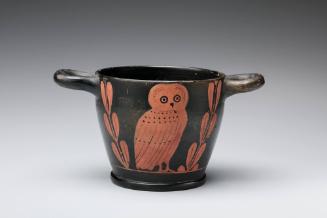
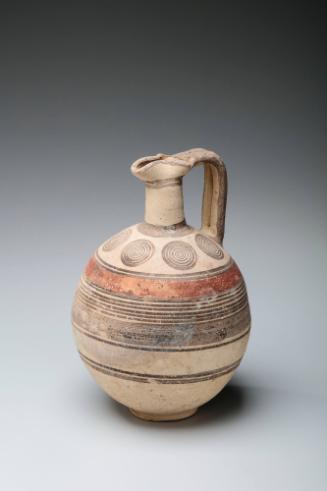
750-600 BCE

1375-1300 BCE

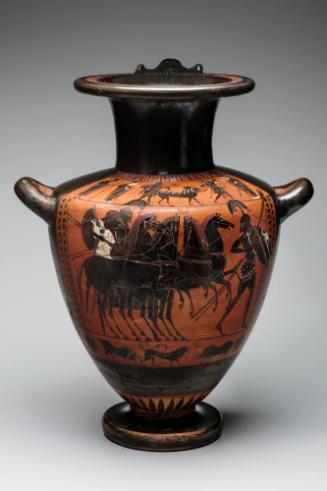

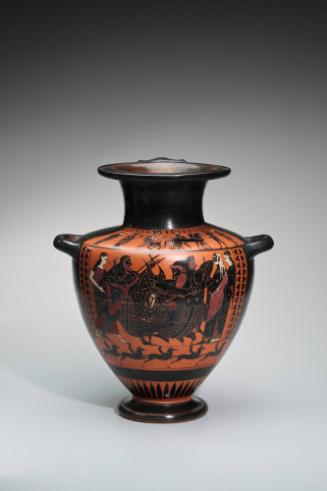

Workshop of the potter Nikosthenes
about 520 BCE


Membership
Become a TMA member today
Support TMA
Help support the TMA mission