

Fragment of Snake

Fragment of Snake
Place of OriginRoman Empire, Eastern Mediterranean or Italy
DateProbably 1st century BCE to 1st century CE
DimensionsMax L: 3 in. (7.6 cm); Max W: 5/8 in. (1.6 cm); Depth: 1/2 in. (1.2 cm)
MediumMarbled and molded mosaic glass: free-modeled with tools, applied marvered threads, stress marks on the underside.
ClassificationGlass
Credit LineGift of Edward Drummond Libbey
Object number
1980.1207
Not on View
DescriptionLight blue ground with curving, longitudinal threads of pale purple, opaque yellow, opaque white, and opaque turquoise-blue marvered into the upper surface.
Curvilinear fragment of body of snake. Body hemispherical in cross section; underside flat but uneven.
Published ReferencesGrose, David F., Early Ancient Glass: Core-Formed, Rod-Formed, and Cast Vessels and Objects from the Late Bronze Age to the Early Roman Empire, 1600 B. C. to A. D. 50, New York: Hudson Hills Press in association with the Toledo Museum of Art, 1989, cat. no. 678, p. 372.Probably 1st century BCE to 1st century CE
Probably 1st century BCE to 1st century CE
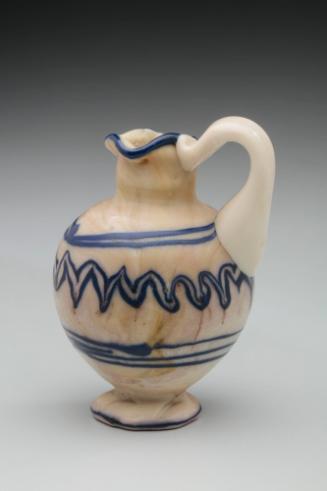
Late 1st century BCE to early 1st century CE

Late 6th to early 5th century BCE
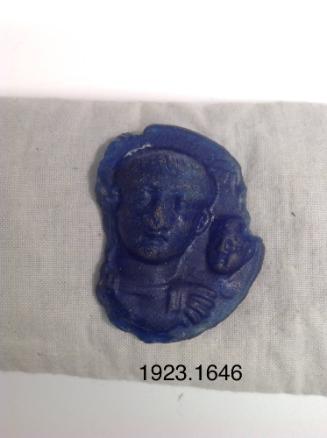
First quarter of the 1st century CE
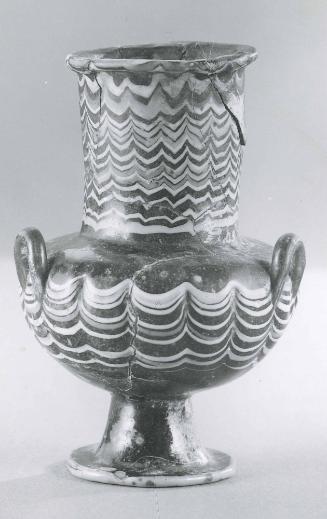
18th Dynasty (1550-1292 BCE), about 1412-1350 BCE
Late 6th through 5th century BCE

Late 6th through 5th century BCE
Late 6th through 5th century BCE
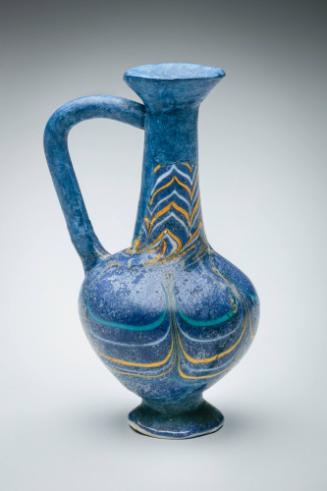
18th Dynasty (1550-1292 BCE), about 1400-1350 BCE
Probably 8th century BCE

Membership
Become a TMA member today
Support TMA
Help support the TMA mission