

Bowl with Christian Symbols
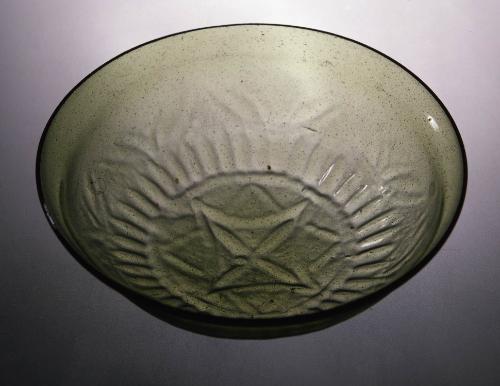

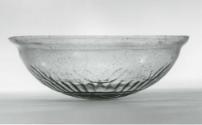
Bowl with Christian Symbols
Place of OriginNorthern Gaul (France or Belgium), reportedly found in Germany
DateLate 4th - early 5th century CE
DimensionsH: 2 1/2 in. (6.4 cm); Rim Diam: 6 7/8 in. (17.4 cm)
MediumMold blown glass
ClassificationGlass
Credit LinePurchased with funds from the Libbey Endowment, Gift of Edward Drummond Libbey
Object number
1981.94
Not on View
DescriptionA hemispherical bowl blown into a one-part mold from transparent, natural green glass containing numerous small spherical bubbles and black impurities. The vessel features a ground rim that flares slightly from a constriction below the edge. The decorative pattern is molded in relief on the exterior (appearing positive on the interior) and is concentrated on the base. The central motif consists of an equal-armed cross set within two interlocking quadrilaterals (lozenges) with curving sides, creating an eight-pointed star effect. This central medallion is encircled by a band of radiating tongues or ribs. The outermost register features a frieze of seven pairs of open lotus petals. The surface is unweathered but exhibits slight iridescence.
Label TextThis green bowl is a rare survivor from the twilight of the Roman Empire in the West. Blown into a mold, its base features a central cross surrounded by an eight-pointed star—an early example of Christian symbolism appearing on everyday objects in Northern Europe. While the technique of mold-blowing was perfected by Romans centuries earlier, the shape of this bowl anticipates the simple, footless drinking vessels preferred by the Franks who would soon dominate the region. It was likely made in what is now northern France or Belgium, yet it was reportedly discovered in Germany, attesting to the movement of goods and ideas across the changing frontiers of Late Antiquity.Published ReferencesLuckner, K., "Recent Acquisitions of Ancient Glass at the Toledo Museum of Art," The Decorative Arts Society Newsletter, VIII, 2 and 3, September 1982, repr. p. 11.Second quarter to mid-1st century CE
Early to Late 15th century

Probably second quarter of the 1st century
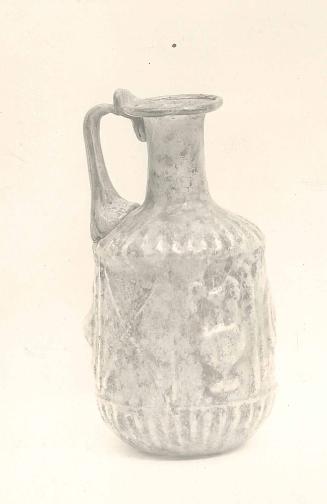
Probably second quarter of the 1st century
Probably second quarter to mid-1st century

Second to third quarter of 1st century CE
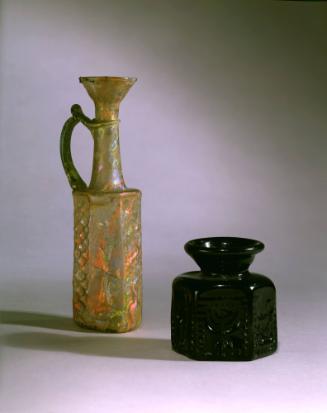
Late 6th- early 7th century CE
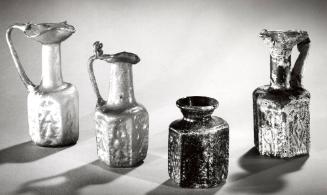
about 578-636 or 638

5th to 7th century

Membership
Become a TMA member today
Support TMA
Help support the TMA mission